Charcuterie Board vs Cheese Board: What Is Actually Different
People use these interchangeably and mostly that is fine. But there are three real differences, and they change what you should buy.
Heads up: we earn a commission from qualifying purchases made through the links on this page, at no extra cost to you. It never changes which products we pick or the order we rank them in. Full disclosure.
Quick picks
Tap any row to jump to the full write-up further down the page.
| # | Product | Best for | Score | Price |
|---|---|---|---|---|
| 1 | 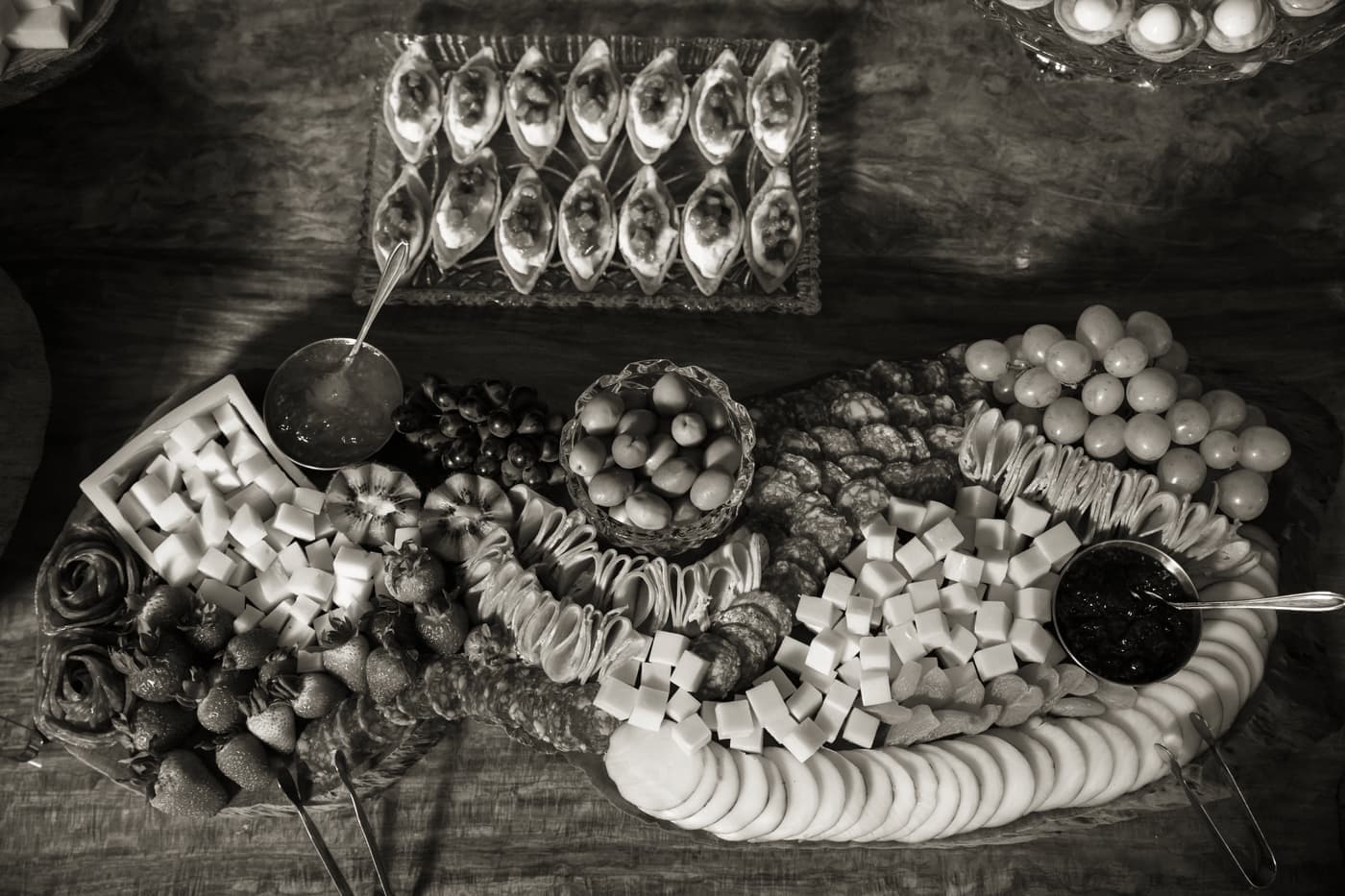 Shanik Acacia Wood Charcuterie BoardA board you keep | A board you keep | 8.6 | Check price on Amazon #ad We may earn a commission · We do not print prices — see the live one on Amazon |
| 2 | 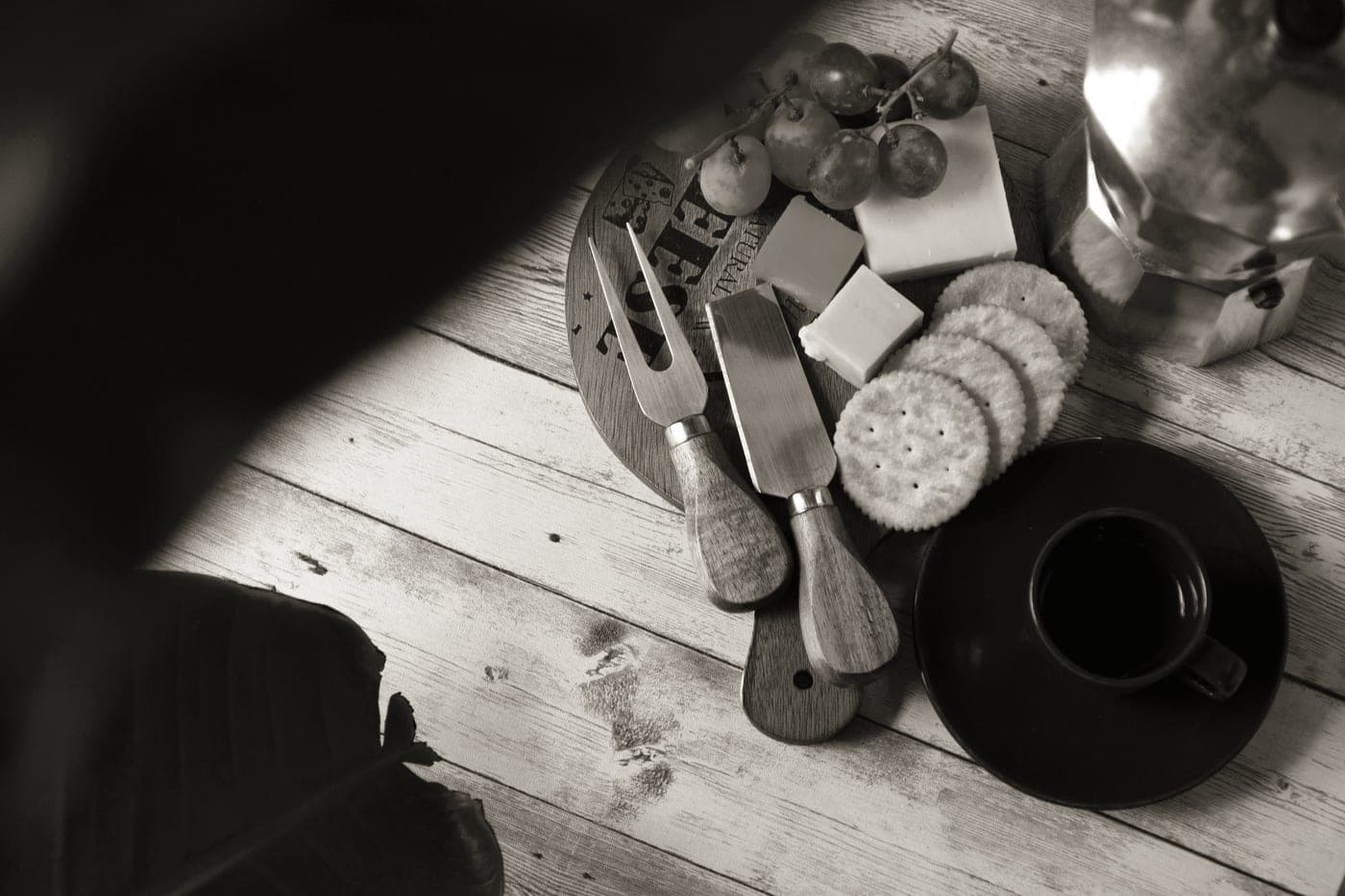 ChefSofi Acacia Charcuterie Board SetDips and spreads | Dips and spreads | 8.3 | Check price on Amazon #ad We may earn a commission · We do not print prices — see the live one on Amazon |
| 3 | SMIRLY Bamboo Charcuterie Board and Knife SetOne-box gift | One-box gift | 8.4 | Check price on Amazon #ad We may earn a commission · We do not print prices — see the live one on Amazon |
Scores are our editorial rating, not a lab test result — see how we pick.
The short answer: charcuterie means cured meat, so a charcuterie board leads with meat and a cheese board leads with cheese. In practice the words have merged, most boards sold today are used for both, and if you are buying one board you should buy the larger flatter one and stop worrying about it.
Where the words come from
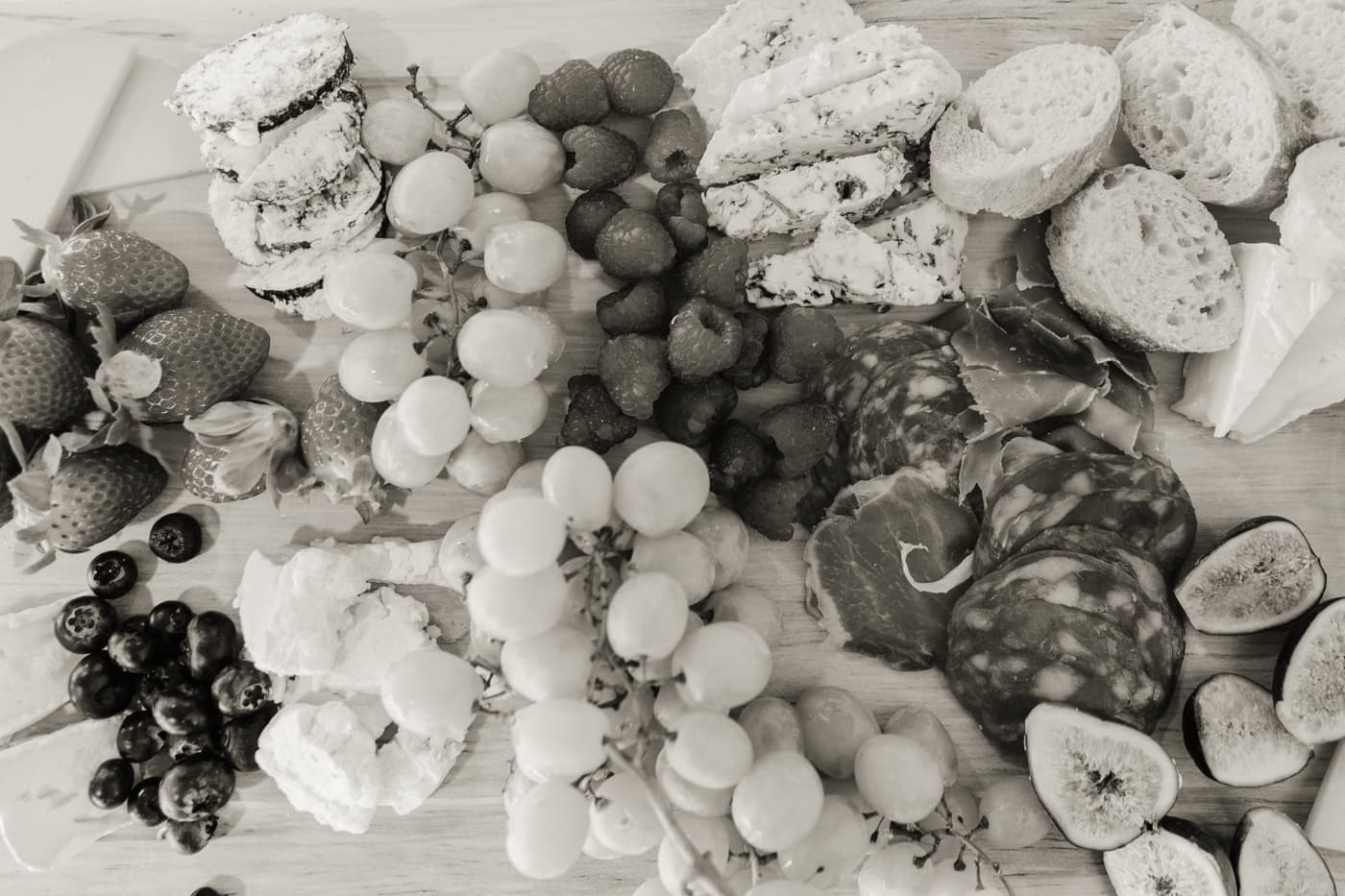
Charcuterie is a French term for prepared meat products — cured, smoked, salted. A traditional charcuterie board is prosciutto, salami, coppa, pâté, with pickles and mustard to cut the fat, and bread. Cheese might appear, or might not.
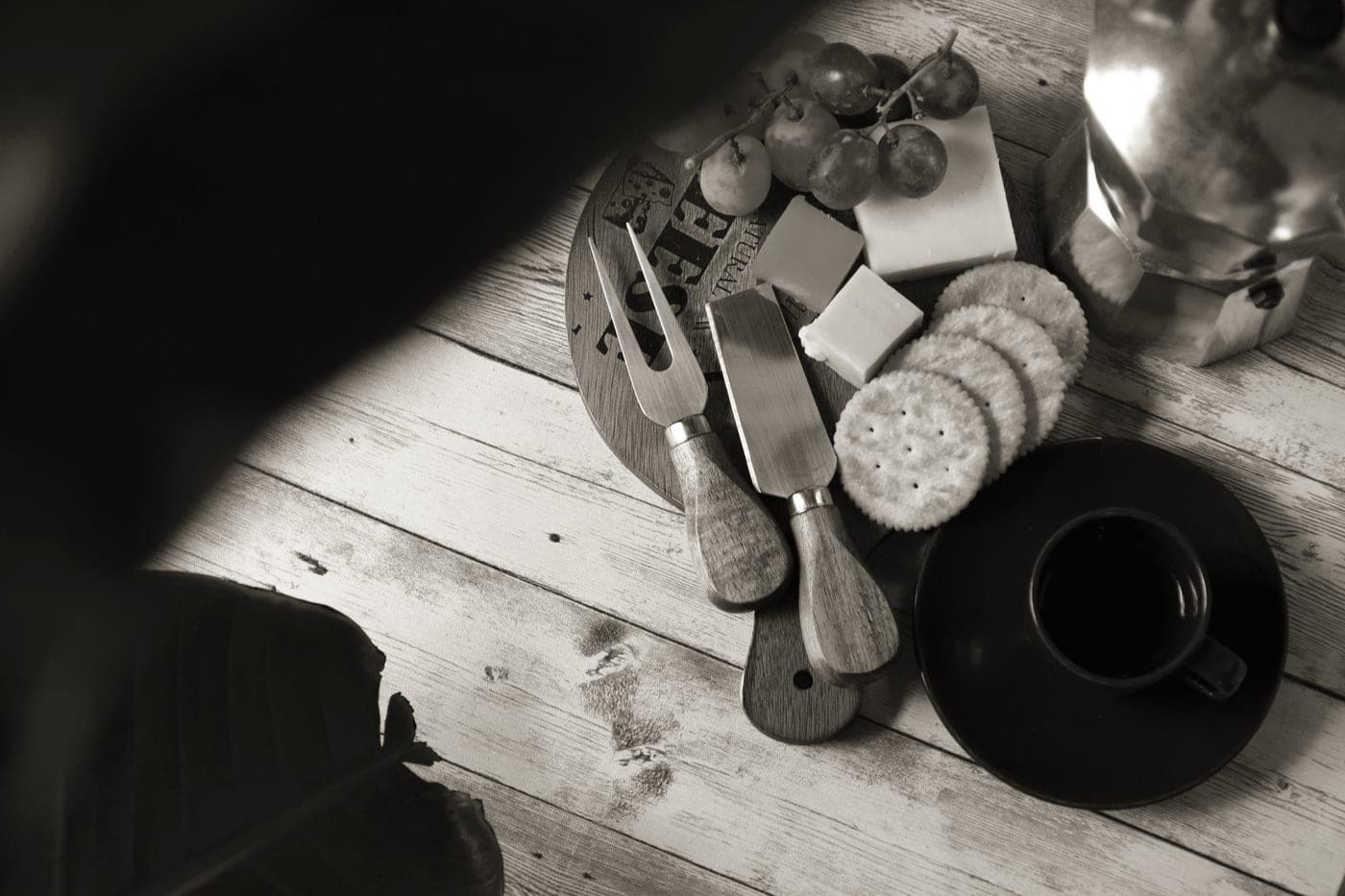
A cheese board is the cheese course: three to five cheeses, something sweet like honey or fig, something crisp, and crackers. Meat is optional and usually minimal.
What people build now is a hybrid, and calling it a charcuterie board has simply won as the name for it.
The three differences that survive
| Charcuterie board | Cheese board | |
|---|---|---|
| Built around | Cured meat | Cheese |
| Typical size | Larger, 16 in and up | Smaller, 10 to 13 in |
| Tools | Few — meat needs no special knives | Several — one blade per texture |
| Material matters? | Not much | Yes — cold keeps soft cheese firm |
| Best for a standing party | Yes | Less so |
1. Size
Cheese boards are smaller because a cheese course is a smaller spread. Charcuterie boards are sized for grazing. If the board is the food at your party, you want the charcuterie dimensions — our size guide has the numbers per guest count.
2. Tools
Cured meat needs no knives; you lay it out in folds and people take it. Cheese needs a different blade for every texture, which is why cheese boards ship with knives and charcuterie boards frequently do not.
3. Temperature
Cured meat is stable at room temperature for hours; that is the entire point of curing it. Soft cheese is not. This is the one genuinely functional difference, and it is why stone cheese boards exist and stone charcuterie boards are mostly decorative.
The picks in full
We have not lab-tested these products. Picks are chosen from live listings, sustained customer feedback at scale, material quality and fit for hosting — our full methodology.
Representative category photo, not the product listing image.
1. Shanik Acacia Wood Charcuterie Board
Heavier and more figured than any bamboo board, with grain variation that means no two look alike. This is the one that stays out on the counter rather than going back in the cupboard.
Key specs
- Solid acacia
- Noticeably thicker than bamboo boards
- Juice groove on most sizes
- Reversible
What works
- Acacia's color variation reads as furniture, not kitchenware
- Thick enough that it does not flex when you carry it loaded
- Doubles honestly as a cutting board
What does not
- Heavy once it is full, which matters if you are carrying it outside
- Needs oiling a few times a year or it goes dull and gray
#ad We may earn a commission · We do not print prices — see the live one on Amazon
Representative category photo, not the product listing image.
2. ChefSofi Acacia Charcuterie Board Set
A 13-inch acacia board that ships with four knives and four ceramic bowls, which is the difference between a board that holds cheese and a board that holds a whole spread.
Key specs
- 13 in acacia board
- Four knives
- Four ceramic bowls
- Slide-out storage
What works
- The bowls solve olives, nuts and jam, which is where most boards fall apart
- Acacia at a set price that usually buys bamboo
- Bowls lift out so the board cleans properly
What does not
- Four bowls on a 13-inch board leaves less room than you expect
- Ceramic bowls add real weight to carry
#ad We may earn a commission · We do not print prices — see the live one on Amazon
Representative category photo, not the product listing image.
3. SMIRLY Bamboo Charcuterie Board and Knife Set
A carbonized bamboo board with a hidden drawer of knives, bowls and picks, which is the whole reason to buy it: you hand someone one box and they can host that night.
Key specs
- Carbonized bamboo
- Hidden slide-out drawer
- Knives, bowls and serving picks included
- Around 13 x 13 in
What works
- Everything a first-time host needs arrives in one box
- The drawer keeps the knives with the board instead of in a utensil jumble
- Dark carbonized finish hides the crumb-and-oil marks a pale board shows
What does not
- The included knives are fine on soft cheese and mediocre on a hard aged cheddar
- Too small to be your only board once you are feeding more than about eight
#ad We may earn a commission · We do not print prices — see the live one on Amazon
Common questions
Is a charcuterie board the same as a cheese board?
Not strictly. Charcuterie means cured meat, so a charcuterie board is built around meat with cheese as a supporting element, and a cheese board is the reverse. In everyday use the terms have merged, and most boards sold as charcuterie boards are used for both.
Can I use the same board for both?
Yes, and most people do. Buy the larger, flatter option and you have covered both jobs. The only reason to own two is if you serve a lot of soft cheese and want a chilled stone board for it.
Does a charcuterie board need cheese on it?
Technically no, since charcuterie refers to the meat. In practice almost every charcuterie board includes cheese, because the two balance each other and a board of only cured meat is very rich.
Which is better for a party?
A charcuterie board, in the loose sense: larger, flatter, more variety and less dependent on temperature. Soft cheese is what limits how long a spread survives at a standing party.