How to Build a Charcuterie Board
There is an order to this, and doing it in the right order is the difference between a board that looks abundant and one that looks like items on wood.
Heads up: we earn a commission from qualifying purchases made through the links on this page, at no extra cost to you. It never changes which products we pick or the order we rank them in. Full disclosure.
Quick picks
Tap any row to jump to the full write-up further down the page.
| # | Product | Best for | Score | Price |
|---|---|---|---|---|
| 1 | 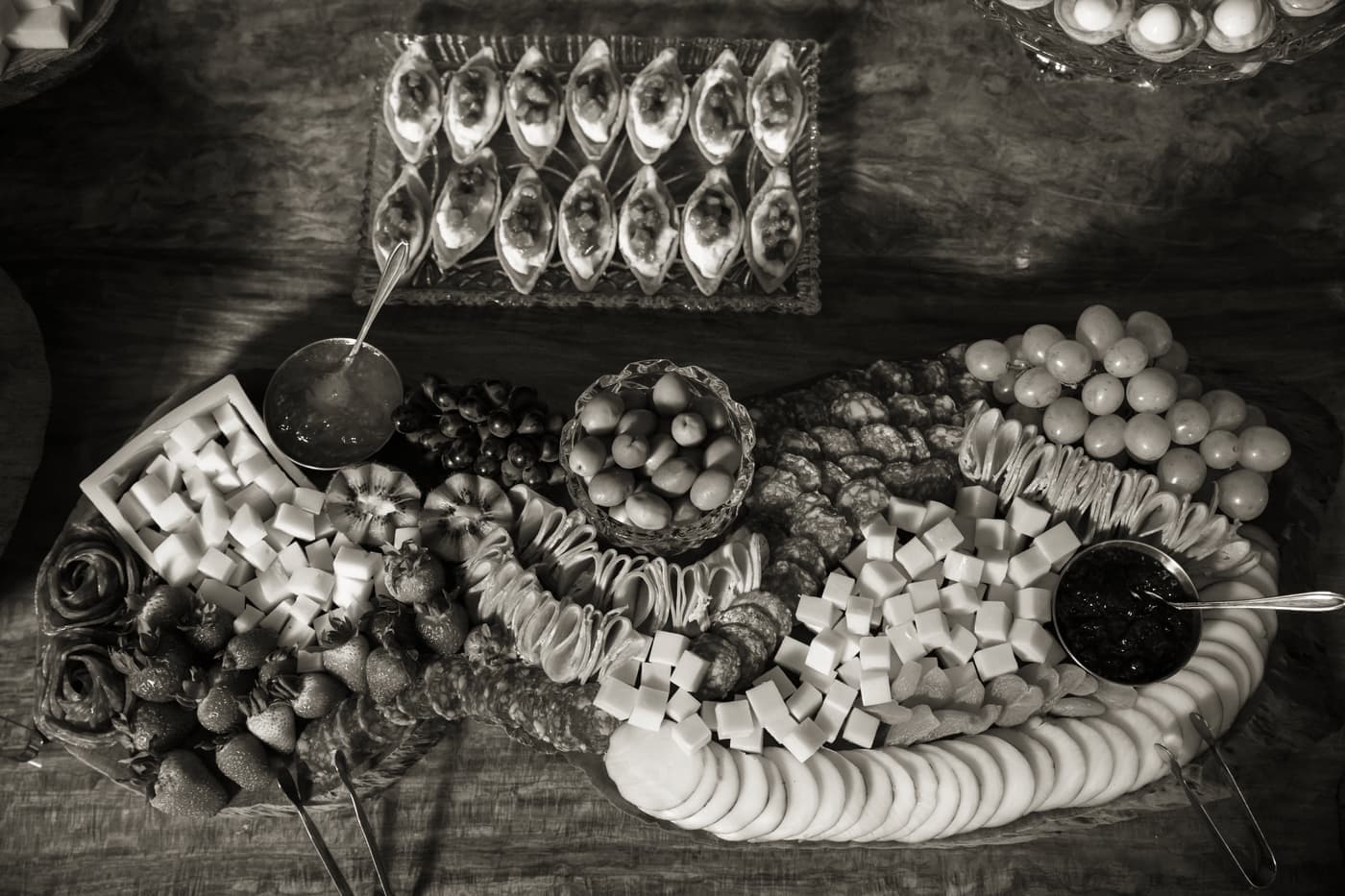 Shanik Acacia Wood Charcuterie BoardA board you keep | A board you keep | 8.6 | Check price on Amazon #ad We may earn a commission · We do not print prices — see the live one on Amazon |
| 2 | 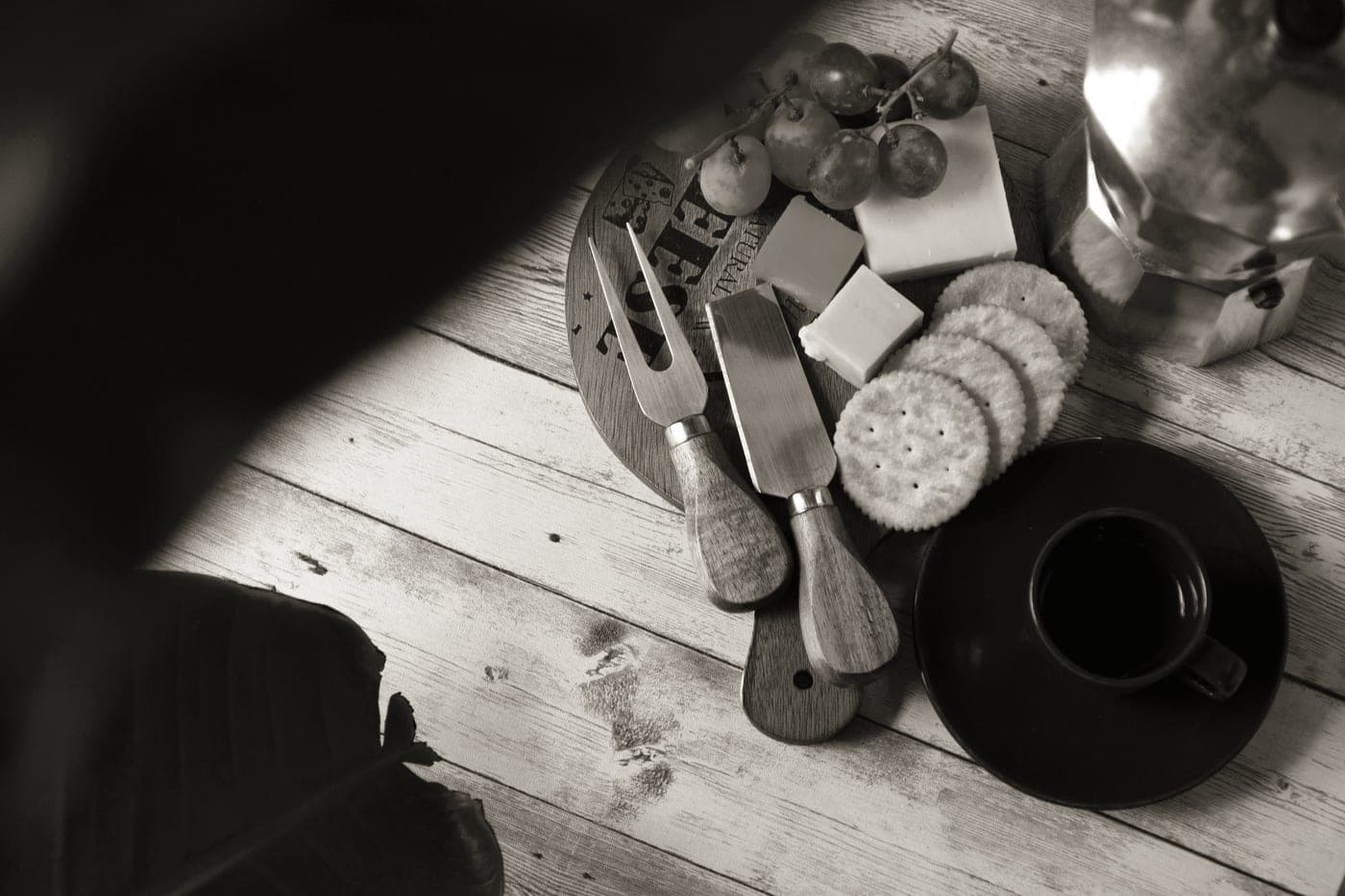 ChefSofi Acacia Charcuterie Board SetDips and spreads | Dips and spreads | 8.3 | Check price on Amazon #ad We may earn a commission · We do not print prices — see the live one on Amazon |
| 3 | 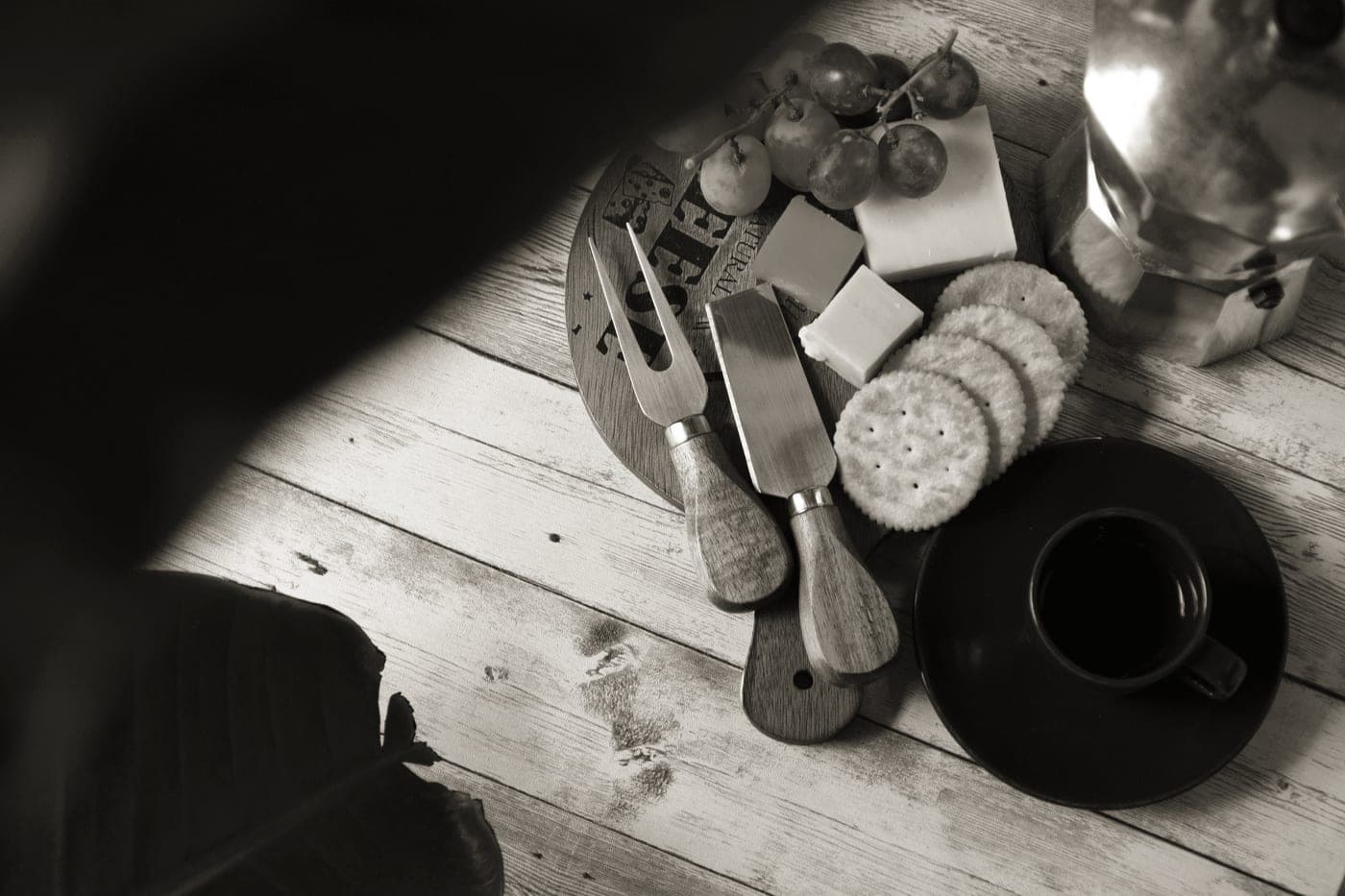 BOSKA Cheese Knife SetActually cutting cheese | Actually cutting cheese | 8.5 | Check price on Amazon #ad We may earn a commission · We do not print prices — see the live one on Amazon |
Scores are our editorial rating, not a lab test result — see how we pick.
The short version: bowls first, then cheese, then meat, then crackers, then fill every single gap with fruit and nuts, then garnish. Six steps, about fifteen minutes, and the order is what matters.
The steps, in order
- Place the bowls. Anything wet or loose — olives, honey, jam, cornichons — goes in a small bowl, and the bowls go down first because they are fixed points you build around. Two or three, spaced apart, never in a line.
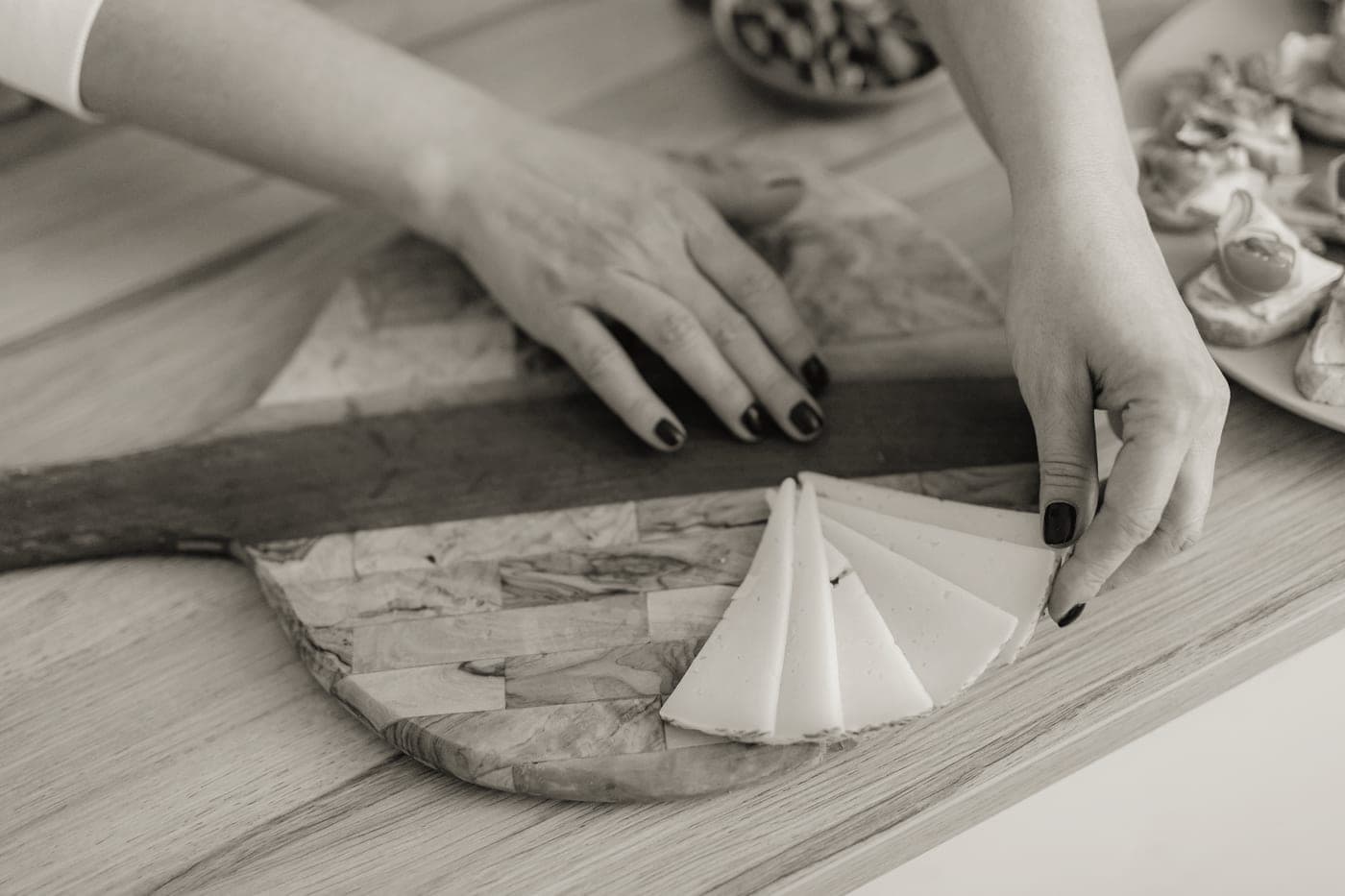
- Place the cheeses, spread apart. Not clustered. Put them at roughly equal distances so the board has three centers of gravity instead of one. Pre-cut some of each — a whole untouched wedge makes people hesitate.
- Add the meats in the gaps. Do not lay them flat. Fold salami into quarters, ruffle prosciutto into loose ribbons, make a small river of it between two cheeses. Height and movement are what make a board look generous.
- Crackers and bread along the edges. Fan them in a curve rather than stacking. Some can overhang the board edge, which makes the whole thing look like it is overflowing.
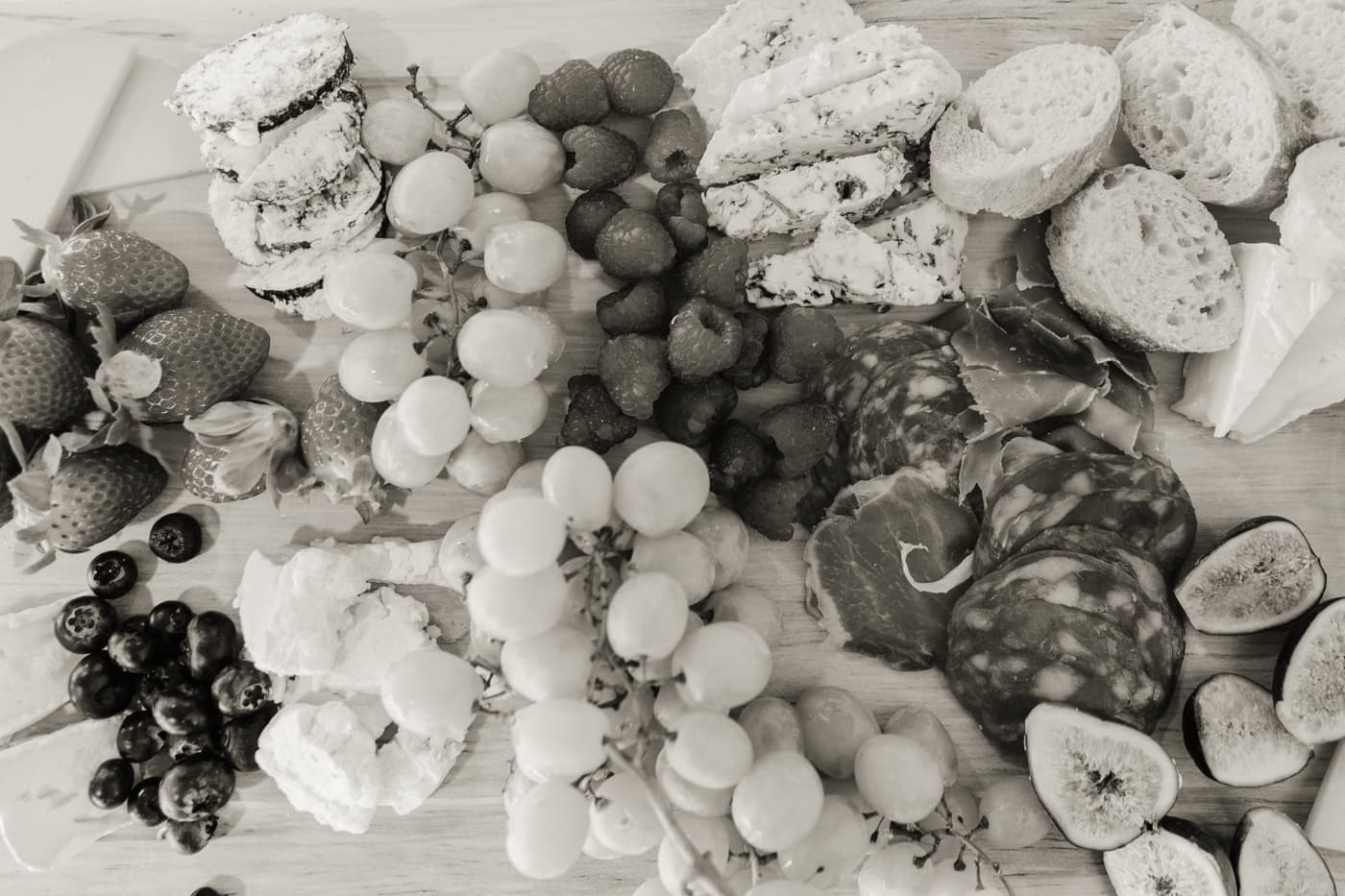
- Fill every remaining gap. Grapes in small bunches, berries, dried apricots, nuts poured into the spaces. This is the step people skip and it is the one that does most of the work.
- Garnish. A few sprigs of rosemary or thyme tucked into gaps. Thirty seconds, and it is the difference between food on a board and a board.
The 3-3-3 starting point
Three cheeses, three meats, three accompaniments. It is a shopping heuristic rather than a rule, and it works because it forces variety.
| Category | Pick three by contrast |
|---|---|
| Cheese | One soft, one hard and aged, one with an opinion (blue, washed rind, smoked) |
| Meat | One thin and delicate (prosciutto), one firm and sliced (salami), one different (coppa, chorizo, pâté) |
| Accompaniments | One sweet (honey, jam, dried fruit), one sharp (cornichons, olives), one crunchy (nuts, crackers) |
The full shopping list with quantities is in what goes on a charcuterie board.
How much food
As a starter before a meal, budget roughly 2 ounces of cheese and 2 ounces of meat per person. If the board is the meal, roughly double both. For larger numbers, see how many appetizers per person and building for a crowd.
Temperature is the free upgrade
Take the cheese out of the fridge forty-five minutes before you serve it. Cold suppresses aroma and stiffens texture, and a mid-range cheese at room temperature genuinely tastes better than an expensive one served cold.
This costs nothing and improves a board more than spending twice as much on the cheese would.
Equipment
A board big enough for your guest count — the size guide has the numbers — small bowls for the wet things, and knives that actually cut. That is genuinely all of it.
If you are buying the board itself, our picks are here.
The picks in full
We have not lab-tested these products. Picks are chosen from live listings, sustained customer feedback at scale, material quality and fit for hosting — our full methodology.
Representative category photo, not the product listing image.
1. Shanik Acacia Wood Charcuterie Board
Heavier and more figured than any bamboo board, with grain variation that means no two look alike. This is the one that stays out on the counter rather than going back in the cupboard.
Key specs
- Solid acacia
- Noticeably thicker than bamboo boards
- Juice groove on most sizes
- Reversible
What works
- Acacia's color variation reads as furniture, not kitchenware
- Thick enough that it does not flex when you carry it loaded
- Doubles honestly as a cutting board
What does not
- Heavy once it is full, which matters if you are carrying it outside
- Needs oiling a few times a year or it goes dull and gray
#ad We may earn a commission · We do not print prices — see the live one on Amazon
Representative category photo, not the product listing image.
2. ChefSofi Acacia Charcuterie Board Set
A 13-inch acacia board that ships with four knives and four ceramic bowls, which is the difference between a board that holds cheese and a board that holds a whole spread.
Key specs
- 13 in acacia board
- Four knives
- Four ceramic bowls
- Slide-out storage
What works
- The bowls solve olives, nuts and jam, which is where most boards fall apart
- Acacia at a set price that usually buys bamboo
- Bowls lift out so the board cleans properly
What does not
- Four bowls on a 13-inch board leaves less room than you expect
- Ceramic bowls add real weight to carry
#ad We may earn a commission · We do not print prices — see the live one on Amazon
Representative category photo, not the product listing image.
3. BOSKA Cheese Knife Set
A specialist cheese company's knives rather than a board maker's afterthought. These go through a hard aged cheese, which is exactly where bundled knives fail.
Key specs
- German steel
- Cheese-specific blade shapes
- Sold as focused sets
What works
- Cuts hard cheese without the blade skating off
- Blade shapes are matched to cheese types, not decorative
- From a company that only makes cheese tools
What does not
- Costs more than the knives bundled with a board
- No wooden handle option in every set
#ad We may earn a commission · We do not print prices — see the live one on Amazon
Common questions
How do you build a charcuterie board step by step?
Place the bowls first, then the cheeses spread apart, then the meats in the gaps between them, then crackers and bread along the edges, then fruit and nuts to fill every remaining space, and finally garnish. Working outward from fixed points is what makes it look designed rather than scattered.
What is the 3-3-3 rule for charcuterie boards?
Three cheeses, three meats and three accompaniments. It is a starting formula rather than a law, and it works because it guarantees variety of texture and flavor without overwhelming a board or a shopper.
How far in advance can you make a charcuterie board?
Assemble up to four hours ahead, cover with cling film and refrigerate. Add crackers, sliced apple, pear and anything that goes soggy at the last minute. Take the board out about forty-five minutes before serving so the cheese is not fridge-cold.
Should cheese be served cold?
No. Cheese served straight from the fridge tastes of much less, because cold suppresses aroma and flattens texture. Forty-five minutes at room temperature makes a bigger difference to how a board tastes than which cheeses you bought.
How do you keep a charcuterie board from looking empty?
Fill every gap. The visual trick is that abundance comes from no bare wood showing, so nuts, berries, small fruit and herbs go into every space left after the main items. Under-filling is the single most common mistake.