18/10 vs 18/0 Flatware
Two numbers on a box, one of which predicts whether your forks will rust. The other predicts almost nothing.
Heads up: we earn a commission from qualifying purchases made through the links on this page, at no extra cost to you. It never changes which products we pick or the order we rank them in. Full disclosure.
Quick picks
Tap any row to jump to the full write-up further down the page.
| # | Product | Best for | Score | Price |
|---|---|---|---|---|
| 1 | 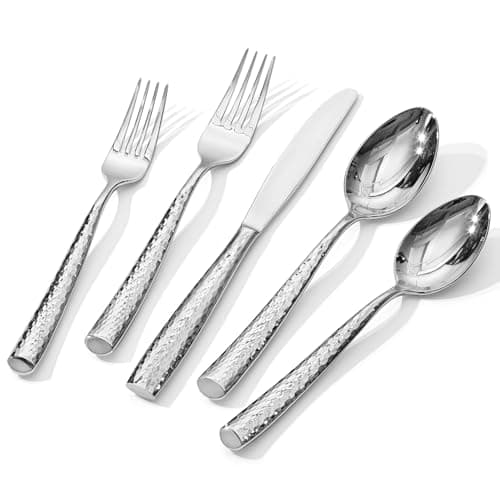 KINGSTONE Hammered Silverware SetBest overall | Best overall | 8.6 | $119.99 · View on Amazon(20% off) #ad We may earn a commission · Price as of November 2, 2026 |
| 2 | 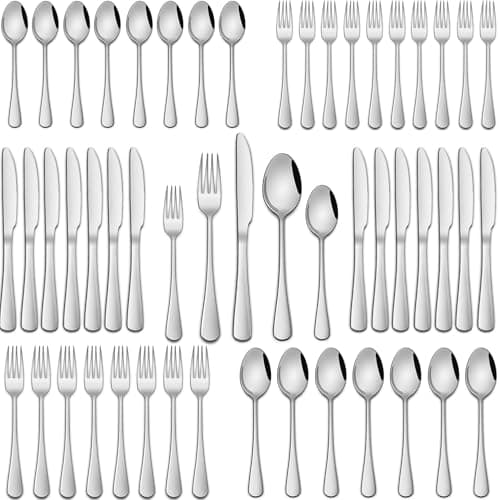 DEHOV Stainless Flatware SetEveryday value | Everyday value | 8.0 | $16.99 · View on Amazon #ad We may earn a commission · Price as of November 2, 2026 |
| 3 | 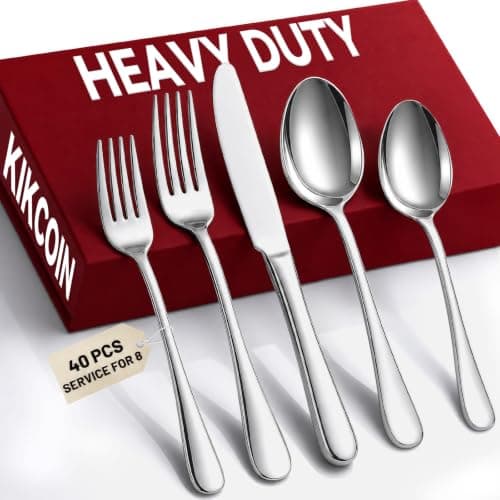 KIKCOIN Silverware SetBig households | Big households | 7.8 | $29.98 · View on Amazon(17% off) #ad We may earn a commission · Price as of November 2, 2026 |
| 4 | 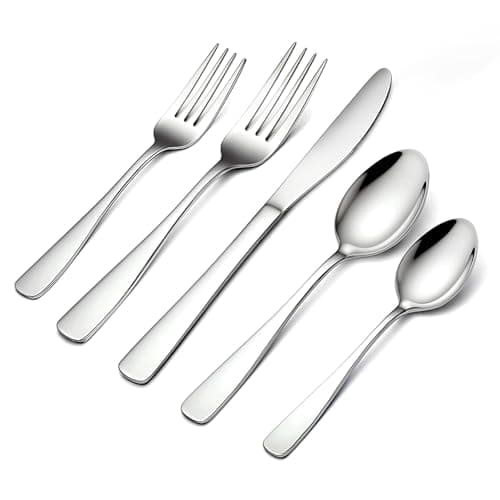 BEWOS Flatware SetFinished handles | Finished handles | 7.7 | $9.98 · View on Amazon(23% off) #ad We may earn a commission · Price as of November 2, 2026 |
Scores are our editorial rating, not a lab test result — see how we pick.
18/10 means 18 percent chromium and 10 percent nickel; 18/0 means 18 percent chromium and no nickel. The nickel is why 18/10 resists rust better and has a warmer shine, and it is the reason 18/10 costs more. Buy 18/10 for the set you expect to keep, and 18/0 without guilt for an outdoor set, a party set or a first apartment.
The two grades, side by side
| 18/10 | 18/0 | |
|---|---|---|
| Composition | 18% chromium, 10% nickel | 18% chromium, no nickel |
| Corrosion resistance | High | Adequate, less forgiving of neglect |
| Finish | Warmer, deeper shine | Slightly cooler and flatter |
| Magnet test | Magnet slides off | Magnet sticks |
| Weight in the hand | Usually heavier, though that is gauge, not grade | Often thinner, but not always |
| Price | Higher | Lower |
| Buy it for | The set you keep for a decade | Outdoors, parties, a second set |
What the numbers actually describe
Both numbers describe the alloy, not the quality of manufacture. The first is chromium, which reacts with oxygen to form the thin passive layer that makes steel “stainless” in the first place. At 18 percent, both grades have plenty.
The second is nickel, and nickel does two things: it stabilizes the steel in a structure that resists pitting better, and it gives the surface a warmer, less clinical shine. Take the nickel out and you get a cheaper, slightly harder, slightly more magnetic steel that is more likely to spot if it is treated badly.
The magnet test
Nickel-bearing 18/10 is austenitic, which in practice means a fridge magnet will not stick to a fork. 18/0 is ferritic and the magnet holds. It takes two seconds and it is the only way to check a set whose listing is vague.
One caveat worth knowing before you distrust a good set: knife blades are usually a different alloy from the handles, chosen because it hardens and holds an edge. A magnet sticking to a knife blade on an otherwise non-magnetic set is normal and is not a sign you were sold 18/0.
Where our picks sit
Of the four sets here, the KINGSTONE listing is the one that states 18/10 explicitly — 40 pieces, service for eight, hammered handles, dishwasher safe. The other three list “stainless steel” without naming a grade, which is extremely common and is exactly the situation the magnet test exists for. We do not assign a grade a listing does not claim.
- KINGSTONE: stated 18/10, service for eight. The set to buy if you want this settled.
- DEHOV: stainless, mirror finish, service-for-eight options. Everyday value.
- KIKCOIN: stainless, large piece counts, service for eight and twelve. For big households.
- BEWOS: stainless, colored and matte finishes, service for four and eight. For when the finish is the point.
How to make either grade last
- Do not leave it wet in the basket. This causes more spotting than grade ever does.
- Keep it away from other metals in the dishwasher. Steel touching aluminum in a wet basket pits both.
- Rinse off salt and acid before they sit. Vinaigrette and lemon left overnight will mark 18/0 and can mark 18/10.
- Load handles down for forks and spoons, up for knives. Cleaner on the business end, safer on unloading.
For the sets compared on their own merits rather than on alloy, the flatware roundup goes through all four in full.
Grade is the first of five decisions. How to choose flatware covers the other four — weight, finish, piece count and handle shape — in the order they matter.
The picks in full
We have not lab-tested these products. Picks are chosen from live listings, sustained customer feedback at scale, material quality and fit for hosting — our full methodology.
Product image from Amazon, refreshed daily.
1. KINGSTONE Hammered Silverware Set
18/10 stainless in a 40-piece service for eight with a hammered handle that costs nothing extra and makes a plain table look finished.
Key specs
- 18/10 stainless steel
- 40 pieces, service for 8
- Hammered handles
- Dishwasher safe
What works
- 18/10 is the corrosion-resistant grade, not the cheaper 18/0
- Service for 8 in one box, which is the number that matters
- Hammered texture hides water spots
What does not
- Hammered handles trap residue if the dishwasher is overloaded
- Heavier in the hand than thin budget flatware
#ad We may earn a commission · Price as of November 2, 2026
Product image from Amazon, refreshed daily.
2. DEHOV Stainless Flatware Set
Plain, well-balanced stainless at an everyday price. The set you buy when flatware should be invisible rather than decorative.
Key specs
- Stainless steel
- Mirror finish
- Service for 8 options
- Dishwasher safe
What works
- Mirror finish cleans up with no effort
- Balance is better than the price suggests
- Plain enough to match any plate
What does not
- Mirror finish shows every fingerprint and water spot
- Nothing about it is memorable, by design
#ad We may earn a commission · Price as of November 2, 2026
Product image from Amazon, refreshed daily.
3. KIKCOIN Silverware Set
Large-count sets that cover a household where the dishwasher runs once a day and half the forks are always in it.
Key specs
- Stainless steel
- Large piece counts
- Service for 8 and 12
- Dishwasher safe
What works
- Enough pieces that you are not washing mid-party
- Service for 12 exists, which is rare at this price
- Consistent piece quality across the set
What does not
- Large sets need real drawer space
- Finish is a step below the 18/10 sets
#ad We may earn a commission · Price as of November 2, 2026
Product image from Amazon, refreshed daily.
4. BEWOS Flatware Set
Finished and colored handle options, black, gold and matte, for when the flatware is meant to be part of the table setting.
Key specs
- Stainless steel
- Colored and matte finishes
- Service for 4 and 8
What works
- Color options that coordinate with dark or earth-toned plates
- Finish is even across the set
- Adds a designed look for very little money
What does not
- Coated finishes wear at contact points over years of dishwashing
- Colored flatware dates faster than plain steel
#ad We may earn a commission · Price as of November 2, 2026
Common questions
What does 18/10 mean on flatware?
18 percent chromium and 10 percent nickel in the steel. The chromium is what makes it stainless; the nickel is what gives it the warm shine and most of its corrosion resistance. 18/0 has the same chromium and no nickel.
Is 18/10 better than 18/0?
For forks and spoons, yes, and the difference shows up as rust spots rather than as anything you notice on day one. 18/0 is more prone to pitting and water spotting, especially if it sits wet in a dishwasher basket. For knife blades the picture flips: blade steel is often deliberately a harder, lower-nickel alloy because it holds an edge better.
How can I tell 18/10 from 18/0?
Hold a magnet to it. Nickel-bearing 18/10 is essentially non-magnetic, so a fridge magnet slides off. 18/0 is magnetic and the magnet sticks. It is not a laboratory test - knife blades stick either way - but on a fork or spoon it is reliable.
Does 18/0 flatware rust?
It can, and the usual culprit is not the steel but the routine: left wet in a basket, in contact with another metal, or exposed to salt and acid overnight. Rinsing and drying promptly keeps 18/0 looking fine for years. Neglect it and the spots appear where 18/10 would have shrugged.
Is 18/0 flatware a bad buy?
No. It is the right buy for an outdoor set, a second set for a party, a first apartment, or anywhere loss and damage are more likely than long service. The grade is a trade, not a defect.
What about 18/8 flatware?
18 percent chromium, 8 percent nickel - effectively a slightly leaner version of 18/10 and a close cousin in practice. If a listing says 18/8, treat it as the same tier as 18/10 rather than as the same tier as 18/0.