The Best Cloth Napkins
Almost everyone who buys cloth napkins stops using them within a year, and the reason is always the same: they need ironing. Choose for the laundry first and the table second.
Heads up: we earn a commission from qualifying purchases made through the links on this page, at no extra cost to you. It never changes which products we pick or the order we rank them in. Full disclosure.
Quick picks
Tap any row to jump to the full write-up further down the page.
| # | Product | Best for | Score | Price |
|---|---|---|---|---|
| 1 | 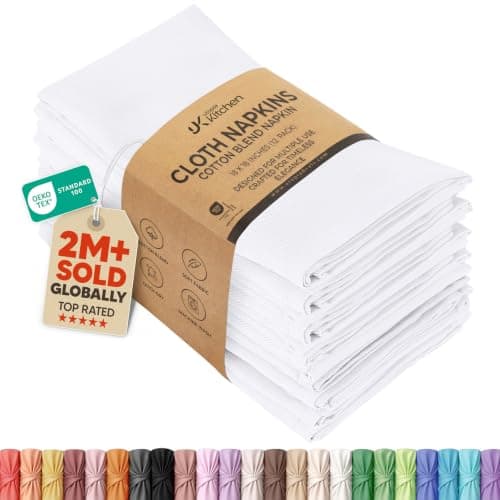 Utopia Kitchen Cotton Blend Cloth Napkins, 12 PackThe everyday workhorse | The everyday workhorse | 8.6 | $16.99 · View on Amazon #ad We may earn a commission · Price as of November 2, 2026 |
| 2 | 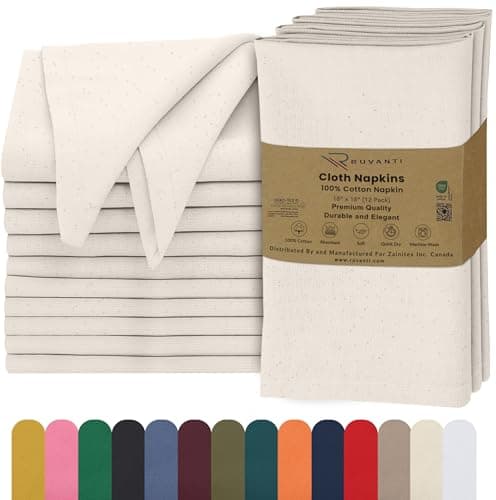 Ruvanti 100% Cotton Cloth Napkins, Set of 12Pure cotton in color | Pure cotton in color | 8.3 | $21.99 · View on Amazon #ad We may earn a commission · Price as of November 2, 2026 |
| 3 | 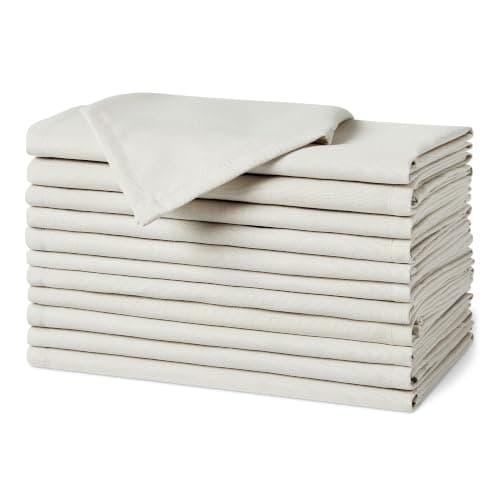 Amazon Basics Stain and Wrinkle Resistant Cloth Napkins, 12-PackNever ironing again | Never ironing again | 8.0 | $13.64 · View on Amazon #ad We may earn a commission · Price as of November 2, 2026 |
| 4 | 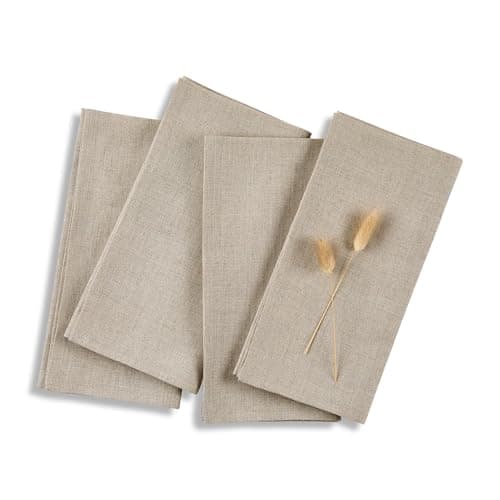 Solino Home 100% Linen Dinner Napkins, Set of 4A properly set table | A properly set table | 8.1 | $64.99 · View on Amazon #ad We may earn a commission · Price as of November 2, 2026 |
| 5 | 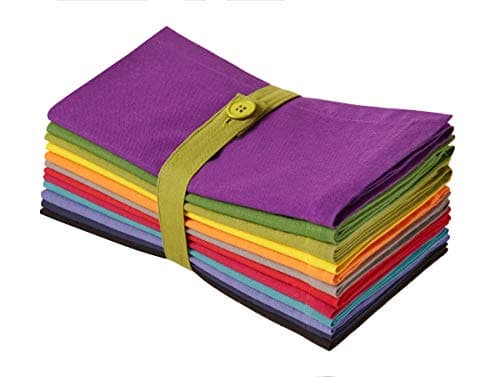 COTTON CRAFT Multicolor Cloth Napkins, 12 PackColor without a theme | Color without a theme | 8.0 | $17.99 · View on Amazon #ad We may earn a commission · Price as of November 2, 2026 |
Scores are our editorial rating, not a lab test result — see how we pick.
Cloth napkins are the cheapest upgrade a table can get, and the one most households abandon. The pattern is predictable: somebody buys a set of twelve, uses them for three dinners, discovers that getting them back to flat means standing at an ironing board, and the napkins move to the back of a drawer where the paper ones never were. The table goes back to looking like a weeknight.
So the first decision in this category is not color, pattern or thread count. It is how much laundry effort you will genuinely tolerate, because that single answer eliminates most of the market for you. Below are the five criteria that decide whether a napkin stays in service, the sizes and fibers explained in plain terms, and five sets that answer the question differently - from a twelve-pack you can live with forever to four pieces of real linen for a table you have actually laid.
How we judged these napkins
We have not lab-tested textiles. These picks come from live listing data and the manufacturers' stated specifications, judged against five criteria that decide whether a napkin gets used rather than stored.
1. What it looks like out of the dryer
This is the criterion that beats every other one, because it decides whether the napkins are used weekly or twice a year. A cotton blend or a wrinkle-resistant synthetic comes out usable. Pure cotton comes out creased but recoverable with a snap and an immediate fold. Linen comes out rumpled and stays rumpled unless you press it, which linen people regard as the point and everyone else regards as a chore. None of these is wrong; buying the wrong one for your household is.
2. Size, and whether it covers a lap
Napkins are sold between about 15 and 22 inches square and the difference is larger than it sounds. At 20 inches a napkin drapes over a lap and stays there. At 17 it perches, slides off when someone stands up, and ends under the table. If the napkins are mainly for wiping hands beside a plate, 17 is fine and cheaper. If people are sitting down to a long dinner, buy 18 at minimum and prefer 20.
3. Fiber, which is really a laundry decision
Cotton absorbs well, washes hot, bleaches, and creases. Linen absorbs better, lasts longer, softens with age, and creases more. Polyester and poly-cotton blends resist stains and wrinkles and absorb worse - they push a spill around before taking it up. The honest ranking for a table is linen, then cotton, then blends. The honest ranking for a household that does its own laundry is often exactly reversed.
4. Count, against the size of your table
A set of four is two place settings in practice, because half your napkins are always in the wash. Sets of twelve exist because that is what a table of six needs to stay stocked, and the cost per napkin drops sharply at the larger counts. Buying four beautiful napkins and then not having clean ones on a Tuesday is the most common mistake in this category.
5. Color, judged by what it does to stains
White is the only color that can be restored: bleach exists, and a white napkin that has been through a dinner party can come back to white. Dark solids never look stained in the first place because nothing shows against them. Pale colors are the trap - they mark as readily as white and cannot be bleached. An assorted multi-color pack is the sneaky third answer, because a tired napkin among eleven different ones does not read as tired at all.
Napkin sizes, and what each is for
| Size | Sold as | Right for | Wrong for |
|---|---|---|---|
| 12 to 14 in | Cocktail / beverage napkin | Standing drinks, under a glass | A seated meal |
| 17 in | Lunch napkin | Everyday, breakfast, kids | A long dinner on a lap |
| 18 in | Everyday dinner napkin | The all-purpose home size | Nothing much - this is the default |
| 20 to 22 in | Formal dinner napkin | Holidays, laid tables, long meals | A quick weeknight wash cycle |
The picks
Utopia Kitchen cotton blend, 12 pack: the default
Twelve plain 18-inch napkins in a cotton blend, at the budget end of the category. Eighteen inches is the right everyday size, twelve is the right count for a household that eats at the table, and the blend is the reason the set survives: it comes out of a dryer flat enough to fold and put away without an iron entering the story. This is the set that converts a paper-napkin household.
The honest cons. A blend never has the heavy drape of pure cotton, and if you handle the linen pick alongside it the difference is obvious. White shows everything, so a red wine spill left overnight is a permanent member of the set. And 18 inches is standard rather than generous on a lap at a long dinner.
Ruvanti 100% cotton, set of 12: the upgrade
The same twelve-count, 18-inch format in pure cotton rather than a blend, sold across a run of solid colorways including an undyed natural. Pure cotton is heavier in the hand, noticeably more absorbent, and looks like cloth rather than like something engineered to resist being cloth. If you want the practical twelve-pack format without the synthetic feel, this is the trade.
Against it: 100% cotton creases hard, so these either get pulled from the dryer damp and folded immediately or they get pressed. A new dyed set wants a solo wash before it meets anything pale. And it costs more per napkin than the blend for the same size and count - you are paying for the fiber, which is the entire point.
Amazon Basics stain and wrinkle resistant, 12-pack: for the household that will not iron
Sold on one promise, which is that it comes out of the wash ready to use, and that promise is the only honest reason to buy it. At 17 inches these are lunch-sized rather than dinner-sized, and the synthetic hand is obvious next to cotton. They are also the napkins most likely to still be in weekly use in three years, in a house where the cotton set would have quietly retired to the drawer.
The real drawbacks are the ones the material cannot escape. A synthetic napkin is less absorbent, so it moves a spill before it takes it up. It feels slippery rather than soft. And on a properly laid table it reads as catering stock. For breakfast, children and weeknights, none of that matters.
Solino Home 100% linen, set of 4: for a table you have laid
Real linen at 20 inches square - the fiber and the size that a restaurant uses, and the one set here that makes a table look considered rather than merely tidy. Linen also improves: it gets softer and more absorbent with every wash instead of thinning out, which is why linen napkins get handed down and polyester ones do not. It is the right companion to a table you have gone to the trouble of setting, and our guide to how to set a table covers where the napkin actually goes.
Three honest cons, and they are not small. This is by far the highest cost per napkin here. Four napkins does not cover a dinner party, so a table of eight means buying two or three boxes. And linen wrinkles the instant it is touched - if a rumpled napkin reads as sloppy to you rather than as relaxed, buy the cotton instead and spend the difference on better flatware.
COTTON CRAFT multicolor, 12 pack: the stain-proof strategy
Twelve 100% cotton napkins in an assortment of colors rather than a matched set. The point is not decoration, it is maintenance: when no two napkins match, a tired one does not stand out against eleven identical siblings, and a set stays presentable for years longer than a matched white one does. At 17 inches they are everyday-sized, and the per-napkin cost is close to the blends because of the pack size.
What you give up: an assortment cannot do a formally laid table, where matching is the whole convention. Pure cotton creases, so guests mean a quick press. And colorways vary between production runs, so a reorder in two years will not match what you have.
How many you need, and where they live
Two napkins per seat is the number that keeps cloth in circulation. One set on the table, one set clean in the drawer, and the laundry cycle never becomes a reason to reach for paper. For a table of six that is twelve napkins; for eight it is sixteen, which is a twelve-pack plus a four. Buy to the table you actually have rather than to the dinner party you host twice a year, then add a second twelve-pack before the holidays rather than buying sixteen premium napkins you use once.
Store them flat and folded rather than rolled, in the same drawer as the placemats if you use them, so that setting the table is one trip rather than three. If you host often enough that the napkins live on a sideboard, a shallow tray keeps the stack from migrating - our serving tray picks include several that are the right shape for exactly that.
Caring for them so they last
Wash cloth napkins with towels rather than with clothes, warm rather than hot for colors, and skip fabric softener - it coats the fibers and makes cotton less absorbent over time, which is the opposite of what a napkin is for. Treat stains before they go anywhere near a dryer, because dryer heat is what makes a stain permanent. Linen can be washed as often as you like and genuinely gets better; it is the pressing, not the washing, that is the work.
Retire a napkin when it thins at the hem rather than when it stains, and keep the retirees as kitchen cloths. A twelve-pack bought now should be doing weekly service for the better part of a decade, which is the comparison that makes cloth cheaper than paper even before you count how much better the table looks. If you are building the rest of that table at the same time, start with the dinnerware and let the napkins follow the plates rather than the other way around.
Which one to buy
- Best overall: Utopia Kitchen cotton blend, 12 pack. The right size, the right count, and it never needs ironing.
- Best pure cotton: Ruvanti 100% cotton, set of 12. Heavier, more absorbent, same practical format.
- Best if you refuse to iron: Amazon Basics stain and wrinkle resistant, 12-pack. Comes out of the dryer finished.
- Best for a laid table: Solino Home 100% linen, set of 4. Twenty inches of the real thing, at a real price.
- Best for hiding stains: COTTON CRAFT multicolor, 12 pack. Nothing looks worn when nothing matches.
The picks in full
We have not lab-tested these products. Picks are chosen from live listings, sustained customer feedback at scale, material quality and fit for hosting — our full methodology.
Product image from Amazon, refreshed daily.
1. Utopia Kitchen Cotton Blend Cloth Napkins, 12 Pack
Twelve plain 18-inch napkins at the budget end of the category, in a cotton blend that comes out of the dryer flat enough to use without touching an iron. This is the set you buy to stop using paper.
Key specs
- 12 napkins
- 18 x 18 in
- Cotton blend
- Machine washable and reusable
What works
- Twelve napkins is the right count for a table of eight plus spares
- The blend creases far less than pure cotton, so a shake and a fold is usually enough
- Plain white goes with any dinnerware and bleaches back when something spills
What does not
- A blend never gets the dense, heavy drape that pure cotton or linen has
- White shows red wine and turmeric permanently if you leave it overnight
- 18 inches is a standard size, not a generous one, on a lap
#ad We may earn a commission · Price as of November 2, 2026
Product image from Amazon, refreshed daily.
2. Ruvanti 100% Cotton Cloth Napkins, Set of 12
The same twelve-count, 18-inch format as the white workhorse but in 100% cotton, sold in a run of solid colorways including an undyed natural. The upgrade you feel in the hand.
Key specs
- 12 napkins
- 18 x 18 in
- 100% cotton
- Sold in solid colors as well as white
What works
- Pure cotton is noticeably heavier and more absorbent than a blend
- Sold in solid colorways, so a darker set hides wine between washes
- Twelve in a box means a full table and a second round without laundry
What does not
- 100% cotton creases hard - these want ironing or a very fast dryer pull
- A dyed set can bleed on the first two washes, so wash a new one alone
- Costs more per napkin than the blend for the same size and count
#ad We may earn a commission · Price as of November 2, 2026
Product image from Amazon, refreshed daily.
3. Amazon Basics Stain and Wrinkle Resistant Cloth Napkins, 12-Pack
Sold on one promise - that it comes out of the wash ready to use - and that is the honest reason to own it. A synthetic napkin for a household that will not iron and should stop pretending it will.
Key specs
- 12 napkins
- 17 x 17 in
- Stain and wrinkle resistant finish
- Machine washable
What works
- Comes out of a dryer essentially flat, which no pure cotton napkin does
- Shrugs off the oily stains that set permanently in cotton
- A cheap route to twelve matching napkins that always look presentable
What does not
- A synthetic napkin feels slippery next to cotton and never drapes as well
- Less absorbent than cotton, so it pushes a spill around before soaking it up
- 17 inches is at the small end of dinner-napkin sizing
#ad We may earn a commission · Price as of November 2, 2026
Product image from Amazon, refreshed daily.
4. Solino Home 100% Linen Dinner Napkins, Set of 4
Real linen at 20 inches square - the size and the fiber that restaurant tables use. Expensive for four napkins, and the only set here that makes a table look considered rather than merely tidy.
Key specs
- 4 napkins
- 20 x 20 in
- 100% linen
- Natural undyed colorway
What works
- 20 inches is a true dinner napkin - it covers a lap instead of perching on it
- Linen gets softer and more absorbent with every wash rather than wearing out
- The one set here that looks like it belongs on a table laid for a holiday
What does not
- By far the highest cost per napkin in this roundup
- Four napkins does not cover a dinner party - you are buying two or three boxes
- Linen wrinkles the moment you look at it, which is either the charm or the problem
#ad We may earn a commission · Price as of November 2, 2026
Product image from Amazon, refreshed daily.
5. COTTON CRAFT Multicolor Cloth Napkins, 12 Pack
Twelve 100% cotton napkins in an assortment of colors rather than a matched set, which is the quiet trick for hiding stains: a napkin nobody can compare to eleven identical ones never looks tired.
Key specs
- 12 napkins
- 17 x 17 in
- 100% cotton
- Assorted colors in one pack
What works
- Mixed colors mean a stained napkin does not stand out against a matching set
- Pure cotton at close to blend pricing because of the pack size
- Doubles as the holiday set without buying a seasonal pattern you use twice
What does not
- An assortment will not suit a formally laid table, where matching is the point
- 100% cotton again means creasing, so plan on a quick press for guests
- Colors vary between production runs, so a later reorder may not match
#ad We may earn a commission · Price as of November 2, 2026
Common questions
What size should a cloth napkin be?
Twenty inches square is the traditional dinner napkin and the size restaurants use, because it covers a lap properly. Eighteen inches is the most common size sold for home use and is the sensible default. Seventeen inches is a lunch napkin - fine beside a plate, a little mean on a lap. Anything under about 15 inches is a cocktail napkin, which is a different object meant to go under a glass.
How many cloth napkins do I need?
Two per seat at your table, as a baseline. That gives you a clean set while the other set is in the wash, which is what actually keeps cloth napkins in circulation instead of in a drawer. For a table of six that is twelve napkins, which is exactly why twelve-packs exist. If you host beyond your seat count, buy to your biggest realistic dinner rather than to your everyday one.
Do cloth napkins have to be ironed?
Pure cotton and linen do if you want them crisp; blends and wrinkle-resistant finishes mostly do not. The practical trick with any of them is to pull them out of the dryer while they are still slightly damp, give each one a sharp snap, and fold it immediately - that gets a cotton napkin about 80 percent of the way to ironed for about five seconds of work per napkin.
Are cloth napkins actually cheaper than paper?
Over a few years, yes, though it is not the reason to switch. A twelve-pack of cotton napkins costs roughly what a household spends on paper napkins in a few months, and the cloth ones last for years of weekly washing. The real argument is that a cloth napkin changes how a table reads at no ongoing cost, which paper cannot do at any price.
What color cloth napkins should I buy?
White if you are willing to bleach, because white is the only color you can restore rather than merely live with. A mid-tone or dark solid if you are not - stains on a dark napkin disappear between washes. The one trap is a pale colored napkin, which shows marks like white but cannot be bleached back.
How do I get red wine out of a cloth napkin?
Deal with it before it dries - cold water from the back of the fabric, pushing the stain out rather than through, then a normal wash. Do not put a stained napkin in a hot dryer, because heat is what sets a stain permanently. Anything oily wants dish soap worked in first. This is the honest argument for dark napkins at a dinner party and white ones at breakfast.