Fiestaware Alternatives
Fiesta is bright, heavy, American-made and bought a piece at a time. If you want some of that without that set, here is what comes closest - and exactly where each one gives ground.
Heads up: we earn a commission from qualifying purchases made through the links on this page, at no extra cost to you. It never changes which products we pick or the order we rank them in. Full disclosure.
Quick picks
Tap any row to jump to the full write-up further down the page.
| # | Product | Best for | Score | Price |
|---|---|---|---|---|
| 1 | 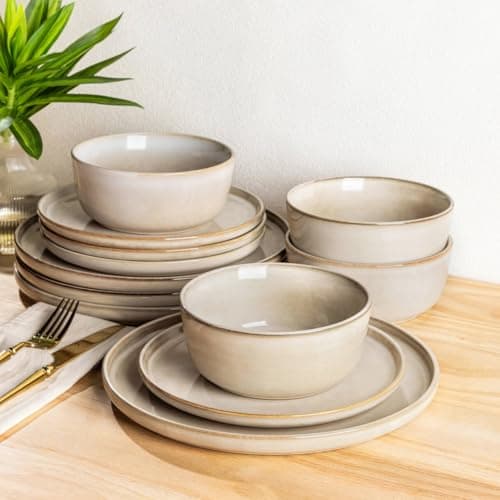 AmorArc Stoneware Dinnerware SetBest overall | Best overall | 8.8 | $137.95 · View on Amazon #ad We may earn a commission · Price as of November 24, 2026 |
| 2 | 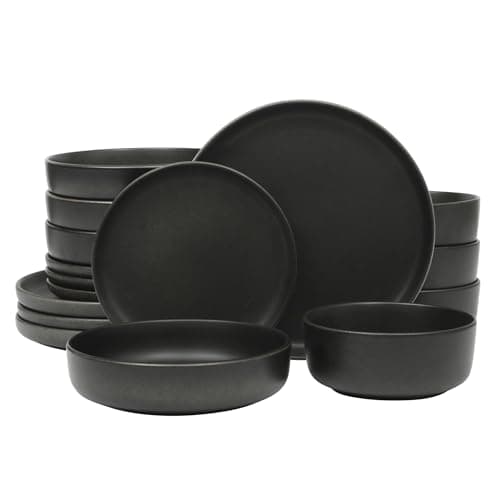 Gibson Elite Pasco Dinnerware SetVersatility | Versatility | 8.5 | $69.99 · View on Amazon #ad We may earn a commission · Price as of November 24, 2026 |
| 3 | 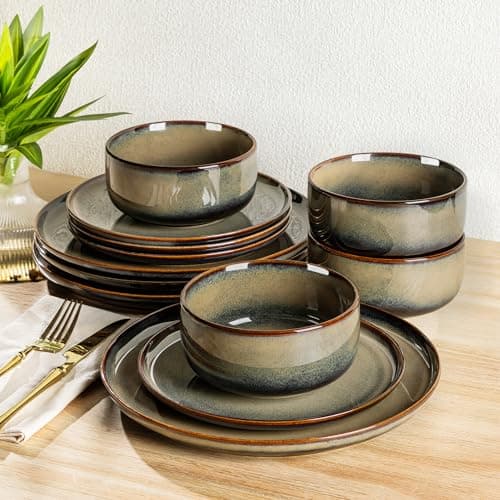 TheTerra Stoneware Dinnerware SetEarth-tone tables | Earth-tone tables | 8.0 | $59.47 · View on Amazon(15% off) #ad We may earn a commission · Price as of November 24, 2026 |
| 4 | 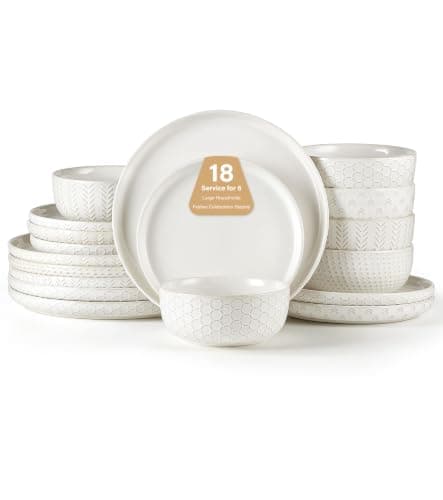 Lareina Stoneware Dinnerware SetOrganic shapes | Organic shapes | 8.0 | $123.49 · View on Amazon(23% off) #ad We may earn a commission · Price as of November 24, 2026 |
| 5 | 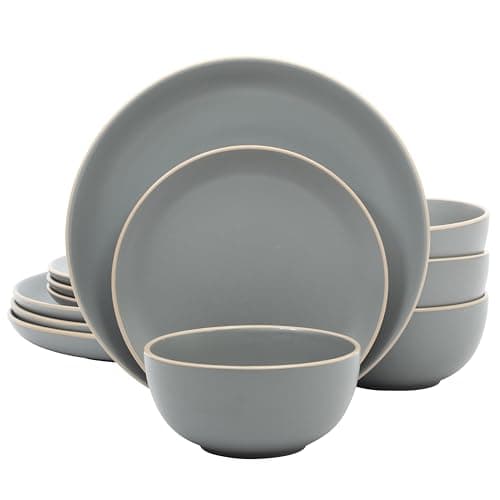 Gibson Home Rockaway Dinnerware SetLowest cost per piece | Lowest cost per piece | 8.2 | $36.09 · View on Amazon(10% off) #ad We may earn a commission · Price as of November 24, 2026 |
Scores are our editorial rating, not a lab test result — see how we pick.
The closest alternative is the AmorArc Stoneware Set - a reactive-glaze service for eight that arrives in one box, which is the thing Fiesta deliberately does not do. The budget pick is Gibson Home Rockaway, the cheapest honest route into a colored ceramic table. If what you actually liked about Fiesta was that it covers every bowl job, the Gibson Elite Pasco set ships two bowl sizes instead of one. Prices here are read live from each listing with the date they were checked.
It is worth being precise about what Fiesta is, because the alternatives only make sense measured against it. Fiesta is fully vitrified ceramic made in Newell, West Virginia, by The Fiesta Tableware Company - formerly the Homer Laughlin China Company, which has made the line since 1936. The body is fired until it is effectively non-porous, which the maker describes as industrial strength and says will not take on odors or moisture. It is sold in solid glossy colors, piece by piece, so retailers list an individual Fiesta dinner plate or salad plate by color rather than only a boxed set. There is a chip replacement warranty of five years on first-quality pieces.
That is a genuinely unusual product and this page is not an argument against it. If you want one specific color, or you want to add two plates a year for a decade, nothing here replaces it.
What sends people looking is almost always one of three things, and each points at a different alternative. The first is the buying model: piece-by-piece pricing is a slow, pleasant way to build a table and a frustrating way to set eight places before Thanksgiving. The second is the finish - solid high-gloss color is a strong look, and the current alternative is a reactive or matte glaze with depth rather than flat color. The third is weight, because a vitrified body is heavy, and a full stack of twelve plates is a real lift for some households.
What to match on, and what you give up
| Set | Matches Fiesta on | Gives ground on |
|---|---|---|
| AmorArc stoneware | Color with depth; service for 8 in one box | Reactive glazes vary, so replacements differ |
| Gibson Elite Pasco | Covers every bowl job; color range | Sold as service for 4, so eight is two boxes |
| TheTerra stoneware | Strong committed color on the table | Narrow open-stock range for replacements |
| Lareina stoneware | Considered color range; hides small chips | Matte marks with cutlery; stacks less neatly |
| Gibson Home Rockaway | Color at the lowest cost per piece | Thinner walls; color varies between boxes |
The pattern in that table is the honest summary of the page. Nothing here matches Fiesta on all three of its defining traits at once, because no other line on a normal budget is both vitrified to that density and sold as open stock in dozens of solid colors. What the alternatives do is pick one of the three and beat it on price or convenience.
How we judged these
None of these has been tested in a lab here and no plate on this page has been dropped on a tile floor to compare. The comparison is drawn from live listings, stated specifications, the manufacturers' own published material and how the materials behave, on four axes.
1. Color, and what kind of color
This is the first reason anyone buys Fiesta. Solid gloss color is a specific effect: flat, saturated, and it reads as a deliberate design choice on a table. Reactive glaze is the modern answer and a different effect - variation across the surface, so the plate reads as handmade rather than manufactured. Neither is better. If you genuinely want the flat solid look, be aware that every ceramic alternative here is going for the other one.
2. How you buy eight place settings
The practical axis and the one most pages skip. Fiesta is bought a piece at a time; every set below is bought as a box of twelve or sixteen pieces for four. The thing to check before ordering is whether the set is sold as service for four or for eight, because two boxes of four from different production runs can differ slightly in a reactive glaze. Our dinnerware sets for 8 page only lists sets that come as a single service for eight.
3. Weight in the hand
A vitrified body is dense, which is why Fiesta feels like it will outlive you and also why the cupboard shelf complains. Most stoneware here is lighter but not light - if weight is the actual problem, the honest answer is a laminated glass or melamine set rather than any stoneware, which is the argument we run through on stoneware vs porcelain vs melamine.
4. What happens when a piece chips
Every ceramic chips eventually. What differs is how the chip shows and what it costs to fix. On a solid-color vitrified plate the body under the glaze is a similar shade, so a rim chip is subtle, and Fiesta's five-year chip warranty on first-quality pieces covers part of it. On a dark reactive glaze a chip shows pale and obvious. On a set with no open-stock availability, one broken plate means either an odd plate or a new set. We go further into this on chip-resistant dinnerware.
The one thing none of these replace
Worth saying clearly, because it is the reason the comparison has a limit. What Fiesta sells is not really a dinnerware set - it is a color library you can keep drawing from. A line that stays in production for decades, in solid colors listed by name, bought one piece at a time, means you can decide in year six that the table needs two more plates in one specific shade and simply order them.
No reactive-glaze stoneware set can offer that, and it is not a failing of the sets - it is physics. A reactive glaze is a chemical reaction during firing, so variation across the surface is the product. Two plates from the same box differ slightly; two plates from boxes bought eighteen months apart differ more. If matching a replacement exactly in five years is a requirement rather than a preference, the honest recommendation on this page is a solid-color line still in production, which includes Fiesta itself and includes plain white porcelain.
The second thing that does not transfer is the warranty. A five-year chip replacement on first-quality pieces is a real commitment, and none of the sets below carries anything equivalent. What they offer instead is a low enough price that replacement is not a claim process. For a household with children, that may genuinely be the better arrangement - a plate you can replace for a few dollars tomorrow beats a plate you can claim for in eight weeks.
So the useful question is not which set is best. It is whether you are buying a table for the next five years or a table for the next twenty-five. These five sets answer the first question well and the second one poorly, and the page is written on that basis.
The picks
AmorArc Stoneware: the closest alternative overall
For the buyer whose real objection to Fiesta is having to assemble it. A reactive-glaze stoneware service for eight that arrives in one purchase, dishwasher and microwave safe, and holding its finish through repeated dishwasher cycles. It is the one set here that gets a full table of colored ceramic into the house in a single order.
Where it gives ground: reactive glazes vary from piece to piece and from batch to batch, so a replacement plate in two years will not match exactly - the opposite of Fiesta's repeatable solid colors. Stoneware is also heavy, and a full stack of eight settings is a real lift.
Gibson Elite Pasco: for covering every bowl job
For the household that liked Fiesta's breadth of shapes. This set ships two bowl sizes rather than one, which quietly covers cereal, soup and pasta without a second purchase - the practical version of what an open-stock line gives you. Reactive glaze, colors that work against both wood and linen, and a large review base for the category.
Against it: it is most commonly sold as service for four, so eight places means two boxes and the batch-matching caveat above. And on a dark reactive glaze a chip shows pale against the color.
TheTerra Stoneware: if the color was the point
For the buyer who wants the table to commit to a color the way a Fiesta table does. Earth-toned reactive glazes built for a warm natural table rather than a white one, which sits particularly well next to wooden boards and linen. Within a single set the color is consistent, which is not true of every reactive line.
The trade: a strong color direction dates faster than white, the open-stock range for replacements is narrow, and it is sold as service for four.
Lareina Stoneware: for a softer, current look
For the buyer who wants color without gloss. Matte finishes and slightly irregular organic shapes, and a color range that is more considered than most sets at the price. The irregular rims have a genuine practical advantage: a small chip on a rim that was never a true circle is far less visible than the same chip on a perfect one.
Limits: irregular shapes stack less neatly, which costs you cupboard space; a matte glaze picks up cutlery marks over time in a way gloss does not; and service for four only.
Gibson Home Rockaway: the budget pick
For a first apartment, a rental or a set you expect to lose pieces from. The lowest cost per piece of any real stoneware here, in matte and reactive finishes beyond plain white, dishwasher and microwave safe. At this price replacing a broken plate does not hurt, which is a different and entirely valid answer to the durability question than buying something that lasts forever.
What the price costs you: thinner walls than the premium stoneware, color consistency across boxes that is not guaranteed, and service for four.
Which one to buy
- Closest overall: AmorArc stoneware, service for eight in one box.
- Best range of shapes: Gibson Elite Pasco, two bowl sizes.
- If the color was the point: TheTerra stoneware.
- Best softer, matte look: Lareina stoneware.
- Best budget: Gibson Home Rockaway.
If you would rather see the full field than a brand comparison, our stoneware dinnerware sets roundup ranks these against each other on their own merits, and Corelle alternatives runs the same exercise for the household whose priority is a set that does not break. Once the plates are settled, the pieces that move the food onto them are the next gap, and the best serving utensils page covers those by length and piece count.
The picks in full
We have not lab-tested these products. Picks are chosen from live listings, sustained customer feedback at scale, material quality and fit for hosting — our full methodology.
Product image from Amazon, refreshed daily.
1. AmorArc Stoneware Dinnerware Set
Reactive-glaze stoneware in a service for eight that looks like a much more expensive set, and the one to buy if you are replacing everything at once.
Key specs
- Stoneware
- Reactive glaze
- Service for 4 and 8
- Dishwasher and microwave safe
What works
- Reactive glaze means no two plates are identical, which reads as handmade
- Service for 8 in one purchase covers a real dinner party
- Holds its finish through repeated dishwasher cycles
What does not
- Stoneware is heavy and a full stack is a real lift
- Reactive glazes vary, so replacements may not match exactly
#ad We may earn a commission · Price as of November 24, 2026
Product image from Amazon, refreshed daily.
2. Gibson Elite Pasco Dinnerware Set
A reactive-glaze set that ships with two bowl sizes instead of one, which quietly covers cereal, soup and pasta without a second purchase.
Key specs
- Stoneware
- Reactive glaze
- Two bowl sizes
- Service for 4, stackable to 8
What works
- Two bowl sizes is genuinely more useful than a prettier single bowl
- Very large review base for a reactive-glaze set
- Colors work with both wood and linen tables
What does not
- Sold most often as service for 4, so you buy two boxes for eight
- Reactive glaze chips show pale against dark color
#ad We may earn a commission · Price as of November 24, 2026
Product image from Amazon, refreshed daily.
3. TheTerra Stoneware Dinnerware Set
Earth-toned reactive glazes built for the warm, natural table rather than the white one. It sits beautifully next to wooden boards.
Key specs
- Stoneware
- Reactive earth-tone glazes
- Service for 4
What works
- Earth tones coordinate with wood boards and linen without effort
- Reactive glaze gives depth a flat color cannot
- Consistent within a single set
What does not
- Strong color direction dates faster than white
- Smaller range of open-stock replacements
#ad We may earn a commission · Price as of November 24, 2026
Product image from Amazon, refreshed daily.
4. Lareina Stoneware Dinnerware Set
Matte finishes and slightly irregular organic shapes, part of the move away from the glossy white porcelain that ran the 2010s.
Key specs
- Stoneware
- Matte finish
- Organic irregular shapes
- Service for 4
What works
- Matte and organic shaping looks current, not dated
- Irregular rims hide small chips better than a true circle
- Color range is more considered than most budget sets
What does not
- Irregular shapes stack less neatly
- Matte glaze marks with cutlery over time
#ad We may earn a commission · Price as of November 24, 2026
Product image from Amazon, refreshed daily.
5. Gibson Home Rockaway Dinnerware Set
The stoneware look at the lowest price per piece here. The right answer for a first apartment, a rental, or a set you expect to lose pieces from.
Key specs
- Stoneware
- Matte and reactive finishes
- Service for 4
- Dishwasher and microwave safe
What works
- Cheapest honest route into the stoneware look
- Replacing a broken plate does not hurt
- Finish options beyond plain white
What does not
- Thinner walls than the premium stoneware sets
- Color consistency across boxes is not guaranteed
#ad We may earn a commission · Price as of November 24, 2026
Common questions
What is Fiesta dinnerware actually made of?
Fully vitrified ceramic - a clay body fired until it is effectively non-porous, which the manufacturer describes as industrial strength and says will not absorb odors or moisture. It is made in Newell, West Virginia, by The Fiesta Tableware Company, formerly the Homer Laughlin China Company, which has produced the line since 1936. That body is the reason Fiesta plates feel substantially heavier than most modern stoneware of the same diameter.
Why do people look for a Fiesta alternative?
Usually price structure rather than quality. Fiesta is sold piece by piece in solid colors, which is a feature if you want to build and mix a set over years, and an obstacle if you want service for eight delivered this week. The other common reasons: wanting a reactive or matte glaze instead of a solid gloss, and wanting something lighter in the hand.
Is Fiesta lead free?
The manufacturer's own FAQ states the dinnerware is lead free, and its fact sheet says the retail line has been lead free since 1986 and the whole retail and food service line since 1992. The company notes it declines to use the phrase "100% lead free" because trace amounts of lead occur in almost all ceramic raw materials. That is a precise answer rather than a hedge, and it is worth reading before taking any competitor's lead-free claim at face value.
Can I mix another brand in with Fiesta I already own?
Yes, and it is often the better purchase. Solid bright colors mix with reactive and matte glazes more easily than two different patterns do, because the solid pieces read as the color and the reactive ones read as the texture. The practical warnings are weight and diameter: a lighter plate next to a Fiesta plate feels cheap by comparison, and plate sizes vary enough between brands that a stack of mixed makes will not sit flat.
Is Fiesta oven and microwave safe?
The brand describes the line as microwave and dishwasher safe, and its materials give a temperature limit of 350F for dinnerware, with bakeware rated higher. It also advises against direct flame and against sudden temperature changes, such as moving a piece from the freezer into a hot oven, which is standard thermal-shock guidance for any vitrified ceramic. Every alternative on this page is dishwasher and microwave safe; none of them should go under a broiler either.
Are the prices on this page current?
Each one is read from the live Amazon listing rather than typed into the page, with the date it was last checked beside the button. If a listing has no buyable offer the price disappears and the button becomes a plain link. We do not print a number for Fiesta itself here, because it is sold piece by piece and a per-plate figure would tell you very little about what a full table costs.