The Best Pitchers for Drinks
A pitcher is the difference between a host who sits down and a host who spends the evening walking to the kitchen. The size is the decision; everything else is detail.
Heads up: we earn a commission from qualifying purchases made through the links on this page, at no extra cost to you. It never changes which products we pick or the order we rank them in. Full disclosure.
Quick picks
Tap any row to jump to the full write-up further down the page.
| # | Product | Best for | Score | Price |
|---|---|---|---|---|
| 1 | 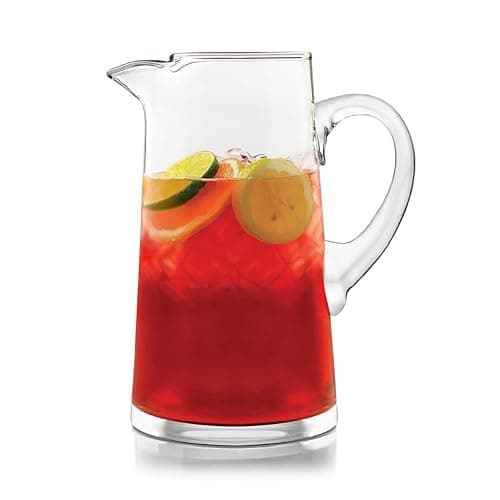 Libbey Cantina Glass Pitcher, 90 OzOne pitcher to own | One pitcher to own | 8.8 | $18.99 · View on Amazon(10% off) #ad We may earn a commission · Price as of November 2, 2026 |
| 2 | 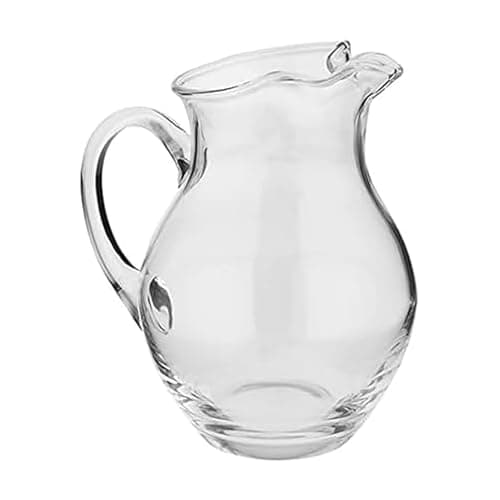 Mikasa Napoli Glass Water Pitcher, 70 OzA laid dinner table | A laid dinner table | 8.3 | $44.99 · View on Amazon #ad We may earn a commission · Price as of November 2, 2026 |
| 3 | 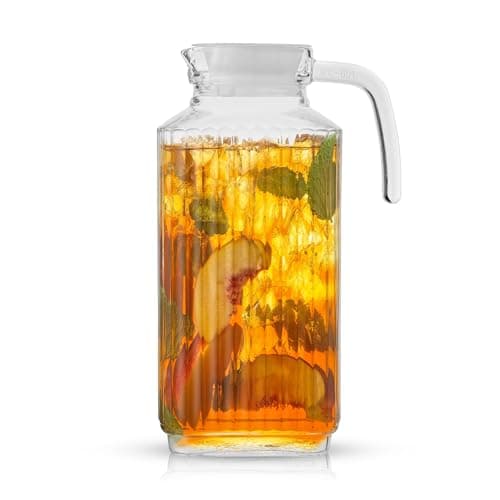 JoyJolt Glass Pitcher with Lid, 60 OzMaking drinks ahead | Making drinks ahead | 8.4 | $14.59 · View on Amazon #ad We may earn a commission · Price as of November 2, 2026 |
| 4 | 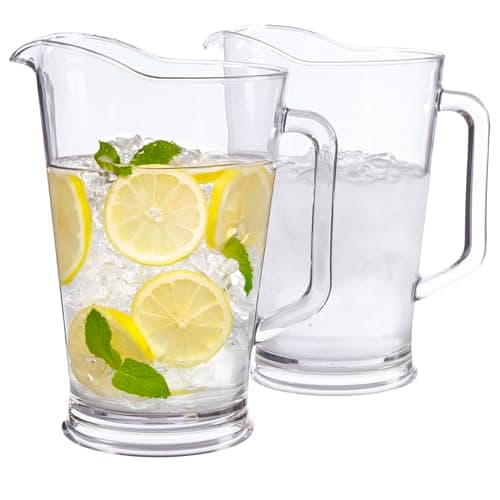 US Acrylic Bistro Pitcher, 64 Oz, Set of 2Outside and by the pool | Outside and by the pool | 8.2 | $22.99 · View on Amazon #ad We may earn a commission · Price as of November 2, 2026 |
| 5 | 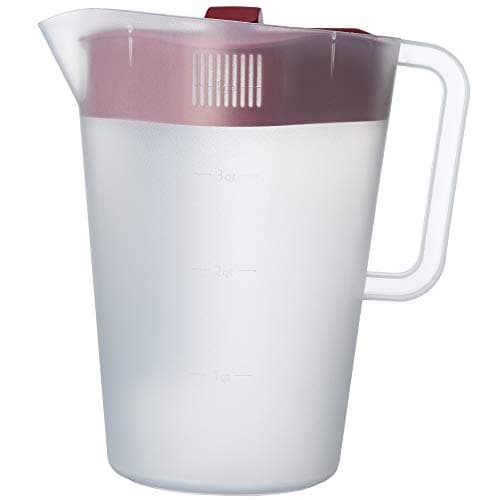 GoodCook 1 Gallon Pitcher with 4-Way LidMixing a gallon at a time | Mixing a gallon at a time | 7.9 | Check price on Amazon #ad We may earn a commission · Live price on Amazon — it changes often |
Scores are our editorial rating, not a lab test result — see how we pick.
Every host learns the pitcher lesson the same way. You put out a 60-ounce jug of something nice, six people take a glass, and it is empty before the first person has finished theirs. You spend the next hour between the table and the kitchen, and by the time you sit down the conversation has moved on without you.
That is a capacity problem, and it is the only decision in this category that really matters. The rest — glass or acrylic, lid or no lid, pretty or practical — follows from where the pitcher actually lives: on the table, in the refrigerator, or outside on a patio. Below is how we weighted that, then five pitchers that answer it from different directions.
How we judged these pitchers
We have not lab-tested these pitchers. The picks come from live listing data and the manufacturers' stated specifications, judged against five criteria that decide whether a pitcher gets filled or stays in a cupboard.
1. Capacity, counted in glasses
Ounces are abstract; glasses are not. A water or iced-tea glass holds roughly 10 to 12 ounces once there is ice in it, so a 60-ounce pitcher is about five pours and a 90-ounce pitcher is seven or eight. Six people at a table drink a 60-ounce pitcher dry before the plates are cleared. This single number decides more about how an evening goes than any other spec on the page.
2. Whether it pours without dribbling
A pitcher that runs down its own side is a pitcher that gets left in the cupboard, because every pour means a wiped tablecloth. What separates a clean pour from a dribble is a spout with a defined lip rather than a rolled rim, and enough shape to the neck that the flow separates from the glass cleanly. This is also where lids cause trouble: pouring through a lid aperture slows the flow and makes it harder to stop sharply.
3. What it looks like on a laid table
Plain glass belongs anywhere. Acrylic is unmistakably plastic in the hand even when it is optically clear, and a utility jug with measurement marks up the side announces itself as kitchen equipment. None of that matters by a pool and all of it matters at a dinner table, which is why most households that host often end up with two pitchers rather than one compromise.
4. What happens when it gets knocked over
Full pitchers get knocked over — by elbows, by dogs, by children reaching across a table. Glass on a tiled floor is a lost pitcher and twenty minutes with a dustpan; acrylic bounces. If the pitcher is going outdoors, onto a lawn, or anywhere near a hard floor and small children, this criterion quietly outranks everything above it.
5. Whether a lid earns its place
A lid converts a serving pitcher into a storage container, which is the difference between mixing a drink an hour before guests arrive and mixing it the night before. It also keeps refrigerator smells out of a jug of water, which anyone who has poured onion-flavored water will recognize. The cost is a part that warps, discolors and eventually stops sealing, and a slower pour.
Capacity, in glasses rather than ounces
| Pitcher size | Glasses (10 to 12 oz) | Comfortable for | Watch out for |
|---|---|---|---|
| 32 to 40 oz | 3 to 4 | Two people, or a carafe of water for a side table | Too small for any table of four |
| 60 to 68 oz (2 quarts) | 5 to 6 | Four people, or a refrigerator jug | Six people empty it in one round |
| 70 to 90 oz | 6 to 8 | Six to eight at a table — the most useful size to own | Heavy in glass when full |
| 1 gallon (128 oz) | 10 to 12 | Mixing and storing, then refilling a smaller pitcher | Too heavy and too plain to pass round a table |
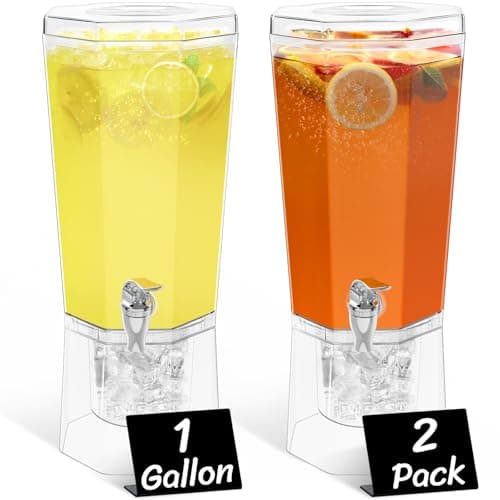
The practical reading of that table is that one 70- to 90-ounce pitcher covers almost every dinner, and anything above eight people wants either two pitchers or a dispenser. Our beverage dispenser picks cover the second case, including the argument for two small dispensers over one large one.
The picks
Libbey Cantina, 90 oz: the one pitcher to own
Ninety ounces is the most capacity of any glass pitcher here, and it sits at the budget end of the category rather than the premium one. That combination is the whole case. Seven or eight glasses means a table of six gets served twice from one fill, and the plain handblown shape carries water at a laid dinner as comfortably as it carries sangria on a Saturday.
The honest cons. There is no lid, so this is a serving pitcher and not a storage one — a jug of mixed drink cannot live in the refrigerator overnight without being covered. Ninety ounces of liquid in glass is genuinely heavy, and an older guest may not want to pour it one-handed. And handblown glass carries visible seams and thickness variation, which is charm to some people and a defect to others.
Mikasa Napoli, 70 oz: for a properly laid table
This is the one that looks like it belongs beside real stemware. Mikasa is a tableware brand rather than a housewares brand, and it shows in the shaped spout and the weight of the glass. More usefully, the listing states it is dishwasher safe, which most handblown pitchers at this size are not — and a pitcher that has to be hand washed is a pitcher that gets used less. Seventy ounces covers a table of six without a refill.
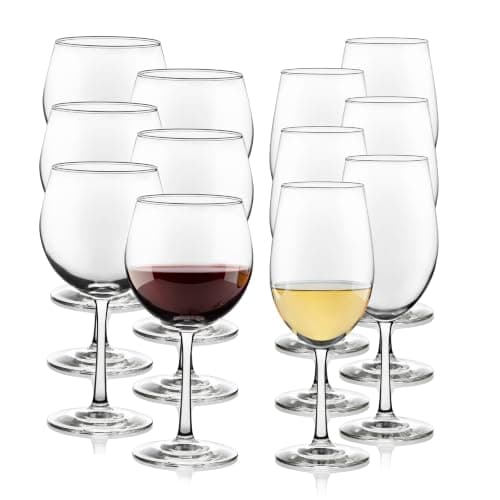
Against it: it is the most expensive pitcher on this page by a clear margin. There is no lid, so it does the same single job as the Libbey. And clear, unadorned glass shows every water spot, which means it wants drying rather than draining if it is going straight onto a table. It pairs naturally with the glassware in our drinkware set picks.
JoyJolt 60 oz with lid: for drinks made the night before
The lid is the reason to buy this one, and it is a better reason than it sounds. A sealed pitcher can be mixed a day ahead, which takes the drinks entirely off the list of things happening in the last hour before people arrive. It is also narrow enough to stand in a refrigerator door shelf, which most two-quart pitchers are not, and it is the cheapest glass pitcher here by a margin that makes it the one likely to be in daily use rather than party use.
The limits are real. Sixty ounces is five glasses, so a table of six empties it in one round — this is a make-ahead and refrigerator pitcher, not the one that sits on a dinner table. Plastic lids on glass pitchers are the component that warps and discolors first, and it is rarely replaceable. And pouring with the lid on restricts the flow, so it comes off at the table anyway.
US Acrylic Bistro, 64 oz pair: for outside
Two 64-ounce acrylic pitchers in one box, for about what a single mid-range glass pitcher costs, and the only pair here you can hand to somebody on a patio without watching where they set it down. Two pitchers is also quietly the right answer to a party rather than a dinner: one of water and one of something else, running simultaneously, which is how drinks actually get served when there are fifteen people in a garden.
What you give up. Acrylic scratches and gradually clouds with dishwasher cycles, so these are a five-year item rather than a lifetime one. Neither has a lid, so neither can hold a mixed drink in the refrigerator. And acrylic reads as plastic on a formal table however clear it is — that is a fair trade outdoors and a poor one indoors. For the rest of the outdoor kit, our outdoor entertaining essentials covers what else travels.
GoodCook 1 gallon: the mixing jug, not the serving one
A gallon of capacity with measurement marks embossed up the side, for less than the price of two coffees. Nobody puts this on a dinner table, and that is fine, because that is not what it is for. You mix in it by ratio, keep it in the refrigerator, and refill the nice pitcher from it all evening. The four-way lid means it travels in a car to a potluck without emptying itself.
The honest limits. It is plainly a utility jug, and the measurement marks make that unmissable. Thin plastic flexes when it is full and will stain over time from strongly colored fruit juice. And a full gallon weighs over eight pounds, which is more than most people can pour accurately into a glass. Use it as a reservoir and pour from something else.
Keeping a pitcher of drink cold
The mistake is almost universal: fill the pitcher with ice, then pour the drink over it. The first glass is perfect and the last glass is water, because the ice has been melting into the jug for an hour. The fix is to chill the liquid before it goes anywhere near the pitcher — in the refrigerator, not with ice — and then put ice in the glasses instead, where it only dilutes one drink at a time.
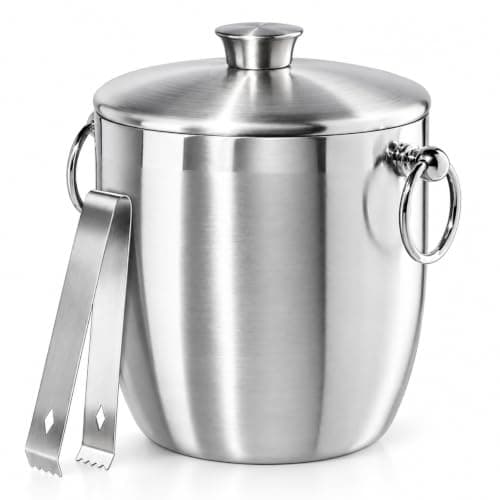
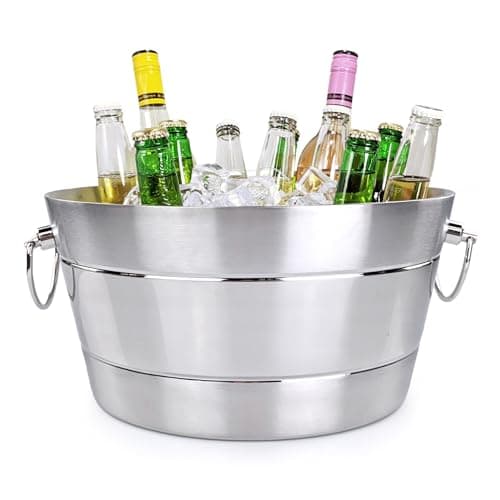
When ice genuinely has to go in the pitcher, cube size matters more than quantity. One large cube or a frozen block has a fraction of the surface area of the same weight of small cubes, so it cools the same amount of liquid and melts far slower. A frozen ring of the drink itself — lemonade frozen in a bowl, dropped into lemonade — dilutes nothing at all. If ice is going to be a theme of the evening, our how much ice for a party guide does the quantity math, and the ice bucket picks cover where to keep it so it is not melting in a sink.
How many pitchers a household actually needs
Two, in most cases, and they should be different from each other. One is a 70- to 90-ounce glass pitcher that goes on a table: it does water at dinner, iced tea in summer, and anything that needs to look like a choice rather than a convenience. The other is a lidded or shatterproof one that handles the jobs the first cannot — overnight in the refrigerator, outdoors, in the hands of a nine-year-old, or in the back of a car.
Buying one pitcher to do both ends badly in a predictable way. A lidded plastic jug on a laid table looks like you gave up, and a handblown glass pitcher is the wrong object to send out to a lawn. The two together cost less than many single premium pitchers and cover every situation a host runs into.
Cleaning, and the narrow-neck problem
Anything with fruit in it stains, and anything with a narrow neck is hard to get a hand into. Those two facts between them explain most abandoned pitchers. A wide-mouthed pitcher can be cleaned with a cloth; a narrow one needs a bottle brush, and will keep a faint tea ring forever without one. Dishwasher safe matters for the same reason it matters with every other piece of serveware on this site: a thing that has to be hand washed is a thing that gets used on special occasions only.
Two specifics worth knowing. Lemon and lime oils soften and cloud acrylic over time, so a citrus drink is better in glass if you have the choice. And a pitcher that has held milk or a creamy cocktail needs washing before it holds anything else, because the residue is not visible and is extremely obvious in the next drink.
Which one to buy
- Best overall: Libbey Cantina, 90 oz. The most capacity in glass, from the budget end of the category.
- Best for a laid table: Mikasa Napoli, 70 oz. Dishwasher safe and shaped like proper tableware.
- Best for making drinks ahead: JoyJolt 60 oz with lid. Mix it the night before and stand it in the refrigerator door.
- Best for outdoors: US Acrylic Bistro, 64 oz pair. Two running at once, and neither of them breaks.
- Best for mixing a batch: GoodCook 1 gallon. Measurement marks and a sealing lid; a reservoir, not a table pitcher.
If the gathering is big enough that pouring is becoming a job, stop buying pitchers and read the beverage dispenser roundup instead. And if the drink in question is wine rather than something soft, how much wine for a party settles the bottle count before any of this matters.
The picks in full
We have not lab-tested these products. Picks are chosen from live listings, sustained customer feedback at scale, material quality and fit for hosting — our full methodology.
Product image from Amazon, refreshed daily.
1. Libbey Cantina Glass Pitcher, 90 Oz
Ninety ounces of plain handblown glass for the price of a cheap plastic jug. It is the most drink per trip to the kitchen of anything here, and glass is the only material that makes a pale drink look like something.
Key specs
- 90 oz capacity
- Handblown glass
- Sold for cocktails and iced tea
- Single pitcher
What works
- The largest glass capacity here, so one fill serves a table twice
- Plain enough to carry water at dinner and sangria at a party
- Libbey is an established glassware name rather than a one-off seller
What does not
- No lid, so it cannot go in the refrigerator overnight without covering
- Ninety ounces of liquid in glass is heavy for one hand to pour
- Handblown glass has visible seam and thickness variation, which some people dislike
#ad We may earn a commission · Price as of November 2, 2026
Product image from Amazon, refreshed daily.
2. Mikasa Napoli Glass Water Pitcher, 70 Oz
The one here that looks deliberate next to proper glassware, and the only glass pitcher of its size that the listing states is dishwasher safe - which is what decides whether a pitcher gets used or rinsed and put away.
Key specs
- 70 oz capacity
- Glass
- Dishwasher safe
- Shaped pour spout
What works
- Dishwasher safe, unlike most handblown pitchers at this size
- Seventy ounces covers a table of six without a refill
- Mikasa is a tableware brand, so it sits correctly beside real stemware
What does not
- The most expensive pitcher here by a clear margin
- No lid, so it is a serving pitcher rather than a storage one
- Clear unadorned glass shows every water spot and fingerprint
#ad We may earn a commission · Price as of November 2, 2026
Product image from Amazon, refreshed daily.
3. JoyJolt Glass Pitcher with Lid, 60 Oz
The lid is the whole point: this is a pitcher you mix the night before, put in the refrigerator door, and carry straight to the table without decanting it into something prettier.
Key specs
- 60 oz capacity
- Glass body
- Two lids included
- Sold as a refrigerator pitcher
What works
- A lid means tea, lemonade and infused water can be made a day ahead
- Narrow enough for a refrigerator door shelf, which most 2-quart pitchers are not
- Cheapest glass pitcher here, and it is the one most likely to be in daily use
What does not
- Sixty ounces runs out quickly with six people at a table
- Plastic lids on glass pitchers are the part that warps and discolors first
- Pouring with the lid on restricts flow, so it wants removing at the table
#ad We may earn a commission · Price as of November 2, 2026
Product image from Amazon, refreshed daily.
4. US Acrylic Bistro Pitcher, 64 Oz, Set of 2
Two 64-ounce acrylic pitchers for less than one decent glass one, and the only pair here you can hand to somebody on a patio without watching where they put it down.
Key specs
- 64 oz each
- Set of two
- BPA-free acrylic
- Made in the USA
What works
- Two pitchers means two drinks running at once, which is how parties actually work
- Acrylic survives a concrete patio, grass and children in a way glass does not
- Light enough that a full one can be poured one-handed
What does not
- Acrylic scratches and clouds over a few years of dishwasher cycles
- No lids, so neither one can hold a mixed drink in the refrigerator
- Reads as plastic on a formal table no matter how clear it is
#ad We may earn a commission · Price as of November 2, 2026
Product image from Amazon, refreshed daily.
5. GoodCook 1 Gallon Pitcher with 4-Way Lid
A gallon of capacity and measurement marks on the side for less than the price of two coffees. Nobody puts this on a dinner table; you mix in it, keep it in the refrigerator, and refill the nice pitcher from it.
Key specs
- 1 gallon (128 oz)
- BPA-free plastic
- Four-way lid
- Embossed measurement marks
What works
- Measurement marks mean a drink mixed by ratio comes out the same every time
- A gallon is enough iced tea or lemonade for a party in one container
- Cheap enough to own two and keep both full before guests arrive
What does not
- Plainly a utility jug - it belongs in the refrigerator, not on the table
- Thin plastic flexes when full and will stain from strong fruit juice over time
- A gallon of liquid is genuinely heavy and awkward to pour accurately
#ad We may earn a commission · Live price on Amazon — it changes often
Common questions
What size pitcher do I need for a dinner party?
Work from glasses, not ounces. A standard water or iced-tea glass takes around 10 to 12 ounces, so a 60-ounce pitcher is five glasses and a 90-ounce pitcher is seven or eight. For a table of six that means a 60-ounce pitcher empties before everyone has been served twice, and a 70- to 90-ounce pitcher gets you through a course. Six people and above, own two.
Is a glass or plastic pitcher better?
Glass for the table, plastic or acrylic for outside. Glass makes a pale drink look like something and does not hold flavor, which matters if the same pitcher carries lemonade one week and water the next. Acrylic survives a patio, a lawn and a dropped handle, and it is lighter to pour when full. Most households that host regularly end up owning one of each rather than choosing.
Do I need a pitcher with a lid?
Only if you make drinks ahead. A lid is what lets iced tea, lemonade or infused water sit in the refrigerator overnight without absorbing everything else in there, and it stops a spill when the pitcher is moved. If the pitcher is filled and emptied in the same hour, a lid is one more thing to wash and a restriction on how fast it pours.
Will a glass pitcher crack if I pour hot liquid into it?
An ordinary glass pitcher can, which is the single most common way they break. Pitchers sold as borosilicate are made to take hot liquid; pitchers sold simply as glass are not, and the risk is highest with thermal shock, which is hot liquid meeting cold glass or ice. If the listing does not say it handles hot liquid, let tea or coffee cool before it goes in.
How do you keep a pitcher of drink cold without watering it down?
Chill the liquid before it goes in the pitcher, then add ice only to the glasses. Ice in the pitcher dilutes everything left in it, and the last glass poured tastes nothing like the first. If the drink must be iced in the pitcher, use large cubes or a frozen block, which melt far slower than small cubes with the same cooling effect.
Pitcher or beverage dispenser for a party?
A dispenser for a crowd that serves itself, a pitcher for a table where somebody pours. A dispenser with a spigot takes the host out of the loop entirely, which is its whole argument, but it has to sit at the edge of a counter and it is awkward to move once full. A pitcher travels around a table and refills a glass without anybody standing up.