The Best Wine Glasses for Red Wine
Red wine wants a bigger bowl and a narrower rim than you probably own. Two shapes cover almost every bottle you will open.
Heads up: we earn a commission from qualifying purchases made through the links on this page, at no extra cost to you. It never changes which products we pick or the order we rank them in. Full disclosure.
Quick picks
Tap any row to jump to the full write-up further down the page.
| # | Product | Best for | Score | Price |
|---|---|---|---|---|
| 1 | 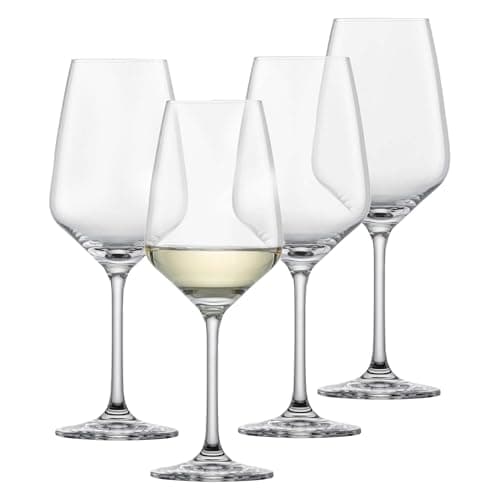 Schott Zwiesel Tritan Crystal Wine GlassesCrystal that survives | Crystal that survives | 8.8 | $28.00 · View on Amazon #ad We may earn a commission · Price as of October 10, 2026 |
| 2 | 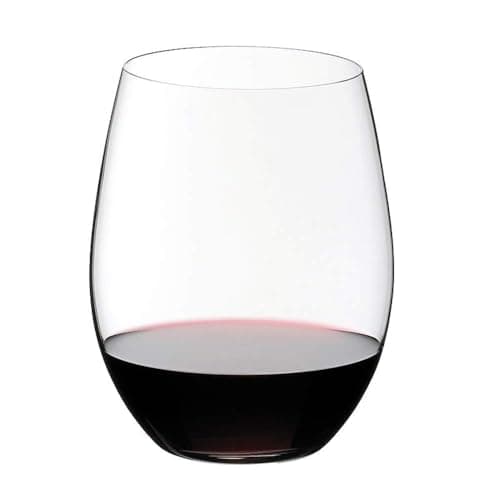 Riedel O Wine TumblerPremium stemless | Premium stemless | 8.2 | $58.50 · View on Amazon #ad We may earn a commission · Price as of October 10, 2026 |
| 3 | 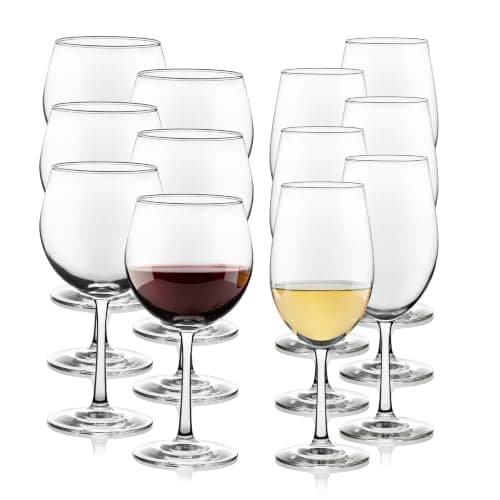 Libbey Wine Glass SetFeeding a crowd | Feeding a crowd | 8.4 | $49.99 · View on Amazon #ad We may earn a commission · Price as of October 10, 2026 |
| 4 | 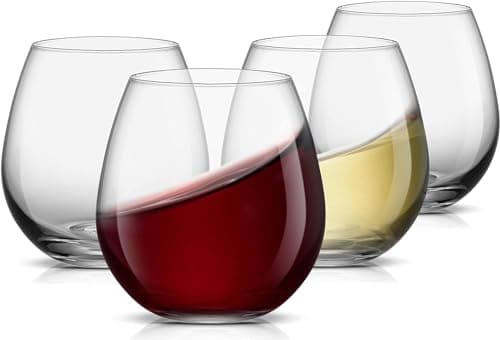 JoyJolt Spirits Stemless Wine GlassesBest overall stemless | Best overall stemless | 8.6 | $15.99 · View on Amazon(27% off) #ad We may earn a commission · Price as of October 10, 2026 |
Scores are our editorial rating, not a lab test result — see how we pick.
For red wine, the Schott Zwiesel Tritan stems are the best buy — a proper red-wine bowl, a thin rim, lead-free Tritan crystal, and dishwasher safe, which is a combination almost nothing else in the category manages. If you want varietal-specific bowls without stems, the Riedel O series is the one, and it is the most practical glass on this page for everyday use.
The picks, by what they are for
| Glass | Material | Stem | Best for | Dishwasher |
|---|---|---|---|---|
| Schott Zwiesel Tritan | Tritan crystal, lead-free | Stemmed | The glass you keep | Yes |
| Riedel O series | Lead-free crystal | Stemless | Varietal-specific bowls | Yes |
| Libbey | Soda-lime glass | Stemmed | Serving a crowd, sets up to 12 | Yes |
| JoyJolt Spirits | Clear glass | Stemless | Everyday, sets of 4 and 8 | Yes |
Why red wants a bigger bowl
Red wine is more aromatic and more tannic than white, and both of those respond to air. A wide bowl gives the wine surface area, which is why swirling a red noticeably changes how it smells after thirty seconds and swirling a crisp white does much less.
The taper at the top is the other half of the design. It funnels everything the bowl released toward your nose rather than letting it escape. A glass with straight sides — a tumbler, essentially — does the first job and none of the second.
The two shapes worth knowing
- Bordeaux-style: tall, moderately wide, with a pronounced taper. Made for cabernet sauvignon, merlot, syrah and other firm reds. This is the shape to buy if you buy one.
- Burgundy-style: wider and rounder, almost a balloon, with a shorter taper. Made for pinot noir and other delicate, perfumed reds where gathering aroma matters more than taming tannin.
Everything else on a wine shop shelf is a variation on these two. If a glass is marketed for a specific grape, it is almost always one of these shapes with the proportions nudged.
Crystal, glass or Tritan
Traditional lead crystal is the most brilliant and the most fragile, and it is hand-wash only. Soda-lime glass is what restaurants use: cheap, tough enough, slightly thicker. Tritan is the interesting middle — a lead-free crystal formulated to survive dishwashers, which is exactly the trade most households want to make.
For glasses you hand to a dozen people, soda-lime from Libbey is the right call and nobody will think less of your table. For the four glasses on your own dinner table, Tritan is worth the step up.
Temperature, which the glass cannot fix
Most red wine at home is served too warm, and a good glass does nothing about it. Room temperature in a modern heated house is several degrees above where red shows best, which is why a bottle that tasted flabby and alcoholic at nine in the evening can taste completely different after twenty minutes in the fridge.
The practical rule: put a light red in the fridge for twenty minutes and a full-bodied red for ten before you open it. If you are already pouring, a stemmed glass at least keeps your hand off the bowl, which is the one temperature job a stem genuinely does.
Should you decant?
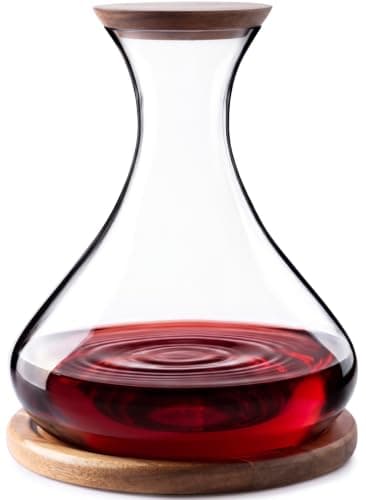
For a young, tannic red, a decanter does more for the wine in twenty minutes than a glass does in an hour, because it exposes far more surface area. For an older bottle it is mostly about leaving the sediment behind. Whether that is worth a purchase is covered in is a wine decanter worth it, and the specific models are in the decanter roundup.
Which to buy
- Best overall for red: Schott Zwiesel Tritan.
- Best stemless, varietal-specific: Riedel O series.
- Best for a crowd: Libbey, in twelve.
- Best everyday: JoyJolt Spirits.
If you want the whole category rather than just reds, start at the wine glass roundup.
The picks in full
We have not lab-tested these products. Picks are chosen from live listings, sustained customer feedback at scale, material quality and fit for hosting — our full methodology.
Product image from Amazon, refreshed daily.
1. Schott Zwiesel Tritan Crystal Wine Glasses
Tritan crystal is the brand that popularized the category: it looks like crystal and goes in the dishwasher, which is the whole point.
Key specs
- Tritan crystal
- Lead-free
- Dishwasher safe
- Stemmed
What works
- Break and chip resistance well beyond ordinary crystal
- Genuinely dishwasher safe, repeatedly
- Clarity holds instead of clouding over years
What does not
- Premium pricing for everyday glassware
- Stems still take cupboard height
#ad We may earn a commission · Price as of October 10, 2026
Product image from Amazon, refreshed daily.
2. Riedel O Wine Tumbler
Varietal-specific bowl shapes in lead-free crystal, which is the only stemless glass here engineered around what is actually in it.
Key specs
- Lead-free crystal
- Varietal-specific bowls
- Stemless
- Dishwasher safe
What works
- Bowl shape genuinely changes how an aromatic wine reads
- Crystal is thinner and clearer than the soda-lime field
- Dishwasher safe despite being crystal
What does not
- Several times the price of the value sets
- Thin crystal is less forgiving of a knock
#ad We may earn a commission · Price as of October 10, 2026
Product image from Amazon, refreshed daily.
3. Libbey Wine Glass Set
Twelve glasses from an American glassmaker that supplies restaurants, which is exactly the durability profile a party needs.
Key specs
- Soda-lime glass
- Sets up to 12
- Dishwasher safe
- Restaurant-grade construction
What works
- Twelve glasses means nobody is drinking from a tumbler
- Built to restaurant tolerances, so breakage is low
- Replacements are easy to find
What does not
- Thicker rim than crystal, which is noticeable side by side
- Plain styling
#ad We may earn a commission · Price as of October 10, 2026
Product image from Amazon, refreshed daily.
4. JoyJolt Spirits Stemless Wine Glasses
The best quality-to-price ratio in stemless glass, with a review base big enough that its consistency is not a guess.
Key specs
- Stemless
- Sold in sets of 4 and 8
- Dishwasher safe
- Clear glass
What works
- Wall thickness is even, which cheap stemless glass often is not
- No stem to snap in a crowded dishwasher
- Stacks into a normal cupboard
What does not
- Your hand warms the wine, a real trade-off for white
- Stemless is informal, which is wrong for a formal table
#ad We may earn a commission · Price as of October 10, 2026
Common questions
What shape wine glass is best for red wine?
A bowl wide enough to swirl, tapering to a narrower rim. The width gives the wine surface area to open up; the taper keeps the aroma inside the glass instead of releasing it into the room. That is the whole principle, and everything else is refinement of it.
Do I need different glasses for cabernet and pinot noir?
You do not need them, but there is a real difference. Cabernet and other firm, tannic reds suit a tall, moderately wide bowl; pinot noir and other delicate, aromatic reds suit a wider, rounder bowl that gathers aroma. If you buy one shape, buy the cabernet shape - it handles both acceptably.
Does the thickness of the rim matter?
More than the brand does. A thin, cut rim lets the wine arrive on your tongue without a lip of glass in the way, and it is the single most noticeable difference between a cheap glass and a good one. A rolled, thick rim is the signature of a tumbler.
Are stemless glasses bad for red wine?
No, and red is the one wine where stemless genuinely makes sense - a warm hand on the bowl matters far less for red, which is served nearer room temperature anyway. They are also harder to knock over, which is why they suit a coffee table.
How full should a red wine glass be?
About a third, or roughly to the widest point of the bowl. The empty space above the wine is not waste - it is where the aroma collects, which is the entire reason the bowl is that big.