Is a Wine Decanter Worth It?
For some bottles it makes a real difference you can taste. For most of what people open on a Tuesday, it does almost nothing.
Heads up: we earn a commission from qualifying purchases made through the links on this page, at no extra cost to you. It never changes which products we pick or the order we rank them in. Full disclosure.
Quick picks
Tap any row to jump to the full write-up further down the page.
| # | Product | Best for | Score | Price |
|---|---|---|---|---|
| 1 | 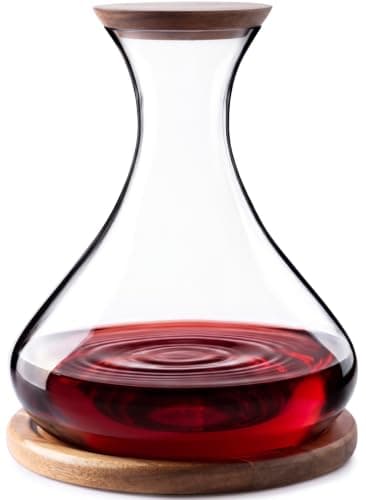 Cork & Mill Wine Decanter SetBest overall decanter | Best overall decanter | 8.2 | $49.99 · View on Amazon #ad We may earn a commission · Price as of October 10, 2026 |
| 2 |  AmazonCommercial Shatterproof Decanter with AeratorOutdoor and budget | Outdoor and budget | 7.4 | Check price on Amazon #ad We may earn a commission · Live price on Amazon — it changes often |
| 3 | 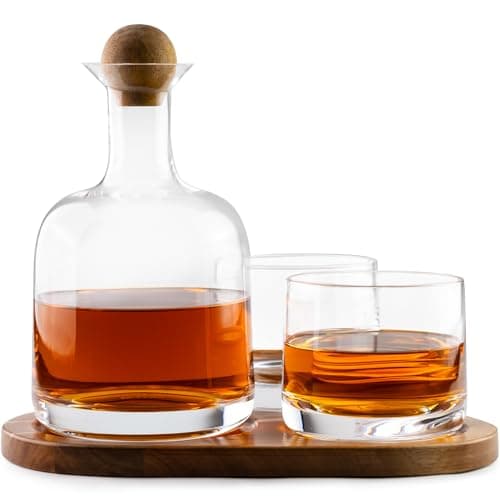 Cork & Mill Whiskey Decanter SetBar cart centerpiece | Bar cart centerpiece | 8.1 | $56.95 · View on Amazon #ad We may earn a commission · Price as of October 10, 2026 |
Scores are our editorial rating, not a lab test result — see how we pick.
A decanter is worth it if you regularly open young, tannic red wine, and it is not worth it otherwise. That is the honest answer. Decanting does two separate jobs — it exposes wine to air, and it leaves sediment behind in the bottle — and whether you need either depends entirely on what you drink.
What decanting actually does
Pouring a bottle into a wide vessel exposes far more of it to air at once than a glass does. For a young red, that oxygen softens tannin and lets aromatic compounds develop, which is why a thirty-minute-old decanted cabernet tastes rounder than the first pour from the bottle. It is a real, repeatable effect, and if you ever pour two glasses side by side you will not need convincing.
The second job has nothing to do with air. An older red throws sediment, and decanting slowly off the bottle leaves that grit behind. For a fifteen-year-old bottle that is the only reason to decant, and you should pour it reasonably soon after, because the delicate aromatics in old wine fade rather than bloom.
Which bottles benefit, and by how much
| What you are opening | Decant? | How long |
|---|---|---|
| Young tannic red (cabernet, syrah, nebbiolo) | Yes — the clearest case | 30 to 60 minutes |
| Everyday mid-weight red | Optional, mild benefit | 15 to 20 minutes |
| Pinot noir and other delicate reds | Usually not | Swirl the glass instead |
| Older red with sediment | Yes, for the sediment | Pour soon after |
| Most white wine | No — it warms up | — |
| Full-bodied oaked white | Optional | About 15 minutes |
| Sparkling wine | No — you lose the bubbles | — |
| Whiskey and other spirits | No benefit, decor only | — |
The honest case against buying one
Three real costs, and they are why plenty of people who like wine do not own a decanter.
- Washing it. A tall, narrow-necked glass vessel with a wide base is genuinely awkward to clean and more awkward to dry. It is the reason decanters end up in cupboards.
- Storage. It is a large, fragile, oddly shaped object that does not stack with anything.
- Marginal gain on most bottles. If what you drink is under about fifteen dollars and already approachable, the wine was built to be drunk on opening, and air does not have much to unlock.
If you do buy one, what to look for
- A wide base. Surface area is the entire mechanism. A narrow carafe looks elegant and decants poorly.
- Full-bottle capacity. Anything that cannot take a whole 750ml bottle creates a second decision you do not want mid-pour.
- A neck you can get a brush into. This is the difference between a decanter you use and one you avoid.
- A stand, if it has a dramatic shape. Decanters that cannot stand up on their own are a spill waiting to happen.
What we would buy
- Best overall: the Cork & Mill decanter — hand-blown, full-bottle capacity, and it comes with an acacia stand, which solves the storage and stability problem at once.
- Outdoors or on a budget: the AmazonCommercial shatterproof decanter with a built-in aerator, at about 28 oz. Not elegant, genuinely practical, and sold in multipacks.
- For a bar cart: the Cork & Mill whiskey set — bought as an object, which is the honest reason to own a spirits decanter.
The full comparison, including capacities and what each one is actually good at, is in the decanter roundup. If you have not sorted your glasses yet, that matters more — start with the right glass for red wine.
The picks in full
We have not lab-tested these products. Picks are chosen from live listings, sustained customer feedback at scale, material quality and fit for hosting — our full methodology.
Product image from Amazon, refreshed daily.
1. Cork & Mill Wine Decanter Set
A hand-blown decanter that ships with an acacia stand, so it has somewhere to live instead of taking up a cupboard shelf on its side.
Key specs
- Hand-blown glass
- Acacia wood stand
- Full-bottle capacity
- Gift packaging
What works
- The stand solves storage and drying, which is the real decanter problem
- Full bottle fits, so you are not decanting in two goes
- Presentation is gift-ready without wrapping
What does not
- Hand-blown glass wants hand washing
- The stand takes counter space a bare decanter does not
#ad We may earn a commission · Price as of October 10, 2026
Representative category photo, not the product listing image.
2. AmazonCommercial Shatterproof Decanter with Aerator
Shatterproof with a built-in aerator, so a young red opens up on a patio table where you would never take glass.
Key specs
- Shatterproof plastic
- Built-in aerator
- About 28 oz
- Sold in multipacks
What works
- Aerator does the job a decanter's shape normally does, faster
- Takes it outside without risk
- Multipacks let you run several at once
What does not
- Plastic is obvious on a formal table
- Aerator adds a part to clean
#ad We may earn a commission · Live price on Amazon — it changes often
Product image from Amazon, refreshed daily.
3. Cork & Mill Whiskey Decanter Set
Decanter plus matched old-fashioned glasses, which is the single statement piece a bar cart should be built around.
Key specs
- Decanter with tight stopper
- Matched old-fashioned glasses
- Gift boxed
What works
- One purchase furnishes the whole bar cart top
- Tight stopper actually holds, which cheap decanters do not
- Reads as a serious gift
What does not
- Decanting spirits is decorative, not functional
- Glasses and decanter are a fixed pairing
#ad We may earn a commission · Price as of October 10, 2026
Common questions
Does a decanter actually make a difference?
For a young, tannic red, yes, and it is not subtle - twenty to thirty minutes in a decanter softens the edges in a way you can taste side by side. For a light red, most whites, and anything already five or more years old, the difference is small to none.
Do I need a decanter for red wine?
Need, no. Benefit, sometimes. If the reds you open are young and firm - cabernet sauvignon, syrah, nebbiolo, young bordeaux - a decanter earns its shelf space. If you mostly drink pinot noir or inexpensive everyday reds, swirling in the glass gets you most of the way there.
How long should wine sit in a decanter?
Twenty to thirty minutes for a young tannic red, up to an hour for a big one. For an older bottle, decant to remove sediment and then pour it fairly promptly, because the aromatics in old wine can fade rather than open.
Should you decant white wine?
Rarely, and the reason is temperature rather than air: a decanter warms white wine up, which is the opposite of what you want. The exception is a full-bodied oaked white, which can take fifteen minutes.
Is a whiskey decanter worth it?
Only as an object. Spirits do not improve with air, and a decanter with an imperfect seal slowly costs you alcohol and aroma. Buy one because it looks good on a bar cart, which is a legitimate reason, and not because it does anything for the whiskey.
Can you just swirl the glass instead?
Yes, and for most everyday bottles that is genuinely enough. A decanter wins because it exposes far more surface area at once - the whole bottle rather than one glass - so it is faster and more even. It is a convenience and consistency argument, not a magic one.