How Much Cheese and Meat Per Person?
Two numbers, and then a table you can shop from. The whole thing turns on whether the board is a starter or the dinner.
Heads up: we earn a commission from qualifying purchases made through the links on this page, at no extra cost to you. It never changes which products we pick or the order we rank them in. Full disclosure.
Quick picks
Tap any row to jump to the full write-up further down the page.
| # | Product | Best for | Score | Price |
|---|---|---|---|---|
| 1 | 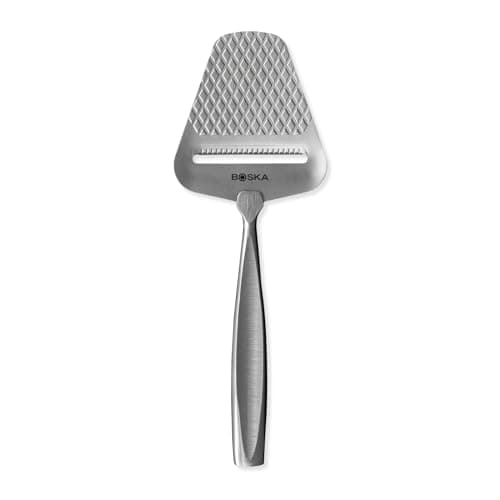 BOSKA Cheese Slicer Monaco+Even slices of hard cheese | Even slices of hard cheese | 8.1 | $19.99 · View on Amazon #ad We may earn a commission · Price as of October 10, 2026 |
| 2 | 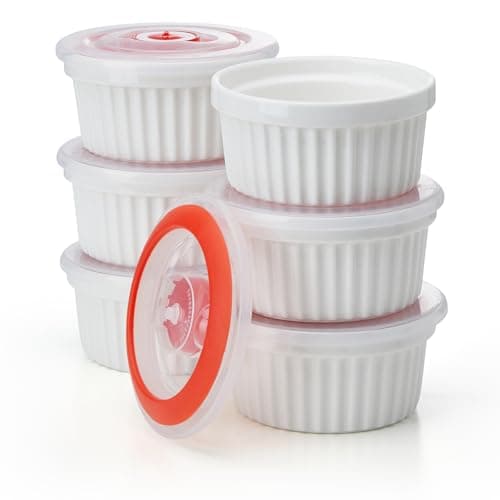 Sweese Pristine White Ramekins with LidOlives, dips and jam | Olives, dips and jam | 8.8 | $28.99 · View on Amazon #ad We may earn a commission · Price as of October 10, 2026 |
| 3 |  Formaticum Two-Ply Cheese Storage Paper SheetsLeftover cheese | Leftover cheese | 8.0 | Check price on Amazon #ad We may earn a commission · Live price on Amazon — it changes often |
| 4 | 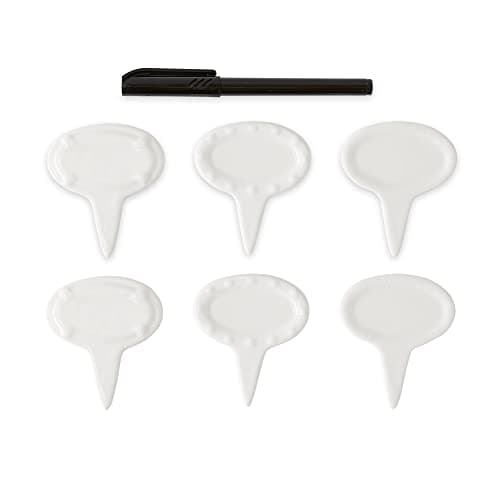 RSVP International Oval Cheese Markers, Set of 6Labeling the cheeses | Labeling the cheeses | 8.2 | $15.95 · View on Amazon #ad We may earn a commission · Price as of October 10, 2026 |
Scores are our editorial rating, not a lab test result — see how we pick.
Two ounces of cheese and two ounces of cured meat per person for a starter board. Four ounces of cheese and three of meat when the board is the meal. That is the answer. The rest of this page is the shopping table, the reason meat and cheese are not bought in equal weights, and the adjustments that actually matter.
The shopping table
Quantities are total weight to buy, not per cheese. Split the cheese figure across three varieties for most boards.
| Guests | Cheese, starter board | Meat, starter board | Cheese, board as the meal | Meat, board as the meal |
|---|---|---|---|---|
| 2 | 4 oz | 4 oz | 8 oz | 6 oz |
| 4 | 8 oz | 8 oz | 1 lb | 12 oz |
| 6 | 12 oz | 12 oz | 1.5 lb | 1.25 lb |
| 8 | 1 lb | 1 lb | 2 lb | 1.5 lb |
| 12 | 1.5 lb | 1.5 lb | 3 lb | 2.25 lb |
| 20 | 2.5 lb | 2.5 lb | 5 lb | 4 lb |
| 30 | 3.5 lb | 3.5 lb | 7 lb | 5.5 lb |
In metric, the two headline figures are about 55 to 60 g of cheese per person for a starter and about 115 g when the board is dinner. The deli counter will weigh in whichever unit you ask for.
Why you buy less meat than cheese
When the board is the meal, the cheese figure doubles and the meat figure goes up by only half. That is not an error. Cured meat is saltier, fattier and more intensely flavored than cheese, and people self-limit on it without noticing. Buy equal weights and the predictable outcome is a board with cheese gone and three slices of salami curling at the edges.
Sliced thickness matters here too. Meat sliced paper-thin from the deli goes much further visually than the same weight cut thick, because you can fold and ruffle it to fill space. If you are trying to make a modest quantity look generous, ask for it thin.
The adjustments that actually change the number
- Length of the event. Two hours is the baseline. Add roughly a quarter for a long grazing evening where the board is the whole food plan.
- Time of day. A board at six o’clock with no dinner to follow gets eaten like a meal. The same board at two in the afternoon gets picked at.
- Group size. Above about twenty, drop the per-head figure by a quarter — not everyone goes to the board. Below six, do not reduce anything.
- What else is out. If there are hot appetizers as well, use the starter figure. Our appetizer-count chart handles that side of the planning.
Buy the board size to match
Weight and surface area are two different constraints, and people usually get the weight right and the board wrong. Two pounds of cheese and meat does not fit attractively on a twelve-inch board, however correct the arithmetic was. Check the quantity you just worked out against the board size guide before you shop, and for anything over about twelve guests read building a board for a crowd first — the answer there is two boards, not a bigger one.
The four things that make portioning easier
- A cheese slicer. Even slices off a hard block mean you are serving what you planned rather than whatever the knife produced. The BOSKA Monaco is stainless, non-stick treated and carries a lifetime guarantee.
- Small lidded bowls. Olives, cornichons, jam and honey eat board space and leak into the wood. The Sweese ramekins come in 4 oz and 8 oz in sets of six, with lids, so they double as prep containers.
- Cheese paper. Over-buying is only a problem if the leftovers die in cling film. Formaticum two-ply paper lets cheese breathe and keeps it for days.
- Markers. Labeled cheeses get eaten more evenly, because people stop guessing and avoiding. The RSVP porcelain set is six markers with a pen.
The picks in full
We have not lab-tested these products. Picks are chosen from live listings, sustained customer feedback at scale, material quality and fit for hosting — our full methodology.
Product image from Amazon, refreshed daily.
1. BOSKA Cheese Slicer Monaco+
A slicer rather than a knife, which is the right tool for a firm aged cheese people want in even pieces. The non-stick treatment is the difference between slices and crumbs.
Key specs
- Stainless steel
- BSF non-stick treatment
- 210 x 74 x 9 mm
- Dishwasher safe
- Lifetime guarantee
What works
- Gives consistent slices that a knife cannot match on a firm cheese
- Lifetime guarantee from a company that only makes cheese tools
- Works on cucumber and hard vegetables, so it is not single-purpose
What does not
- Useless on anything soft, so it never replaces a knife set
- The wire-free design means a dull blade cannot be swapped, only replaced under warranty
#ad We may earn a commission · Price as of October 10, 2026
Product image from Amazon, refreshed daily.
2. Sweese Pristine White Ramekins with Lid
The accessory most people turn out to be missing. Six small bowls keep the wet things off the wood, and the lids mean you can fill them the night before and carry them from the fridge to the board.
Key specs
- Glazed ceramic
- 4 oz and 8 oz, sets of six
- Lids included
- Microwave, dishwasher and oven safe
- Fluted shape, stacks with the lids on
What works
- Lids turn them into prep containers, so the board gets assembled in minutes
- Six is the right number for one large board, not a number that forces a second purchase
- Plain white disappears behind the food instead of competing with it
What does not
- Ceramic is heavier than glass, and a full board of them adds real weight
- The brand's own store stocks them in small quantities, so the size you want is not always there
#ad We may earn a commission · Price as of October 10, 2026
Representative category photo, not the product listing image.
3. Formaticum Two-Ply Cheese Storage Paper Sheets
Two-ply paper that lets cheese breathe while holding humidity, which is the opposite of what plastic wrap does. The accessory that pays for itself in cheese you did not throw away.
Key specs
- Two-ply cheese storage paper
- 11 x 14 in sheets
- Packs of 15, 30 or 60
- Labels included
- Compostable and reusable lines also sold
What works
- Stops the sweating and surface slime that plastic wrap causes
- The included labels mean you know what the wedge is a week later
- Sheets are large enough to wrap a whole wheel, not just an offcut
What does not
- Costs real money for paper, and a damp cloth in a container gets part of the way free
- Single-use unless you buy the reusable line, which is a separate product
#ad We may earn a commission · Live price on Amazon — it changes often
Product image from Amazon, refreshed daily.
4. RSVP International Oval Cheese Markers, Set of 6
Porcelain labels with an ink pen rather than slate and chalk. Chalk dust lands on the food; ink does not, and it washes off in the dishwasher.
Key specs
- White porcelain
- Set of six, three designs
- Black ink pen included
- 2.5 in wide by 2.75 in tall
- Dishwasher safe
What works
- No chalk dust anywhere near the cheese
- Writing stays legible across a whole evening instead of smudging
- Dishwasher safe, so they get reused rather than put away dirty
What does not
- You are dependent on the included pen; a dried-out pen makes the set useless until you replace it
- White porcelain vanishes against a white platter, which is the one board it does not suit
#ad We may earn a commission · Price as of October 10, 2026
Common questions
How much cheese per person on a charcuterie board?
About 2 ounces (around 55 to 60 g) per person when the board is a starter before a meal, and about 4 ounces (around 115 g) per person when the board is the meal. Those are the two numbers worth remembering; everything else is adjustment.
How much charcuterie meat per person?
Roughly 2 ounces per person as a starter and 3 ounces when the board is dinner. Cured meat is richer and saltier than cheese, so people eat less of it than you expect - buying equal weights of meat and cheese leaves you with meat left over.
How much cheese for a party of 20?
Around 2.5 pounds of cheese and 2.5 pounds of cured meat if the board is one of several things being served, and closer to 5 pounds of cheese plus 4 pounds of meat if the board is the food. Split it across two boards rather than one, so there are two serving points.
How many cheeses should be on a board?
Three for most boards and five at the top end. The useful rule is variety by type rather than by count: one hard, one soft, one blue or something pungent. Adding a fourth and fifth cheese without adding a new texture does not make the board better.
Does the number go down with more guests?
Yes, slightly, and it is worth using. At twenty or more people, not everyone eats from the board, and the per-head figure drops by roughly a quarter. At four people, everyone eats everything, so do not scale down.
How much should I buy if there is also dinner?
Use the starter figure and resist rounding up. The most common over-buy is treating a pre-dinner board like the main event; 2 ounces of cheese each is genuinely enough when a meal is coming, and leftover cheese keeps far better than leftover sliced meat.