The Best Cake Stands
A cake stand earns its cupboard space in two ways: it lifts the dessert above everything else on the table, and the good ones keep working the other fifty weeks of the year.
Heads up: we earn a commission from qualifying purchases made through the links on this page, at no extra cost to you. It never changes which products we pick or the order we rank them in. Full disclosure.
Quick picks
Tap any row to jump to the full write-up further down the page.
| # | Product | Best for | Score | Price |
|---|---|---|---|---|
| 1 | 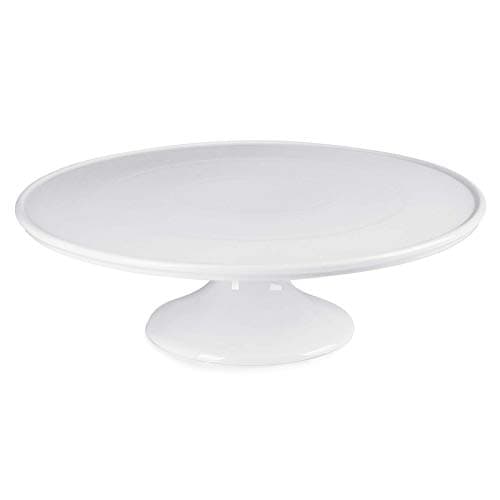 Sweese Porcelain Cake Stand, 12-InchThe one stand to own | The one stand to own | 8.5 | $44.69 · View on Amazon #ad We may earn a commission · Price as of November 2, 2026 |
| 2 | 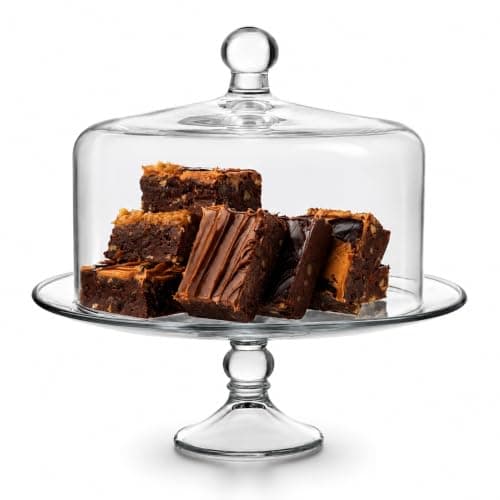 Libbey Selene Glass Cake Stand with Dome LidKeeping a cake fresh | Keeping a cake fresh | 8.3 | $54.99 · View on Amazon #ad We may earn a commission · Price as of November 2, 2026 |
| 3 | 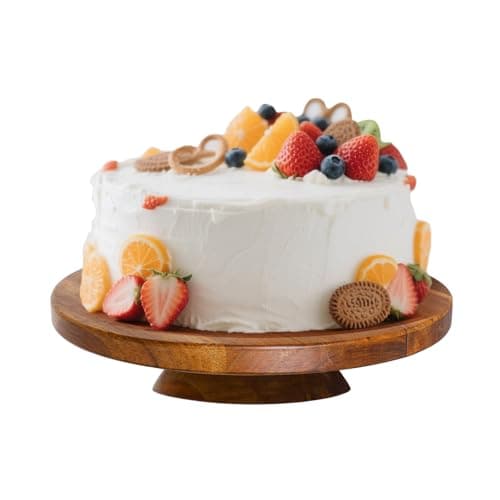 jubilander Acacia Wood Cake Stand, 12 InchDoubling as a board | Doubling as a board | 8.2 | $22.99 · View on Amazon #ad We may earn a commission · Price as of November 2, 2026 |
| 4 | 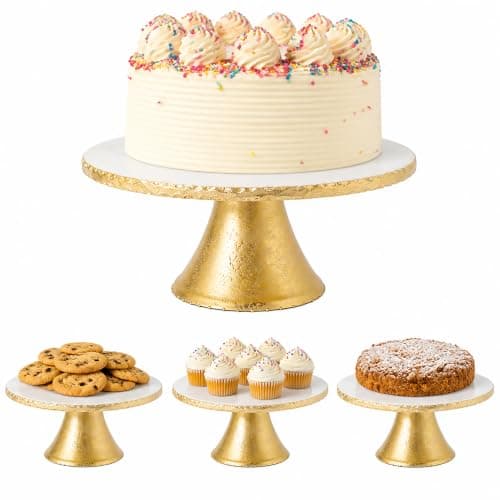 Mud Pie Marble Pedestal Cake Stand, 11 InchA centerpiece | A centerpiece | 8.0 | $50.92 · View on Amazon #ad We may earn a commission · Price as of November 2, 2026 |
| 5 | 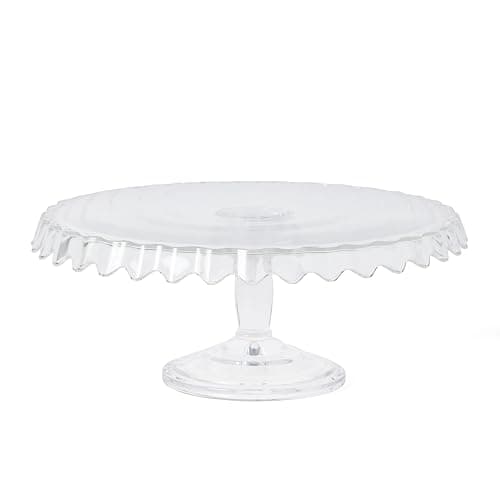 Martha Stewart Watercrest Glass Cake Stand, 10.2 InchLooks without the dome | Looks without the dome | 7.8 | $37.99 · View on Amazon #ad We may earn a commission · Price as of November 2, 2026 |
Scores are our editorial rating, not a lab test result — see how we pick.
A cake stand does one thing no platter can: it puts the dessert at a different height from everything else on the table. That sounds like styling, and it partly is, but it is also practical - a raised plate is reachable across a crowded table, it gives a knife somewhere to work, and it keeps the cake away from the puddle of melting ice and the plate of cheese.
The category is small enough to get right in one purchase, which is the good news. There are four decisions: how wide the plate is, whether it comes with a dome, what it is made of, and whether it can do anything useful when there is no cake. Get those four right and the stand comes out several times a year rather than once. Below is how we weighted them, then five stands that answer them differently.
How we judged these stands
We have not lab-tested these stands. The picks come from live listing data and the manufacturers' stated specifications, judged against five criteria that decide whether a stand is used or stored.
1. Plate width against a real cake
Home baking is usually 8 or 9 inches, bakery cakes run 9 or 10, and a stand should be at least two inches wider than the cake it carries. That makes 12 inches the safe universal size and 10 inches a stand you have to shop around. The border is not decoration: it is where the knife lands, where crumbs fall, and what stops a slice from being lifted over the edge of the plate.
2. Whether the dome earns its money
A dome roughly doubles the price of a stand and is the component most likely to break. It buys you two genuine things - a cut cake that is still good tomorrow, and a frosted cake protected from the kitchen - and one hidden limit, which is maximum cake height. If dessert is always finished the same night, the dome is money spent on a lid.
3. Stability under a loaded plate
A pedestal is a lever. A heavy cake on a narrow foot tips if the table is knocked, and the moment of real risk is carrying a loaded stand across a room. Weight at the base helps, a wide foot helps more, and wood forgives a knock that shatters glass. Marble is the most stable of all because it is heavy - and the most expensive thing to drop.
4. What it does the rest of the year
A stand used once a year is an expensive ornament. A plain white or wooden 12-inch stand is also a cheese platform, a brunch pastry plate, a raised section in a grazing spread, or the level that gives height to a flat table of food. Decorated stands cannot do this - a scalloped glass pedestal under a pile of sandwiches looks like a mistake.
5. Cleaning, after frosting
Buttercream and ganache are the real test. Porcelain and glass go in the dishwasher and come out finished. Wood must not soak, so frosting needs wiping off promptly and the surface will stain from berries and colored icing. Marble wipes but marks. None of this is a deal-breaker; it just needs knowing before the cake goes on.
Stand sizes, and what fits
| Plate width | Takes a cake of | Also works for | Watch out for |
|---|---|---|---|
| 8 to 9 in | 6-inch cakes, cupcakes | A small dessert, a cheese wedge | Too small for a standard layer cake |
| 10 to 10.5 in | 8-inch cakes comfortably | Pastries, a tart | A 10-inch cake leaves no border |
| 12 in | Up to a 10-inch cake | Cheese, sandwiches, charcuterie | Takes real cupboard height |
| 13 in and up | Sheet-style and tall tiered cakes | A full brunch platter | Heavy, and awkward to store |
The picks
Sweese 12-inch porcelain: the one stand to own
Twelve inches of plain white porcelain. It is the right width for anything you are likely to bake or buy, the right finish to carry savory food without looking confused, and porcelain cleans up after buttercream in a way that wood cannot. Sweese turns up repeatedly in our dinnerware research for the same reason it earns the top slot here: the white stays white and the pieces are harder than the price suggests.
The honest cons. There is no dome, so a cut cake is exposed overnight. It is heavy, and a ceramic pedestal is exactly the shape that chips against other crockery in a cupboard. And it takes a full shelf of height for an object most households use a handful of times a year.
Libbey Selene glass with dome: for cake that lasts
The dome is the entire argument, and it is a real one: a cut cake under glass is still good two days later, and a frosted cake is safe from everything else happening in the kitchen. Libbey is a glassware name that has been making this kind of thing for a long time, which matters for a piece you may want to replace a part of in five years. The dome also inverts into a shallow bowl if you are short of serveware mid-party.
Against it: this is the most expensive stand here and the dome is most of the cost. A glass dome is the single most breakable object in a kitchen cupboard. And the dome fixes a maximum cake height, so a tall layer cake simply will not fit under it - measure before you bake.
jubilander acacia 12-inch: the one that works all year
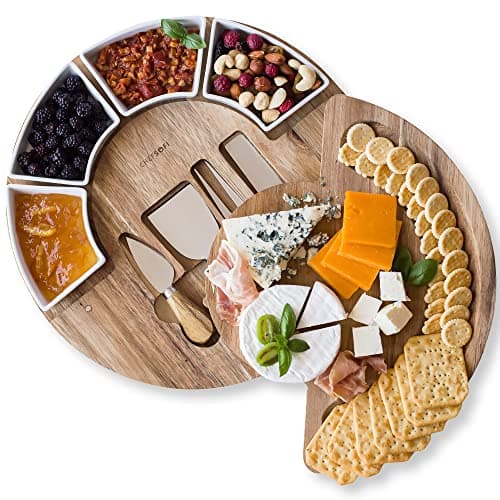
The cheapest full-size stand here, and the one most likely to come out when there is no cake at all. A 12-inch acacia round on a pedestal is, functionally, a raised cheese board - which makes it the stand to buy if you host more than you bake. It sits happily in the middle of a grazing spread adding the height that a flat table of food badly needs, alongside the cheese boards doing the flat work.
The limits are the material's. Wood should not be soaked, so frosting wants wiping off promptly rather than leaving to soak. Unsealed acacia stains from berries and colored icing. And a warm wood tone fights a formal white-and-glass table, where the porcelain or glass stands belong.
Mud Pie marble pedestal, 11 inch: the centerpiece
Marble with a gold-finished stem, 11 inches across and six inches tall. It is bought to be looked at, and it is the only stand here that holds a table when there is nothing on it. The practical bonus is real though: marble stays cold, which is exactly what buttercream and chocolate work want on a warm afternoon, and six inches of height puts the cake clearly above everything else.
Three real drawbacks. Marble is porous, so red berries, wine and oil will mark it if a spill is left. It is the heaviest stand here, and heavy plus stone plus a tile floor is an expensive combination. Decorative metal finishes need hand washing and will show wear over years of use.
Martha Stewart Watercrest glass, 10.2 inch: looks without the dome
A scalloped, ruffled-edge glass pedestal that costs considerably less than the domed stands and gets most of the way to the same presence on a table. The vintage edge treatment is the point - it reads as a chosen object rather than a plain plate on a foot, and clear glass suits any color of cake.
What you give up: at 10.2 inches a 10-inch cake has essentially no border, so this is a stand for 8- and 9-inch baking. There is no dome, so a cut cake dries out overnight. And a decorative rim is always the first part to chip, at which point a glass piece has to be retired rather than repaired.
Using a stand for food that is not cake
The stands that get used most often are the ones nobody thinks of as cake stands by the second year of ownership. A plain 12-inch plate on a pedestal is a brunch pastry plate, a raised cheese course, a stand for a stack of rolls beside a roast, or the thing that holds the dip above a crowded table so people can actually reach it. Wooden stands take savory food most naturally; plain white porcelain is close behind; glass works for anything dry.
Two cautions. Anything oily wants a plate or a liner on a wooden or marble stand, because both are porous and olive oil is the stain that does not come out. And a stand carrying savory food on a table where dessert is coming later needs washing in between, which is an argument for owning the one that goes in the dishwasher rather than the one that does not.
Storing one without breaking it
Cake stands are among the most commonly damaged pieces in a kitchen, for a dull reason: they are tall, awkward and almost always stored at the back of a high cupboard where nothing stacks against them. The fixes are simple. Store a domed stand with the dome inverted on the plate rather than sitting over it, which halves the height and takes the strain off the rim. Put a cloth or a napkin between a ceramic pedestal and whatever it shares a shelf with. Keep a marble stand low rather than high, because the failure mode is not a chip, it is a dropped slab.
If the stand is going to be stored assembled and visible - on an open shelf or a counter - buy the one you are happy looking at every day, which is a real argument for the marble or the wood over the plain white. A stand kept on the counter under a cloche gets used far more often than one that needs retrieving from above the refrigerator, and use is the whole point of owning one.
Cake stand or tiered stand
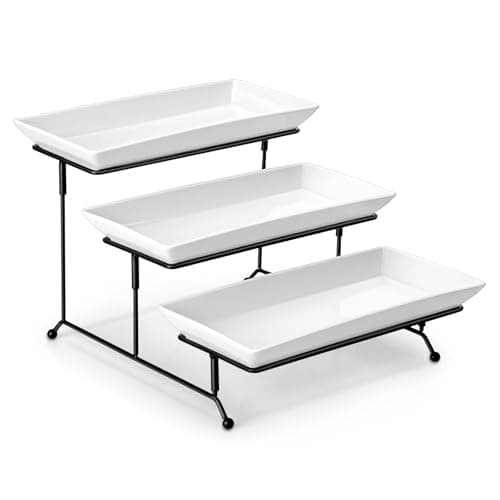
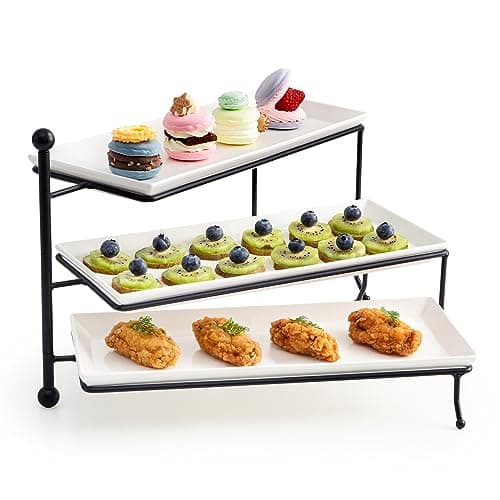
These two objects get shelved together and solve opposite problems. A cake stand is one plate for one large thing. A tiered stand is two or three small plates for many small things - cupcakes, scones, macarons, a tea spread. If what you serve is a single cake, a tiered stand will annoy you, because each tier is too small for it. If what you serve is forty small items, a single stand runs out of room immediately and our tiered serving tray picks are the right page.
If the stand is going on a table where people serve themselves, think about reach before looks. A tall pedestal in the middle of a wide buffet is hard to cut from; put it at the near edge instead, and our guide to setting up a buffet table covers the flow that keeps a queue moving. For the flat serving that goes around it, the platter picks cover the shapes that pair with a raised stand.
Which one to buy
- Best overall: Sweese 12-inch porcelain. The right size for any cake and plain enough to carry anything else.
- Best with a dome: Libbey Selene glass. Buy it if cake routinely survives to day two.
- Best value, and best for hosts: jubilander acacia 12-inch. A cake stand that moonlights as a raised cheese board.
- Best centerpiece: Mud Pie marble pedestal, 11 inch. Cold surface, real height, real weight.
- Best looks without a dome: Martha Stewart Watercrest glass. Vintage edge, no dome, 8- and 9-inch cakes.
The picks in full
We have not lab-tested these products. Picks are chosen from live listings, sustained customer feedback at scale, material quality and fit for hosting — our full methodology.
Product image from Amazon, refreshed daily.
1. Sweese Porcelain Cake Stand, 12-Inch
Twelve inches of plain white porcelain, which is the size that takes a full layer cake with room for the knife, and the only finish that works for savory food as well as sweet.
Key specs
- 12 in plate
- Porcelain
- Round pedestal
- No cover included
What works
- 12 inches clears a 10-inch cake with a border, which 10-inch stands do not
- Plain white carries a cheese course or a pile of sandwiches without looking odd
- Porcelain wipes clean after buttercream in a way wood never does
What does not
- No dome, so nothing is protected once the cake is cut
- Heavy, and a ceramic pedestal is the piece that chips in a cupboard
- Takes a full shelf of height for an object used a few times a year
#ad We may earn a commission · Price as of November 2, 2026
Product image from Amazon, refreshed daily.
2. Libbey Selene Glass Cake Stand with Dome Lid
A glass dome is the difference between a cake that is good on day one and a cake that is good on day three, and Libbey is the glassware name most likely to still be making this in five years.
Key specs
- Glass pedestal plate
- Glass dome lid included
- Footed curved pedestal
- Clear throughout
What works
- The dome keeps a cut cake from drying out, which is the whole argument
- Clear glass disappears, so the cake is what people look at
- The dome inverts into a shallow serving bowl in a pinch
What does not
- The most expensive stand here, and the dome is most of the cost
- Glass domes are the single most breakable thing in any kitchen cupboard
- The dome sets the maximum cake height, so a tall layer cake will not fit
#ad We may earn a commission · Price as of November 2, 2026
Product image from Amazon, refreshed daily.
3. jubilander Acacia Wood Cake Stand, 12 Inch
The cheapest full-size stand here and the one that earns its cupboard space the rest of the year, because a 12-inch acacia round on a pedestal is a cheese board that happens to be raised.
Key specs
- 12 in plate
- Acacia wood
- Round pedestal
- Sold for desserts and appetizers
What works
- Works as a raised charcuterie or cheese stand on a crowded table
- Wood survives being knocked over, which porcelain and glass do not
- Lowest price of the five by a clear margin
What does not
- Wood should not be soaked, so frosting needs wiping off promptly
- An unsealed acacia surface will stain from berries and colored icing
- A warm wood tone fights a formal white-and-glass table
#ad We may earn a commission · Price as of November 2, 2026
Product image from Amazon, refreshed daily.
4. Mud Pie Marble Pedestal Cake Stand, 11 Inch
Marble with a gold-finished stem, 11 inches across and six inches tall. It is bought to be looked at, and it is the only stand here that holds the room when there is nothing on it.
Key specs
- 11 in marble top
- 6 in tall
- Gold-accented pedestal
- No cover included
What works
- Cold marble is the right surface for buttercream and chocolate work
- Six inches of height lifts the cake above everything else on the table
- Doubles as a raised cheese slab once the dessert is gone
What does not
- Marble is porous - red berries and wine will mark it if left
- The heaviest stand here, and marble chips when it meets a tile floor
- Decorative metal finishes need hand washing and will wear over years
#ad We may earn a commission · Price as of November 2, 2026
Product image from Amazon, refreshed daily.
5. Martha Stewart Watercrest Glass Cake Stand, 10.2 Inch
A scalloped, ruffled-edge glass pedestal that costs a good deal less than the domed stands and gets most of the way to the same table presence. Buy it if the cake never survives to day two anyway.
Key specs
- 10.2 in plate
- Glass, handmade
- Scalloped ruffled edge
- Footed pedestal, no cover
What works
- The ruffled edge gives it a vintage look the plain stands do not have
- Clear glass suits any color of cake and any table setting
- Cheaper than the domed glass stands while looking more deliberate
What does not
- 10.2 inches is tight for a 10-inch cake - the border all but disappears
- No dome, so a cut cake dries out overnight
- A decorative rim is the first part to chip, and chipped glass is retired
#ad We may earn a commission · Price as of November 2, 2026
Common questions
What size cake stand do I need?
Buy a stand at least two inches wider than the cake. A 10-inch cake on a 10-inch stand has no border, which looks cramped and gives the knife nowhere to land; on a 12-inch stand it looks deliberate. Most home baking is 8 or 9 inches, so a 12-inch stand covers almost everything and still works as a platter for other food.
Is a cake stand with a dome worth it?
It is if cake survives past the day it is cut. A dome keeps a cut cake from drying out for a couple of days and keeps a frosted one safe from everything in the kitchen. It is not worth it if the cake is always gone the same evening, because the dome roughly doubles the price, limits the cake height you can use, and is the part that breaks.
Can you use a cake stand for things other than cake?
The plain ones, yes, and that is the argument for buying a plain one. A 12-inch white or wooden stand carries a cheese course, a pile of sandwiches, pastries at brunch or a raised section of a charcuterie spread. A decorated or scalloped stand reads as a dessert object and looks odd under savory food.
Are marble cake stands practical?
Marble is genuinely useful for frosted cakes because it stays cold, which helps buttercream and chocolate hold their shape. The costs are weight, price and porosity - marble marks from red berries, wine and oil if a spill sits, so it wants wiping promptly rather than soaking.
How do you keep a cake from sliding on a stand?
A small smear of frosting under the cake board glues it in place, which is the trick bakeries use. Failing that, a dab of frosting straight on the plate works on any smooth stand. Wood grips better than glass or marble, which is worth knowing if you are carrying a loaded stand across a room.
What is the difference between a cake stand and a tiered stand?
A cake stand is one raised plate, built for a single large item; a tiered stand is two or three small plates stacked for lots of little ones. They solve different problems - one cake versus forty cupcakes and scones - and our tiered serving tray roundup covers the second properly.