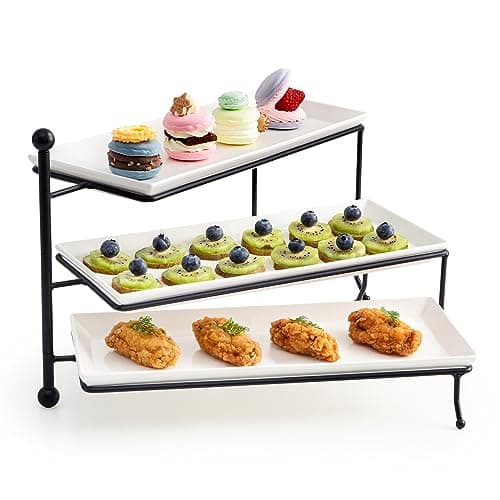
The Best Tiered Serving Trays
A tiered stand is the only serveware that adds table space instead of using it. That is the whole reason to own one, and the reason to be careful which one you buy.
Heads up: we earn a commission from qualifying purchases made through the links on this page, at no extra cost to you. It never changes which products we pick or the order we rank them in. Full disclosure.
Quick picks
Tap any row to jump to the full write-up further down the page.
| # | Product | Best for | Score | Price |
|---|---|---|---|---|
| 1 | 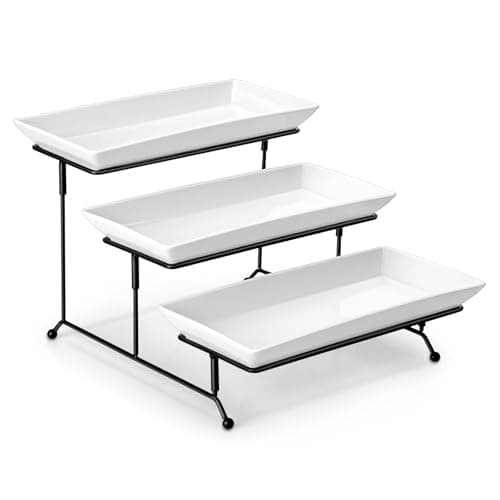 MALACASA 3-Tier Porcelain Serving Trays, 12 InchMost tables | Most tables | 8.4 | $37.99 · View on Amazon #ad We may earn a commission · Price as of November 2, 2026 |
| 2 | 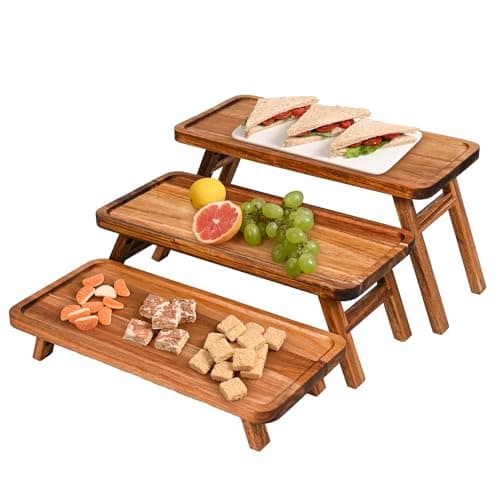 GEHE 3-Tier Acacia Wood Serving Tray StandA board spread | A board spread | 8.1 | $46.99 · View on Amazon(6% off) #ad We may earn a commission · Price as of November 2, 2026 |
| 3 | 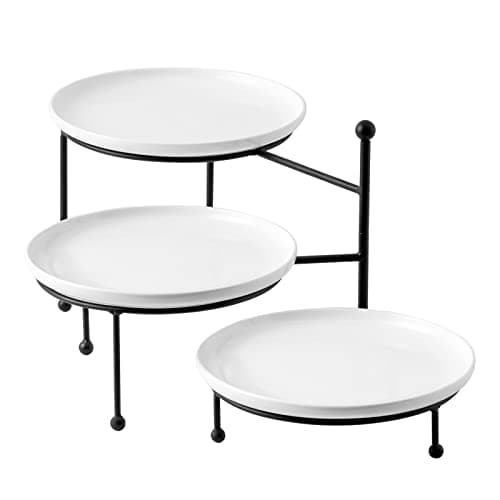 Kanwone 3-Tier Serving Stand with White Porcelain PlatesA dark table | A dark table | 7.9 | $49.99 · View on Amazon #ad We may earn a commission · Price as of November 2, 2026 |
| 4 | 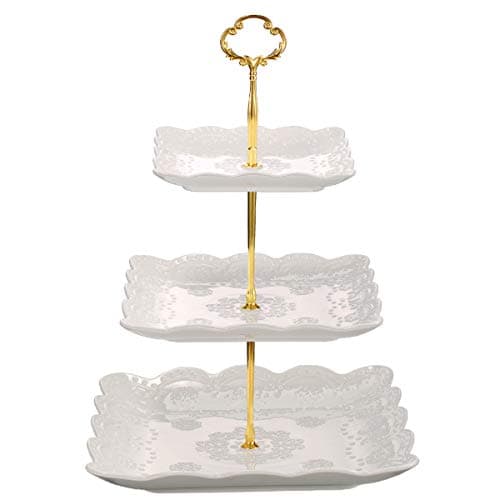 Sumerflos 3-Tier Square Embossed Porcelain StandAfternoon tea | Afternoon tea | 7.9 | $25.99 · View on Amazon #ad We may earn a commission · Price as of November 2, 2026 |
| 5 | 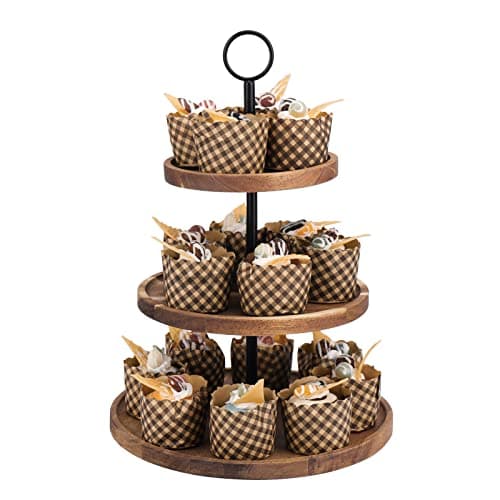 QIELSER 3-Tier Wood Tiered Serving TraySpending the least | Spending the least | 7.3 | $25.99 · View on Amazon #ad We may earn a commission · Price as of November 2, 2026 |
Scores are our editorial rating, not a lab test result — see how we pick.
Every other piece of serveware competes for the same scarce resource. Platters, bowls, boards and trays all take up table, and a spread for twelve people runs out of table long before it runs out of food. A tiered stand is the one exception: it puts two or three platters worth of food into a single platter's footprint by going upwards.
That advantage comes with constraints people discover after buying. Reaching past an upper tier to the lower one is awkward, so the lower tiers want food that can be grabbed rather than served. Weight on top makes the whole thing want to tip. And the stand has to live somewhere for the rest of the year. Below are the five criteria that separate a stand you use from one that stays in the cupboard, then five stands that trade them off differently.
How we judged these stands
We have not load-tested serveware. These picks come from live listing data and the manufacturers' stated specifications, judged against five criteria that are specific to a tiered stand rather than to platters in general.
1. Usable capacity, not quoted diameter
A stand described as twelve inches is twelve inches at the bottom tier only; the tiers above it are smaller, and the clearance between them limits how tall the food can be. The practical capacity of a three-tier stand is closer to one large platter than to three, and anyone buying one as a space multiplier should go in knowing that.
2. Stability when the top tier is loaded
Every tiered stand gets less stable as you fill it upwards. The ones that stay steady have a wide base tier and a rigid central column; the ones that wobble have a narrow base or a folding joint carrying the load. The fix is partly in the loading - heavy and wet on the bottom, light and dry on top - but a well-built stand gives you more margin for a guest who leans on the table.
3. Do the plates come off?
This is the quiet difference between a once-a-year object and a piece of serveware. A stand whose porcelain plates unscrew gives you three flat platters for everyday use and a stand when you need one. A one-piece stand does exactly one job. Both are legitimate; only one earns its shelf space twice.
4. What the surface survives
Porcelain wipes clean, goes in the dishwasher, and does not care about oil, sauce or warm food. Wood tiers mark from anything oily, need hand washing, and are for dry food. If the stand is for pastries and cookies, wood is fine and looks better. If it is for anything that came off a charcuterie board, buy porcelain.
5. How it stores
A tiered stand is used a handful of times a year and is hollow, rigid and awkward the rest of the time. Stands that unscrew into flat plates and a rod cost you five minutes of assembly and almost no shelf. Stands that fold go flat against a wall. Fixed stands are a permanent cupboard problem, and that should be priced into the decision.
The formats, compared
| Format | Best for | Plates come off | Main drawback |
|---|---|---|---|
| Porcelain plates on a metal rack | Any food, including warm and oily | Usually | Heavy when loaded |
| Wood tiers on a folding frame | A board-and-cheese spread | No | Hand wash, stains from oil |
| One-piece wooden stand | A permanent counter display | No | Dry food only, stores badly |
| Square embossed porcelain | Teas, showers, cake tables | Usually | Looks wrong with savory food |
The picks
MALACASA 3-tier porcelain, 12 inch: the default
Three white porcelain platters on a collapsible metal rack, the largest at twelve inches, from a brand that already appears in our dinnerware research. Porcelain is the right surface because it does not care what you put on it, the platters come off and work as flat platters, and the rack collapses rather than living assembled in a cupboard.
Honest drawbacks: three loaded porcelain platters is real weight on a slim rack, so carry it empty and assemble it in place. Twelve inches describes the bottom tier only, and the top is noticeably smaller. And white porcelain shows a chip as a bright mark.
GEHE acacia 3-tier: for a wooden spread
Acacia tiers on a folding frame. The reason to choose it over porcelain is purely visual: if the rest of the table is wooden boards, a white porcelain stand interrupts the spread and this does not. It also folds flat, which almost nothing in this category does, and that is the most useful thing about it.
Against it: wood needs hand washing and will stain from anything oily, so this is a crackers-cheese-and-cookies stand rather than an anything stand. The folding joint carries the load and is the weak point, so do not pile the top tier. And it is the most expensive pick here.
Kanwone 3-tier with black stand: for a dark table
White porcelain rounds on a black metal stand, the largest at 10.3 inches. The black frame is the differentiator - on a dark wood table or a slate counter it reads as deliberate where a chrome rack reads as catering hire. The round plates lift off and work alone, and the narrower footprint helps on a table that is already full.
The costs: a smaller top diameter than the twelve-inch stands, so less total capacity. Painted metal chips at the joints with repeated assembly. And it is among the pricier options for the capacity you get.
Sumerflos square embossed porcelain: for a tea
Square embossed porcelain tiers, which is the dressiest option here. Square tiers also hold more than round tiers of the same width, because round plates waste their corners. For an afternoon tea, a baby shower or a cake table this is the right look, and porcelain wipes clean after buttercream in a way wood does not.
It reads as a cake stand, so it looks odd holding savory food - this is a genuine constraint, not a quibble. The embossed detail traps icing and needs attention when washing. And square porcelain corners are the first thing to chip.
QIELSER 3-tier wood: spending the least
The cheapest stand here and the right buy if a tiered tray is a twice-a-year object in your house. It is a farmhouse-styled display piece first and a serving stand second, which means it can live on the counter holding fruit instead of taking up cupboard space - a real advantage for the format.
The compromises are clear. Wood tiers are for dry food only. The build is lighter than the acacia stand, so it is less steady loaded high. And the farmhouse styling is a look rather than a neutral, so it will not suit every table.
What goes on which tier
Load it bottom-heavy and dry-on-top, and put the thing people want most on the tier they can reach without leaning over the food. In practice that is the middle tier at a standing party and the bottom tier at a seated table. Anything with a sauce or a dip belongs on the bottom, where a drip lands on the stand rather than on the food below it.
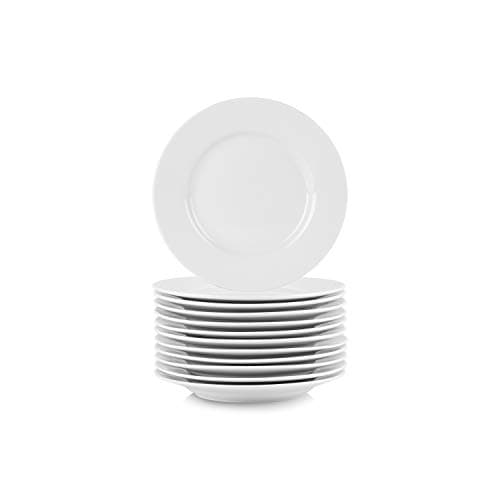
For how a stand fits into a wider spread, our guide to setting up a buffet table covers the order things go in, and how many serving dishes you need puts a number on the rest. Put a stack of appetizer plates at the foot of the stand and the two pieces do one job together.
If what you are serving is one large cake rather than many small things, a tiered stand is the wrong object — every tier is too small for it. Our cake stand picks cover the single raised plate instead, including which plate widths take a real layer cake and when a dome is worth paying for.
Which one to buy
- Best overall: MALACASA 12-inch porcelain. Handles any food, plates come off, rack collapses.
- Best for a board spread: GEHE acacia. Matches wooden serveware and folds flat.
- Best for a dark table: Kanwone black stand. Deliberate-looking, smaller footprint.
- Best for a tea or a shower: Sumerflos square embossed. Dressiest, and square tiers hold more.
- Best value: QIELSER wood. Cheapest, and pretty enough to leave on the counter.
The picks in full
We have not lab-tested these products. Picks are chosen from live listings, sustained customer feedback at scale, material quality and fit for hosting — our full methodology.
Product image from Amazon, refreshed daily.
1. MALACASA 3-Tier Porcelain Serving Trays, 12 Inch
Three white porcelain platters on a metal rack, with the largest at twelve inches, from a brand this site already rates in dinnerware. Porcelain is the right surface for food that is wet, greasy or warm, which is most of what goes on a tiered stand.
Key specs
- 3 tiers
- 12 in largest platter
- White porcelain platters
- Metal rack, collapsible
What works
- Porcelain handles oily and wet food that a wooden tier would stain
- Platters come off the rack and serve as flat platters on their own
- Rack collapses, so it stores flatter than a fixed wooden stand
What does not
- Three loaded porcelain platters is real weight on a thin rack - carry it empty
- Twelve inches is the bottom tier only; the top tier is small
- White porcelain means chips show as a bright mark
#ad We may earn a commission · Price as of November 2, 2026
Product image from Amazon, refreshed daily.
2. GEHE 3-Tier Acacia Wood Serving Tray Stand
Acacia tiers on a folding frame, which is the pick if the rest of your spread is already wooden. It folds flat, which almost no tiered stand does, and that is the single most useful thing about it.
Key specs
- 3 tiers
- Acacia wood tiers
- Foldable stand
- Sold for charcuterie and dessert display
What works
- Matches a wooden charcuterie board instead of interrupting it
- Folds flat for storage, unlike most tiered stands
- Wood is quieter under plates and glasses than a metal rack
What does not
- Wood needs hand washing and will stain from anything oily
- Folding joints are the weak point on any folding stand - do not overload it
- Most expensive pick in this roundup
#ad We may earn a commission · Price as of November 2, 2026
Product image from Amazon, refreshed daily.
3. Kanwone 3-Tier Serving Stand with White Porcelain Plates
White porcelain rounds on a black metal stand, the largest at 10.3 inches. The black frame is the differentiator: on a dark wood table or a slate counter it reads as deliberate where a silver rack reads as catering equipment.
Key specs
- 3 tiers
- 10.3 in largest round plate
- White porcelain plates
- Black metal stand
What works
- Black frame suits a dark table or a modern kitchen better than chrome
- Round porcelain plates lift off and work as standalone plates
- Narrower footprint than the twelve-inch stands on a crowded table
What does not
- Smaller top diameter than the 12-inch stands, so total capacity is lower
- Painted metal chips at the joints with repeated assembly
- Among the pricier stands for the capacity you get
#ad We may earn a commission · Price as of November 2, 2026
Product image from Amazon, refreshed daily.
4. Sumerflos 3-Tier Square Embossed Porcelain Stand
Square embossed porcelain tiers, which is the most formal-looking option here and the one to buy for a tea, a shower or a cake table. Square tiers also hold more than round ones of the same width.
Key specs
- 3 tiers
- Square porcelain tiers
- Embossed white finish
- Sold for cupcakes and pastry service
What works
- Square tiers waste less area than round ones, so each level holds more
- The embossed edge is the dressiest finish in this roundup
- Porcelain wipes clean after buttercream and pastry, unlike wood
What does not
- Reads as a cake stand, so it looks odd holding savory food
- Embossed detail traps icing and needs attention when washing
- Corners are the first thing to chip on a square porcelain tier
#ad We may earn a commission · Price as of November 2, 2026
Product image from Amazon, refreshed daily.
5. QIELSER 3-Tier Wood Tiered Serving Tray
The cheapest wooden stand here and the one to buy if a tiered tray is a twice-a-year object in your house. It is a farmhouse-styled display piece first and a serving tray second, and priced accordingly.
Key specs
- 3 tiers
- Wood tiers
- Farmhouse styling
- Sold for dessert, cookie and candy display
What works
- Lowest price of any stand in this roundup
- Doubles as a permanent counter display rather than living in a cupboard
- Light enough to move loaded, which the porcelain stands are not
What does not
- Wood tiers are for dry food - anything wet or oily will mark them
- Lighter build than the acacia stand, so it is less steady when loaded high
- Styled rather than neutral, so it will not suit every table
#ad We may earn a commission · Price as of November 2, 2026
Common questions
What is a tiered serving tray actually for?
Vertical space. A three-tier stand puts three platters worth of food into one platter's footprint, which is the only piece of serveware that does that. It is most useful on a small table, a kitchen island that has run out of room, or a dessert and pastry spread where the food is dry, bite-sized and does not need to be reached past.
Are tiered stands stable when they are full?
The stand itself usually is; the risk is in the loading. Weight on the top tier raises the center of gravity, so the rule is heavy and wet on the bottom, light and dry on top. Carry it empty, assemble it where it is going to stand, and do not put a stand on a table that people lean on. The folding wooden stands are the ones to be most careful with, because the joint is the weak point.
Wood or porcelain tiers?
Porcelain for anything oily, saucy or warm, because it wipes clean and goes in the dishwasher. Wood for a dry spread - crackers, cookies, cheese, pastries - and for the case where the rest of your table is already wooden boards. Wood tiers stain from oil and need hand washing, which is the real cost of choosing them.
Can the plates come off a tiered stand?
On most porcelain stands, yes, and it is worth checking before you buy because it roughly doubles what the thing is good for: three loose platters for everyday use, assembled into a stand when the table is full. Fixed stands - usually the one-piece wooden ones - do only the one job, which is fine if that is the job you want.
How do you store a tiered serving tray?
This is the question people skip and regret. A stand that disassembles stores as three flat plates and a rod. A folding wooden stand goes flat against a wall. A fixed stand is a permanent, awkward, hollow cupboard tenant for 360 days a year. If storage is tight, buy a stand that comes apart, or buy one that is pretty enough to live on the counter as a fruit bowl.
Is a tiered stand the same thing as a cake stand?
No, though the listings overlap constantly. A cake stand is one raised plate designed to carry the weight of a whole cake and be cut on. A tiered stand is two or three smaller plates stacked vertically for small items. If you want to put a cake on it, you want a single-tier cake stand; if you want to put forty small things on it, you want a tiered stand.