Charcuterie Board Accessories
Almost nobody is short of a board. What runs out is somewhere to put the olives, a way to tell guests what the cheese is, and anything that stops the wood drying out.
Heads up: we earn a commission from qualifying purchases made through the links on this page, at no extra cost to you. It never changes which products we pick or the order we rank them in. Full disclosure.
Quick picks
Tap any row to jump to the full write-up further down the page.
| # | Product | Best for | Score | Price |
|---|---|---|---|---|
| 1 |  Sweese Pristine White Ramekins with LidOlives, dips and jam | Olives, dips and jam | 8.8 | Check price on Amazon #ad We may earn a commission · We do not print prices — see the live one on Amazon |
| 2 | 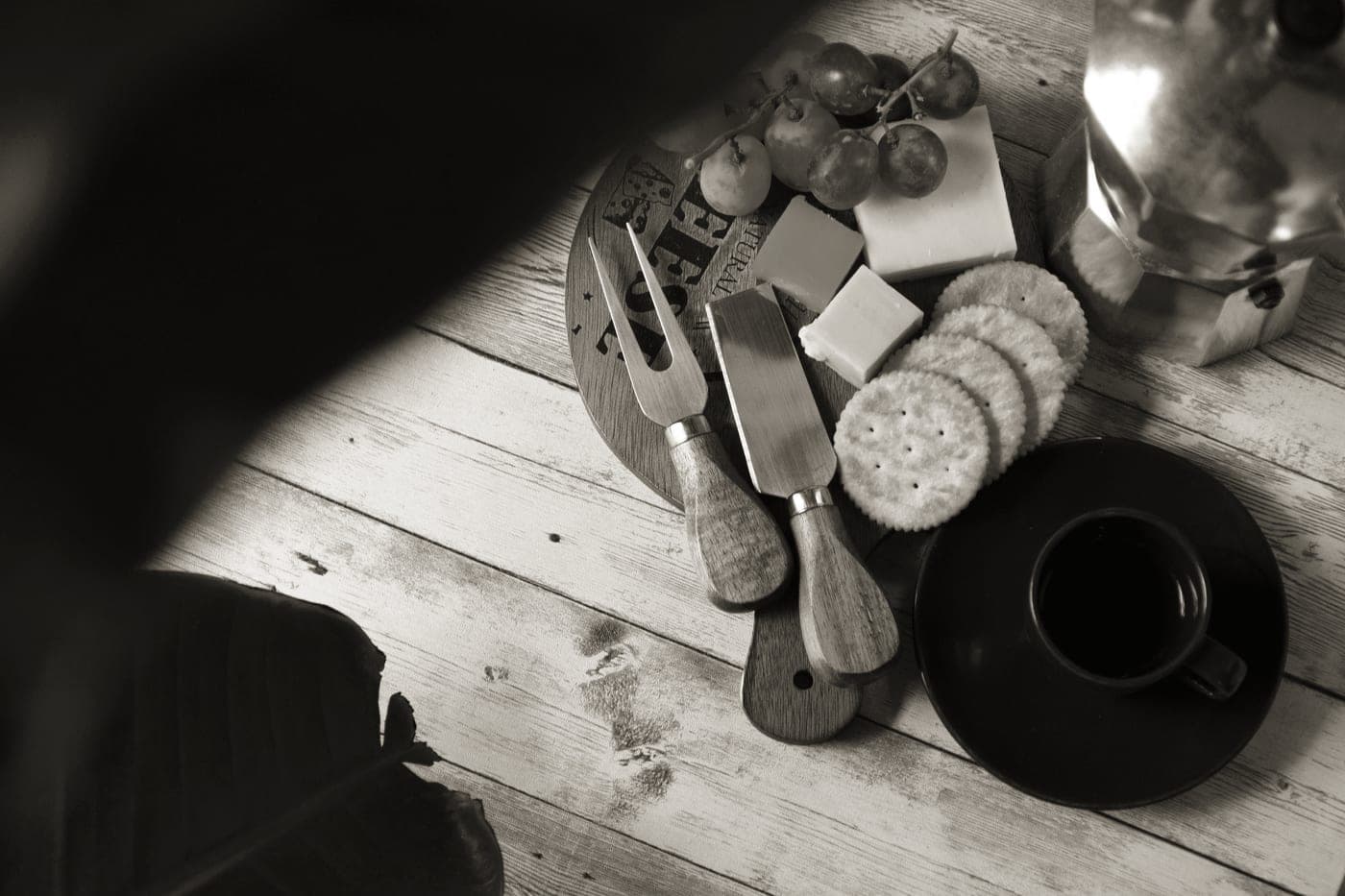 BOSKA Cheese Knife SetActually cutting cheese | Actually cutting cheese | 8.5 | Check price on Amazon #ad We may earn a commission · We do not print prices — see the live one on Amazon |
| 3 | RSVP International Oval Cheese Markers, Set of 6Labeling the cheeses | Labeling the cheeses | 8.2 | Check price on Amazon #ad We may earn a commission · We do not print prices — see the live one on Amazon |
| 4 |  BOSKA Board OilKeeping wood alive | Keeping wood alive | 8.0 | Check price on Amazon #ad We may earn a commission · We do not print prices — see the live one on Amazon |
| 5 | BOSKA Cheese Slicer Monaco+Even slices of hard cheese | Even slices of hard cheese | 8.1 | Check price on Amazon #ad We may earn a commission · We do not print prices — see the live one on Amazon |
| 6 |  Formaticum Two-Ply Cheese Storage Paper SheetsLeftover cheese | Leftover cheese | 8.0 | Check price on Amazon #ad We may earn a commission · We do not print prices — see the live one on Amazon |
Scores are our editorial rating, not a lab test result — see how we pick.
The short version: the accessories that change a board are small bowls, decent knives and something to write the cheese names on. The ones that do not are the twelve-piece kits sold with a board, which bundle four knives you will not use and nothing to put the olives in. Buy for the gaps, and the gaps are nearly always the same three.
How these were ranked
Not by price and not by how they photograph. The order below is how likely you are to be missing the thing, multiplied by how often you would use it once you owned it. That is why a set of small bowls sits above a cheese slicer: almost every household already has something that cuts cheese, and almost none have six lidded bowls the right size for olives.
We have not lab-tested any of this. Picks come from live manufacturer catalogs, material and build, and whether the thing survives being used rather than displayed — the full methodology explains how that works and what it does not claim.
What each accessory is actually for
| Accessory | The job it does | What to look for |
|---|---|---|
| Small bowls | Keeps oil, brine and jam off the wood | Six of them, lids, 4 oz is the useful size |
| Cheese knives | Cuts hard aged cheese without skating | Cheese-specific blade shapes, not a decorative set |
| Labels | Stops you narrating the board all evening | Ink over chalk, and legible from standing height |
| Board oil | Stops a wooden board drying and splitting | Food-safe mineral oil, nothing from the pantry |
| Cheese slicer | Even slices off a firm aged wheel | Non-stick treatment, or it tears rather than slices |
| Cheese paper | Keeps the leftovers worth eating | Two-ply, large enough to wrap a whole wedge |
The problem with accessory kits
Search this category and most of what comes back is a bamboo board with a drawer, four knives, two slate markers and a stick of chalk, sold as a complete set. It looks like excellent value and it mostly is not, for one reason: the knives in those drawers are shaped for photography. They handle a soft brie and skate straight off a hard aged cheddar, which is the cheese that actually needs a tool.
If you are buying from nothing, a kit is a reasonable way to start and we cover the good ones in complete board sets. If you already own a board — and nearly everybody reading a page about accessories does — the kit duplicates the one thing you have and under-delivers on everything else. Buy the pieces.
Start with the bowls, because that is the real gap
Everything wet on a board wants a bowl. Olives sit in brine, jam and honey run, marinated peppers carry oil, and a dip is a dip. Put any of those directly on wood and two things happen: the board stains in a ring that does not come out, and the cracker next to it goes soft.
The number that works is three to four bowls on a board feeding eight, and the number to own is six. The spares are what let you build the board the night before. Fill them, lid them, put the tray in the refrigerator, and on the day the board goes from empty to finished in about four minutes, which is the difference between enjoying your own party and assembling food through the first hour of it.
Four ounces is the size that disappears into a board without taking it over. Eight-ounce bowls are better as a standalone dip beside the board rather than on it. If you want larger vessels for the rest of the table, the serving bowl picks cover that end.
Labeling: ink beats chalk
Slate markers and chalk are the default in this category and they have one flaw nobody mentions in the listing: chalk sheds. Dust lands on whatever is beside the marker, which on a charcuterie board is food. It is not dangerous and it is not pleasant.
Porcelain or ceramic labels with a food-safe ink pen avoid that entirely, stay legible for a whole evening, and go in the dishwasher afterwards, which is why they get reused instead of ending up in a drawer dirty. The one place they fail is on a white platter, where white porcelain simply vanishes — on a white serving dish, use a dark slate board as the writing surface instead.
Write the cheese name, and write the milk underneath it if anyone coming has a reason to care. Goat, sheep and cow is three extra words and it stops the one conversation that otherwise repeats all night.
Keeping a wooden board alive
A wooden board that is never oiled dries from the outside in, and the first sign is a hairline split along the grain at one end. Once that opens it does not close. The fix is dull and takes a minute: food-safe mineral oil, rubbed in with a cloth, left to soak, excess wiped off.
The interval worth knowing is monthly, or every two months on a board in heavy use, which is the guidance the University of Kentucky extension service gives for wooden boards and is cited in full below. The same guidance is blunt about two things people get wrong: never use vegetable or nut-based oils, which turn rancid inside the wood, and never submerge the board, which is what warps and splits it faster than neglect does.
Mineral oil is sold as a specialist board product and also, far more cheaply, as plain food-grade mineral oil. The specialist version in a spray bottle is genuinely easier to use, and ease is the whole variable here, because the problem with board care is not that people do it wrong — it is that they do not do it at all. Our full cleaning and care guide covers the washing side, including the salt-and-lemon method for lifting stains.
Slicing tools, and when a knife is not enough
A knife set is the accessory that matters most, and it has its own page — our cheese knife picks go into blade shapes in detail. The reason a dedicated set is worth the money over the bundled ones is narrow but real: a hard aged cheese resists, and a blade without the right profile slides sideways off the rind instead of entering it.
A slicer is the other half of that problem. On a firm wheel people want even pieces, and a slicer produces them where a knife produces wedges of varying thickness. It is genuinely useless on anything soft, so it never replaces the knives — it is a second tool for one specific cheese, which is why it sits low on this list despite being very good at its job.
The leftovers, which is where most cheese is wasted
Cheese keeps changing after you buy it. Wrapped in plastic it has nowhere to breathe, moisture collects against the surface, and within a few days you get the slick texture and sharp ammonia smell that makes people throw away a wedge that was fine underneath.
Two-ply cheese paper fixes it by doing both jobs at once: the inner layer holds humidity so the wedge does not dry, the outer layer lets gas escape so it does not suffocate. Rewrap after every use, keep it in the warmest part of the refrigerator rather than the coldest, and a good wedge stays good for weeks instead of days.
It is paper, and it costs more than a roll of plastic wrap, which is a fair objection. The counter is simple arithmetic: one wedge of decent cheese rescued pays for the pack.
What this costs, roughly
This is an inexpensive category. Bowls, labels, a bottle of oil and a pack of paper together sit well below what a single good board costs, and the knives are the only item where spending more buys a meaningfully better object. The expensive mistake here is not any single purchase — it is buying a second accessory kit because the first one came with knives that did not cut.
We do not print prices on this site, because they move weekly and a number typed here in October is wrong by December. Every pick links straight to the current listing so you see the real figure before you commit.
Which one to buy
- If you buy one thing: the Sweese lidded ramekins. Six bowls, prep the night before, and the board stops staining.
- Best knives: BOSKA. A cheese specialist’s blades rather than a board maker’s afterthought.
- Best labels: RSVP International porcelain markers. Ink rather than chalk, and dishwasher safe.
- Best board care: BOSKA Board Oil. Mineral oil in a spray bottle, which is why it actually gets used.
- Best for a hard aged wheel: BOSKA Monaco+ slicer. Even slices where a knife gives you wedges.
- Best for leftovers: Formaticum two-ply paper. The pick that pays for itself in cheese you did not throw out.
If you are still choosing the board itself, start with the board picks, which are sized by guest count rather than by looks. For what actually goes on top and in what quantities, how to build a charcuterie board has the per-guest amounts, and the rest of the boards section covers materials, sizes and sets.
The picks in full
We have not lab-tested these products. Picks are chosen from live listings, sustained customer feedback at scale, material quality and fit for hosting — our full methodology.
Representative category photo, not the product listing image.
1. Sweese Pristine White Ramekins with Lid
The accessory most people turn out to be missing. Six small bowls keep the wet things off the wood, and the lids mean you can fill them the night before and carry them from the fridge to the board.
Key specs
- Glazed ceramic
- 4 oz and 8 oz, sets of six
- Lids included
- Microwave, dishwasher and oven safe
- Fluted shape, stacks with the lids on
What works
- Lids turn them into prep containers, so the board gets assembled in minutes
- Six is the right number for one large board, not a number that forces a second purchase
- Plain white disappears behind the food instead of competing with it
What does not
- Ceramic is heavier than glass, and a full board of them adds real weight
- The brand's own store stocks them in small quantities, so the size you want is not always there
#ad We may earn a commission · We do not print prices — see the live one on Amazon
Representative category photo, not the product listing image.
2. BOSKA Cheese Knife Set
A specialist cheese company's knives rather than a board maker's afterthought. These go through a hard aged cheese, which is exactly where bundled knives fail.
Key specs
- German steel
- Cheese-specific blade shapes
- Sold as focused sets
What works
- Cuts hard cheese without the blade skating off
- Blade shapes are matched to cheese types, not decorative
- From a company that only makes cheese tools
What does not
- Costs more than the knives bundled with a board
- No wooden handle option in every set
#ad We may earn a commission · We do not print prices — see the live one on Amazon
Representative category photo, not the product listing image.
3. RSVP International Oval Cheese Markers, Set of 6
Porcelain labels with an ink pen rather than slate and chalk. Chalk dust lands on the food; ink does not, and it washes off in the dishwasher.
Key specs
- White porcelain
- Set of six, three designs
- Black ink pen included
- 2.5 in wide by 2.75 in tall
- Dishwasher safe
What works
- No chalk dust anywhere near the cheese
- Writing stays legible across a whole evening instead of smudging
- Dishwasher safe, so they get reused rather than put away dirty
What does not
- You are dependent on the included pen; a dried-out pen makes the set useless until you replace it
- White porcelain vanishes against a white platter, which is the one board it does not suit
#ad We may earn a commission · We do not print prices — see the live one on Amazon
Representative category photo, not the product listing image.
4. BOSKA Board Oil
White mineral oil in a spray bottle, which is the only kind of oil a wooden board should ever see. The spray is the real feature: it is why the job gets done instead of postponed.
Key specs
- 200 ml / 6.76 fl oz
- White mineral oil
- For wooden and slate boards
- Odorless and tasteless
- Spray bottle
What works
- Mineral oil does not go rancid the way a kitchen cooking oil does
- Spraying and wiping takes a minute, so boards actually get maintained
- One bottle lasts years at the monthly interval extension services recommend
What does not
- Does nothing a plain bottle of food-grade mineral oil would not do, at a specialist price
- The bottle gives no guidance on how much is too much, and an over-oiled board stays tacky
#ad We may earn a commission · We do not print prices — see the live one on Amazon
Representative category photo, not the product listing image.
5. BOSKA Cheese Slicer Monaco+
A slicer rather than a knife, which is the right tool for a firm aged cheese people want in even pieces. The non-stick treatment is the difference between slices and crumbs.
Key specs
- Stainless steel
- BSF non-stick treatment
- 210 x 74 x 9 mm
- Dishwasher safe
- Lifetime guarantee
What works
- Gives consistent slices that a knife cannot match on a firm cheese
- Lifetime guarantee from a company that only makes cheese tools
- Works on cucumber and hard vegetables, so it is not single-purpose
What does not
- Useless on anything soft, so it never replaces a knife set
- The wire-free design means a dull blade cannot be swapped, only replaced under warranty
#ad We may earn a commission · We do not print prices — see the live one on Amazon
Representative category photo, not the product listing image.
6. Formaticum Two-Ply Cheese Storage Paper Sheets
Two-ply paper that lets cheese breathe while holding humidity, which is the opposite of what plastic wrap does. The accessory that pays for itself in cheese you did not throw away.
Key specs
- Two-ply cheese storage paper
- 11 x 14 in sheets
- Packs of 15, 30 or 60
- Labels included
- Compostable and reusable lines also sold
What works
- Stops the sweating and surface slime that plastic wrap causes
- The included labels mean you know what the wedge is a week later
- Sheets are large enough to wrap a whole wheel, not just an offcut
What does not
- Costs real money for paper, and a damp cloth in a container gets part of the way free
- Single-use unless you buy the reusable line, which is a separate product
#ad We may earn a commission · We do not print prices — see the live one on Amazon
Common questions
What accessories do you need for a charcuterie board?
Four things cover almost every spread: a set of small bowls for anything wet, a real set of cheese knives, something to label the cheeses with, and food-safe mineral oil if the board is wooden. Everything beyond that is preference. Most people already own the board and are missing the bowls.
How many small bowls do you need on a charcuterie board?
Three to four for a board feeding eight. Olives, a mustard or jam, and a dip is the usual set, with a fourth for nuts. Six is the right number to own, because the spares let you prepare ahead and swap a bowl out mid-evening rather than washing one at the sink.
How do you label cheese on a charcuterie board?
Porcelain or ceramic markers with an ink pen, or a slate board written on with chalk. Ink is the better choice on a food surface because chalk sheds dust onto whatever sits near it. Write the cheese name and, if anyone is avoiding something, the milk it is made from.
How often should you oil a wooden charcuterie board?
Monthly, or every two months if the board is in heavy use, using food-safe mineral oil. That is the interval the University of Kentucky extension service gives for wooden boards. Never use vegetable or nut oils, which go rancid in the wood.
Can you put cheese knives in the dishwasher?
Stainless steel knives and slicers usually can, and the manufacturer will say so. Anything with a wooden handle should be hand washed, because the dishwasher dries the handle out and loosens it from the blade. The board itself never goes in.
How do you store leftover cheese from a board?
Wrap it in two-ply cheese paper rather than plastic wrap, then keep it in the warmest part of the refrigerator. Cheese is alive and needs to breathe; plastic traps moisture against the surface and that is what produces the slimy, ammonia smell people blame on the cheese being off.