How to Condition a Charcuterie Board
A dry board cracks, stains and holds smells. Conditioning takes ten minutes, costs almost nothing, and is the whole of board maintenance.
Heads up: we earn a commission from qualifying purchases made through the links on this page, at no extra cost to you. It never changes which products we pick or the order we rank them in. Full disclosure.
Quick picks
Tap any row to jump to the full write-up further down the page.
| # | Product | Best for | Score | Price |
|---|---|---|---|---|
| 1 |  BOSKA Board OilKeeping wood alive | Keeping wood alive | 8.0 | Check price on Amazon #ad We may earn a commission · Live price on Amazon — it changes often |
| 2 | 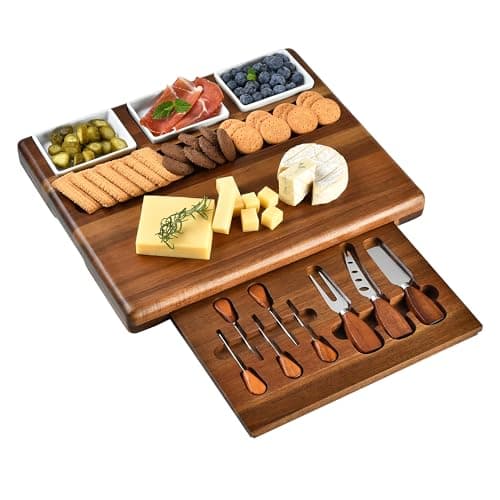 Shanik Acacia Wood Charcuterie BoardA board you keep | A board you keep | 8.6 | $65.99 · View on Amazon(6% off) #ad We may earn a commission · Price as of November 2, 2026 |
| 3 | Home Beets Acacia Charcuterie BoardAcacia on a budget | Acacia on a budget | 8.1 | Check price on Amazon #ad We may earn a commission · Live price on Amazon — it changes often |
| 4 | 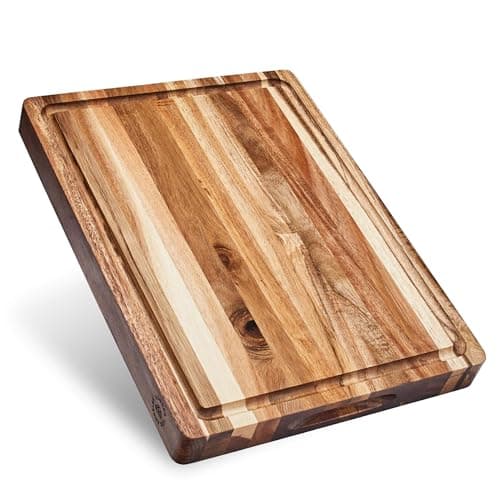 Sonder Los Angeles Acacia Serving BoardLooks on the table | Looks on the table | 8.5 | $59.99 · View on Amazon #ad We may earn a commission · Price as of November 2, 2026 |
Scores are our editorial rating, not a lab test result — see how we pick.
Condition a charcuterie board by flooding the dry wood with food-grade mineral oil, letting it soak for several hours, and wiping off what has not absorbed. Repeat monthly, and weekly for the first month on a new board. That is the entire job, and doing it is the difference between a board that lasts a decade and one that cracks down the middle in two years.
The five steps
- Clean it and dry it completely. Oil will not penetrate damp wood. Wash with warm water and a little dish soap, dry with a towel, then stand the board on edge for an hour so both faces dry evenly.
- Pour the oil on generously. More than seems reasonable. You are not coating the surface, you are filling the wood, and dry wood takes a surprising amount.
- Spread it over every surface. A cloth or a paper towel, working with the grain, and do not skip the edges or the underside. A board oiled on one face only will cup, because one side takes on moisture from the air and the other does not.
- Let it soak. Several hours at minimum, overnight if you can. Stand it on edge rather than flat so the oil moves through rather than pooling.
- Wipe off the excess. Whatever has not absorbed by morning is not going to. A board left sticky with surplus oil picks up dust and feels unpleasant to use.
Why the wood needs it
Wood moves. It takes on moisture from a humid kitchen and gives it up again in a dry one, and that cycle is what opens cracks and lifts the grain. Oil fills the cell structure so there is less room for water to move in and out, which slows the whole process down.
A dry board shows it. The surface goes pale and chalky after washing, end grain looks fuzzy, and the wood absorbs colors and smells from food instead of resisting them. All three reverse with oil.
How often, by board age and use
| Situation | How often | Note |
|---|---|---|
| Brand new board, first month | Weekly | Unsealed wood drinks the first few coats |
| In regular use | Monthly | Or whenever it looks dry after drying |
| Occasional use | Every two to three months | Dry air does damage even unused |
| After a heavy wash | Same day | Soap and hot water strip oil out |
| Bamboo | Every two to three months | Absorbs less, still benefits |
| Marble or slate | Never | Nothing to feed |
Oil, cream or wax
- Mineral oil is the foundation. It penetrates deeply and feeds the wood, and it is what a dry board actually needs. A spray bottle like the BOSKA board oil makes even coverage easier than pouring from a bottle.
- Board cream is mineral oil blended with beeswax or carnauba wax. The wax stays near the surface and adds water resistance, so liquid beads rather than soaking in. Use it after oil, not instead of it.
- Pure beeswax is a surface treatment only. Applied to dry wood it seals the outside while the inside stays thirsty, which is the worst of both.
Reviving a board that has been neglected
A gray, rough, slightly cracked board is usually recoverable. Sand lightly along the grain with fine paper — 220 grit is enough — to open the closed surface, then wipe every trace of dust off with a damp cloth and let it dry.
Then oil it three or four times over several days, letting each coat absorb fully before adding the next. Surface checks close up noticeably and the color comes back. What does not come back is a crack that runs through the full thickness, or a board that has delaminated along a glue joint after going through a dishwasher — at that point the board is done, and how to choose a charcuterie board is the next stop.
Conditioning is not cleaning
The two get conflated and they are separate jobs. Cleaning removes food and bacteria and happens after every use; conditioning replaces oil the cleaning took out and happens monthly. Doing one does not cover the other.
The one rule that spans both: a wooden board never goes in a dishwasher. Prolonged heat and standing water open glue joints and warp solid wood, and no amount of oil afterward fixes it. Full washing method in how to clean a charcuterie board.
Boards that reward the effort
- Shanik acacia: noticeably thicker than most bamboo boards, reversible, with a juice groove on most sizes. Thick solid acacia is the material that most repays regular oiling.
- Home Beets acacia: acacia with a moisture-resistant finish, in mid to large sizes, at a lower price.
- Sonder Los Angeles acacia: hand-finished edges and a food-safe finish, for a board that is also furniture.
- BOSKA board oil: 200 ml of odorless, tasteless white mineral oil in a spray bottle, labeled for wooden and slate boards.
Four signs it is time
- Pale and chalky after washing. The clearest signal. Dry wood lightens as it loses oil, and the color comes straight back once it is fed.
- Water sitting rather than beading. A well-oiled board sheds a drop. One that absorbs it immediately is dry all the way through.
- Fuzzy end grain. Run a thumb across the short edges. If it catches, the grain has lifted and the board wants sanding before oiling.
- Smells of what you cut last. Dry wood absorbs instead of resisting. Oil is what closes the structure back up.
The picks in full
We have not lab-tested these products. Picks are chosen from live listings, sustained customer feedback at scale, material quality and fit for hosting — our full methodology.
Representative category photo, not the product listing image.
1. BOSKA Board Oil
White mineral oil in a spray bottle, which is the only kind of oil a wooden board should ever see. The spray is the real feature: it is why the job gets done instead of postponed.
Key specs
- 200 ml / 6.76 fl oz
- White mineral oil
- For wooden and slate boards
- Odorless and tasteless
- Spray bottle
What works
- Mineral oil does not go rancid the way a kitchen cooking oil does
- Spraying and wiping takes a minute, so boards actually get maintained
- One bottle lasts years at the monthly interval extension services recommend
What does not
- Does nothing a plain bottle of food-grade mineral oil would not do, at a specialist price
- The bottle gives no guidance on how much is too much, and an over-oiled board stays tacky
#ad We may earn a commission · Live price on Amazon — it changes often
Product image from Amazon, refreshed daily.
2. Shanik Acacia Wood Charcuterie Board
Heavier and more figured than any bamboo board, with grain variation that means no two look alike. This is the one that stays out on the counter rather than going back in the cupboard.
Key specs
- Solid acacia
- Noticeably thicker than bamboo boards
- Juice groove on most sizes
- Reversible
What works
- Acacia's color variation reads as furniture, not kitchenware
- Thick enough that it does not flex when you carry it loaded
- Doubles honestly as a cutting board
What does not
- Heavy once it is full, which matters if you are carrying it outside
- Needs oiling a few times a year or it goes dull and gray
#ad We may earn a commission · Price as of November 2, 2026
Representative category photo, not the product listing image.
3. Home Beets Acacia Charcuterie Board
Acacia's look and moisture resistance without the premium-brand markup. The value pick if you want wood with character rather than bamboo's flat grain.
Key specs
- Acacia
- Moisture-resistant finish
- Mid to large sizes
What works
- Real acacia grain at close to bamboo money
- Handles moisture better than untreated hardwood
- Sizes usable for a real party
What does not
- Finish is not as refined as the premium acacia boards
- Grain variation means the one you get may not match the photo
#ad We may earn a commission · Live price on Amazon — it changes often
Product image from Amazon, refreshed daily.
4. Sonder Los Angeles Acacia Serving Board
The best-looking board of the group, with the kind of finish that makes people ask where you got it. Worth it if the board is part of the table setting rather than just a surface.
Key specs
- Acacia
- Hand-finished edges
- Several sizes
- Food-safe finish
What works
- Finish quality is a clear step above the mass-market boards
- Edge profile is comfortable to carry loaded
- Sizes go large enough to anchor a spread
What does not
- Priced above the bamboo field
- No included knives, so budget for those separately
#ad We may earn a commission · Price as of November 2, 2026
Common questions
How do you condition a charcuterie board?
Wash and dry it completely, pour food-grade mineral oil generously onto the dry wood, spread it over every surface including the edges and underside, let it soak for a few hours or overnight, then wipe off whatever has not absorbed. That is the whole process.
How often should you oil a charcuterie board?
Monthly for a board in regular use, and immediately whenever the wood looks pale, chalky or dry after drying. A new board wants oiling weekly for the first month because unsealed wood absorbs far more at the start.
What oil do you use on a charcuterie board?
Food-grade mineral oil, or a board oil or board cream made from it. Mineral oil never goes rancid because it is not a plant oil, it is tasteless and odorless, and it penetrates rather than curing into a film on the surface.
Can you use olive oil on a cutting board?
No. Olive oil, vegetable oil, canola and any other cooking oil go rancid in the wood, and the result is a board that smells sour and transfers that smell to food. It is the single most common way people ruin a board while trying to care for it.
What is the difference between board oil and board cream?
Board oil is mineral oil and it soaks in. Board cream is mineral oil blended with beeswax or carnauba and it leaves a thin protective layer on the surface as well. Oil first to feed the wood, cream afterward if you want added water resistance.
How do you fix a dried-out or cracked board?
Sand lightly along the grain with fine paper to open the surface, wipe the dust off, then oil heavily three or four times over several days, letting each coat soak in fully. Surface cracks close up considerably. A crack through the full thickness will not come back.
Do bamboo and marble boards need conditioning?
Bamboo benefits from occasional oiling even though it is a grass rather than a hardwood, and it absorbs less. Marble and slate need none at all - there is nothing to feed. For those, the care question is only about chips and knife marks.