How to Choose a Charcuterie Board
Five decisions, in the order that matters. Get the first two right and the rest barely moves the outcome.
Heads up: we earn a commission from qualifying purchases made through the links on this page, at no extra cost to you. It never changes which products we pick or the order we rank them in. Full disclosure.
Quick picks
Tap any row to jump to the full write-up further down the page.
| # | Product | Best for | Score | Price |
|---|---|---|---|---|
| 1 | 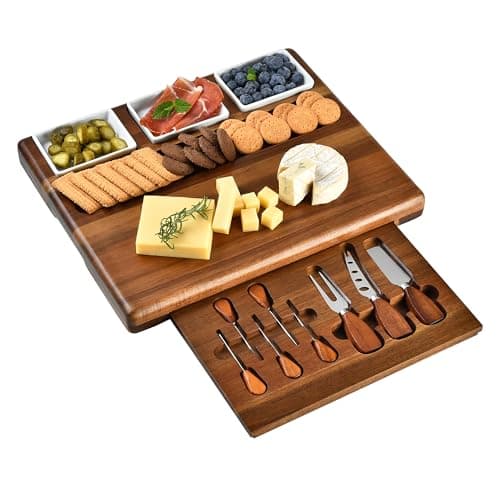 Shanik Acacia Wood Charcuterie BoardA board you keep | A board you keep | 8.6 | $87.99 · View on Amazon #ad We may earn a commission · Price as of October 10, 2026 |
| 2 | 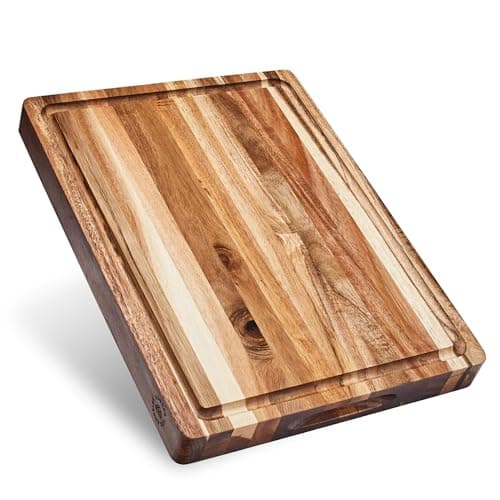 Sonder Los Angeles Acacia Serving BoardLooks on the table | Looks on the table | 8.5 | $59.99 · View on Amazon #ad We may earn a commission · Price as of October 10, 2026 |
| 3 | 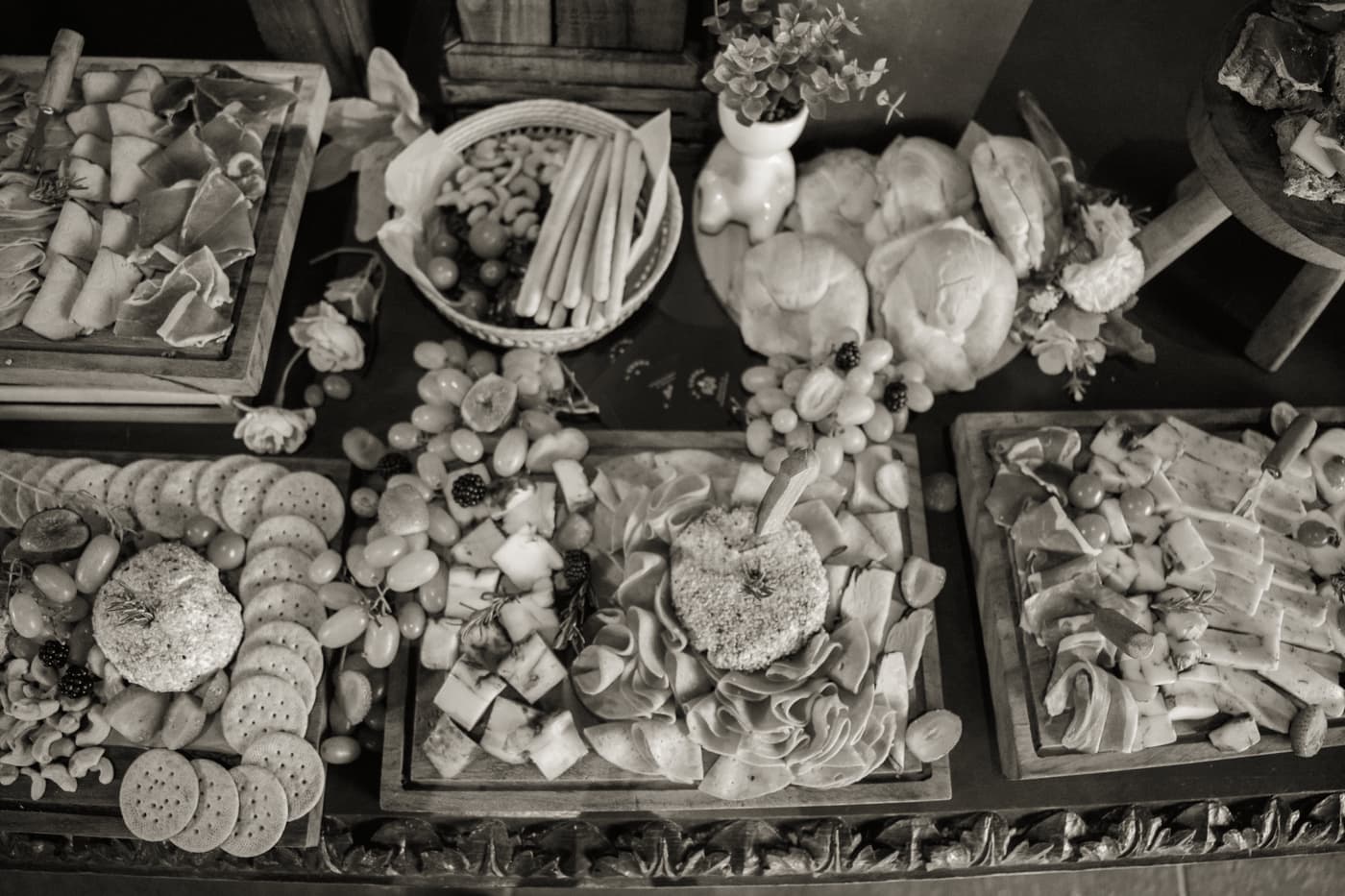 Fresh Nest Co. Extra Large Bamboo BoardBudget crowd board | Budget crowd board | 8.2 | Check price on Amazon #ad We may earn a commission · Live price on Amazon — it changes often |
| 4 | 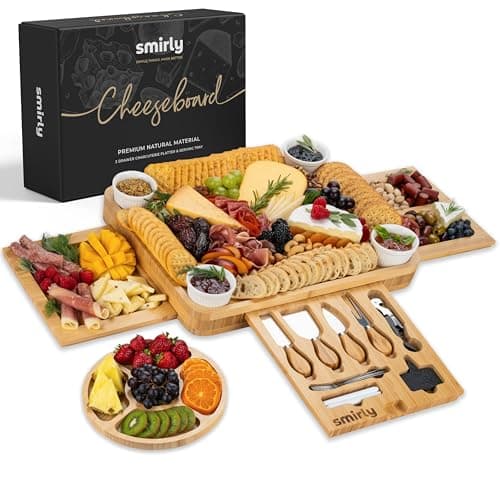 SMIRLY Bamboo Charcuterie Board and Knife SetOne-box gift | One-box gift | 8.4 | $69.99 · View on Amazon #ad We may earn a commission · Price as of October 10, 2026 |
Scores are our editorial rating, not a lab test result — see how we pick.
Choose on size first, material second, and treat everything else as a tie-breaker. Size is the only decision that can make a board unusable; material decides how long you keep it and how much care it needs; thickness, grooves and handles change the experience at the margins. People do this in exactly the wrong order, which is how you end up with a beautiful board that is too small.
Decision 1: size, from your real guest count
Work from the number of people you actually feed, not the number you imagine hosting. Then decide whether the board is a starter or the meal, because that single distinction moves the answer by four to six inches.
| You usually feed | Board as a starter | Board as the meal |
|---|---|---|
| 2 | 8 to 10 in | 12 in |
| 4 | 10 to 12 in | 14 to 16 in |
| 6 to 8 | 16 in | 18 to 20 in |
| 12 or more | Two boards | Boards plus platters |
Two checks before you commit: measure the cupboard shelf it has to live on, and picture carrying it loaded. A large hardwood board with four cheeses and bowls on it is a two-handed lift. The full size guide has the per-guest numbers if your count sits between the rows.
Decision 2: material, from how much care you will really do
Be honest here, because this is the decision people answer aspirationally and then regret. A wooden board needs oiling a few times a year and must never go in a dishwasher. If that will not happen, choose accordingly.
- Acacia: the best default. Dense, holds up to knives, looks warm, available thick. Needs oiling.
- Bamboo: lighter and cheaper at the same footprint, which is why almost every oversized board is bamboo. Slightly harder on knife edges.
- Marble or slate: zero knife tolerance, zero oiling, and genuinely better for soft cheese because it holds cold. Heavy.
- Ceramic or porcelain: dishwasher-safe, no care at all, and the right answer for anything brined or oily.
The acacia vs bamboo vs marble comparison takes this apart properly, and marble vs slate covers the stone question on its own.
Decision 3: thickness and build
On a listing you cannot touch, thickness is the most reliable proxy for quality. A thin board warps, cups and eventually splits along the glue lines; a thick one does not. If two boards are the same price and the same size, take the thicker one and ignore everything else about them.
Two related signals worth reading: solid wood over thin laminate, and whether the listing mentions a food-safe finish. A board sold with no finish at all is not a problem — you can oil it yourself — but a board with a glossy varnish is furniture, not a cutting surface.
Decision 4: the features that are worth paying for
- Reversible: genuinely useful. One face for cheese, one for anything that stains.
- Juice groove: useful on a large board that also carves a roast. Near-useless on a small cheese board, where it mostly traps crumbs.
- Handles or cut-outs: worth it on anything above about sixteen inches. Below that you can hold the board.
- A knife drawer: the one storage feature that genuinely changes behavior, because the knives stay with the board instead of vanishing into a utensil drawer.
Decision 5: budget, and where the step actually is
There is one real quality jump in this category: from the thinnest bargain boards up to a solid, properly thick acacia or bamboo board. Above that, you are paying for grain, brand and furniture-grade finishing, which are real but optional. Below it, you are buying a board you will replace.
So the sensible plan is to spend to the top of the mid tier on the size you worked out in decision one, and put nothing toward extras you have not already decided you want.
The short version
- Buying one board for most situations: a thick 16-inch acacia board, like the Shanik.
- Buying for looks on the counter: Sonder Los Angeles.
- Buying for a crowd on a budget: an oversized bamboo board, like the Fresh Nest Co.
- Buying a first board or a gift: the SMIRLY set, so the knives and bowls arrive with it.
When you are ready to compare specific boards side by side, the full board roundup is organized around exactly these five decisions.
The picks in full
We have not lab-tested these products. Picks are chosen from live listings, sustained customer feedback at scale, material quality and fit for hosting — our full methodology.
Product image from Amazon, refreshed daily.
1. Shanik Acacia Wood Charcuterie Board
Heavier and more figured than any bamboo board, with grain variation that means no two look alike. This is the one that stays out on the counter rather than going back in the cupboard.
Key specs
- Solid acacia
- Noticeably thicker than bamboo boards
- Juice groove on most sizes
- Reversible
What works
- Acacia's color variation reads as furniture, not kitchenware
- Thick enough that it does not flex when you carry it loaded
- Doubles honestly as a cutting board
What does not
- Heavy once it is full, which matters if you are carrying it outside
- Needs oiling a few times a year or it goes dull and gray
#ad We may earn a commission · Price as of October 10, 2026
Product image from Amazon, refreshed daily.
2. Sonder Los Angeles Acacia Serving Board
The best-looking board of the group, with the kind of finish that makes people ask where you got it. Worth it if the board is part of the table setting rather than just a surface.
Key specs
- Acacia
- Hand-finished edges
- Several sizes
- Food-safe finish
What works
- Finish quality is a clear step above the mass-market boards
- Edge profile is comfortable to carry loaded
- Sizes go large enough to anchor a spread
What does not
- Priced above the bamboo field
- No included knives, so budget for those separately
#ad We may earn a commission · Price as of October 10, 2026
Representative category photo, not the product listing image.
3. Fresh Nest Co. Extra Large Bamboo Board
Extra-large surface area at a bamboo price, which is the cheapest honest way to feed twenty people from one board.
Key specs
- Bamboo
- Oversized footprint
- Reversible
- Light for its size
What works
- Surface area per dollar is the best here
- Light enough to carry loaded, unlike a hardwood board this size
- Reversible so one side stays presentable
What does not
- Wide enough that it will not fit every dishwasher or cupboard
- Bamboo looks plain next to acacia at this size
#ad We may earn a commission · Live price on Amazon — it changes often
Product image from Amazon, refreshed daily.
4. SMIRLY Bamboo Charcuterie Board and Knife Set
A carbonized bamboo board with a hidden drawer of knives, bowls and picks, which is the whole reason to buy it: you hand someone one box and they can host that night.
Key specs
- Carbonized bamboo
- Hidden slide-out drawer
- Knives, bowls and serving picks included
- Around 13 x 13 in
What works
- Everything a first-time host needs arrives in one box
- The drawer keeps the knives with the board instead of in a utensil jumble
- Dark carbonized finish hides the crumb-and-oil marks a pale board shows
What does not
- The included knives are fine on soft cheese and mediocre on a hard aged cheddar
- Too small to be your only board once you are feeding more than about eight
#ad We may earn a commission · Price as of October 10, 2026
Common questions
What is the most important thing when choosing a charcuterie board?
Size, decided by your real guest count rather than your aspirational one. Everything else - material, thickness, grooves, handles - changes how pleasant the board is to own. Size decides whether it works at all.
What size board should I buy if I only buy one?
Sixteen inches. It covers four to eight people comfortably, still fits in a standard cupboard, and is light enough in bamboo or acacia to carry when it is loaded.
Is a thicker board better?
Up to a point, yes. Thickness resists warping and reads as quality in the hand, and it is the single most reliable proxy for build quality on a cheap board. Past about an inch and a half you are mostly adding weight you have to carry.
Should I buy a board or a board set?
A set if this is your first board or it is a gift, because knives and small bowls are the two things people discover they need on the night. A bare board if you already own cheese knives, since the knives bundled into sets are usually the weakest part.
How much should I spend on a charcuterie board?
There is a real quality step from the cheapest tier up to a solid, thick acacia or bamboo board, and then diminishing returns above that until you reach genuine hardwood furniture pieces. Spend where the step is: a well-made mid-range board outlasts two cheap ones.