The Best Wine Chillers
Half of these hold a cold bottle at temperature and half of them make a warm bottle cold. Buying the wrong half is why people decide wine chillers do not work.
Heads up: we earn a commission from qualifying purchases made through the links on this page, at no extra cost to you. It never changes which products we pick or the order we rank them in. Full disclosure.
Quick picks
Tap any row to jump to the full write-up further down the page.
| # | Product | Best for | Score | Price |
|---|---|---|---|---|
| 1 | 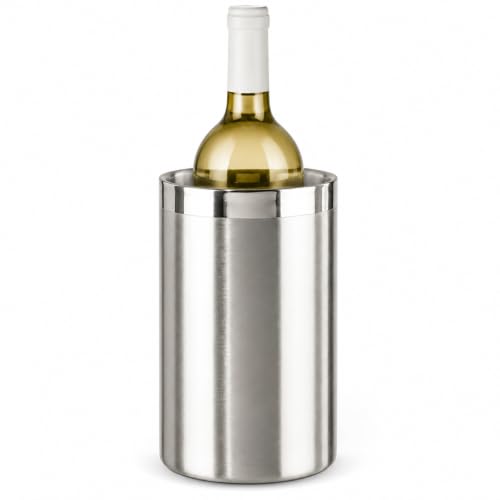 OGGI Stainless Steel Double Wall Wine CoolerMost dinner tables | Most dinner tables | 8.7 | $19.99 · View on Amazon #ad We may earn a commission · Price as of November 16, 2026 |
| 2 | 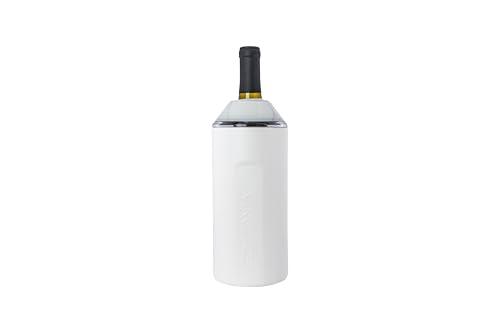 Vinglacé Wine Bottle ChillerOutdoors and long holds | Outdoors and long holds | 8.4 | $89.95 · View on Amazon #ad We may earn a commission · Price as of November 16, 2026 |
| 3 | 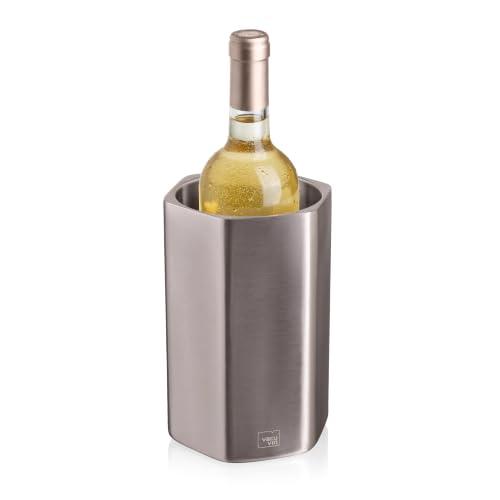 Vacu Vin HIVE Wine ChillerOdd bottle shapes | Odd bottle shapes | 8.3 | $38.70 · View on Amazon #ad We may earn a commission · Price as of November 16, 2026 |
| 4 | 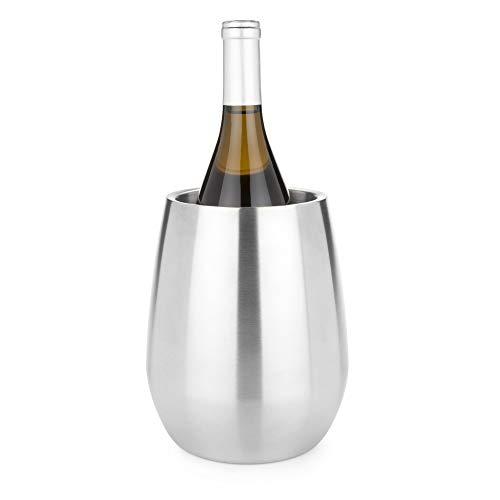 Viski Double Walled Insulated Wine ChillerA bar cart | A bar cart | 8.2 | $42.99 · View on Amazon #ad We may earn a commission · Price as of November 16, 2026 |
| 5 | 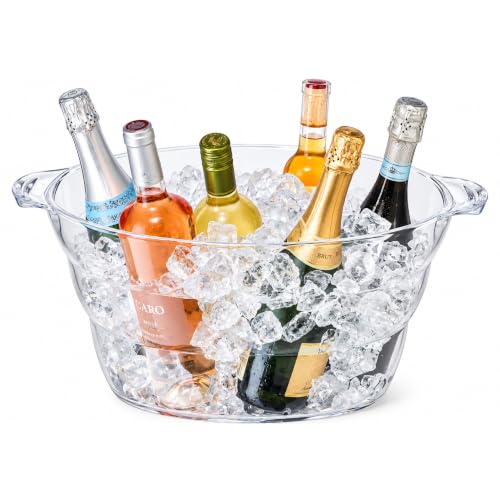 OGGI Acrylic Oval Party TubSeveral bottles on ice | Several bottles on ice | 7.9 | $25.49 · View on Amazon #ad We may earn a commission · Price as of November 16, 2026 |
| 6 | 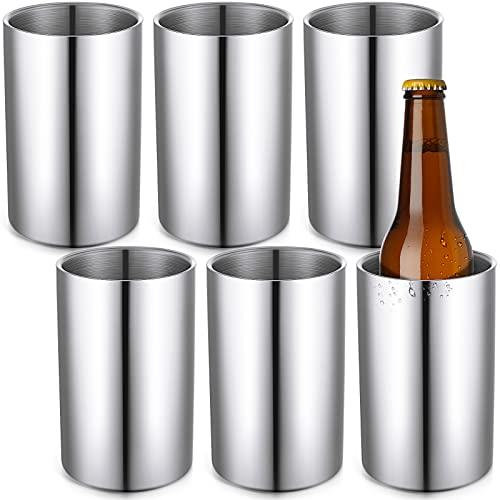 Potchen Wine Chiller Buckets, 6 PackA bottle per table | A bottle per table | 7.5 | $74.99 · View on Amazon #ad We may earn a commission · Price as of November 16, 2026 |
| 7 | 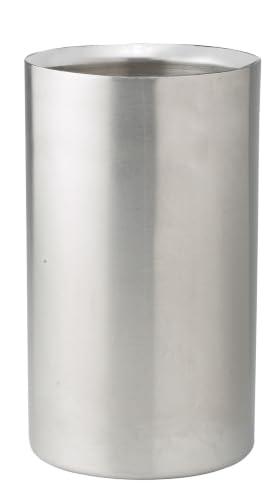 Winco Stainless Steel Wine CoolerBudget, buying several | Budget, buying several | 7.6 | $13.19 · View on Amazon #ad We may earn a commission · Price as of November 16, 2026 |
Scores are our editorial rating, not a lab test result — see how we pick.
Most of the disappointment in this category comes from one misunderstanding. Somebody buys a handsome insulated sleeve, stands a room-temperature bottle in it, waits, and discovers it is still a room-temperature bottle. The sleeve was never going to do that. It has no cold inside it and no way of making any - it is a thermos with the lid left off, and a thermos cannot cool your coffee either.
So the first job on this page is separating the two halves of the category, because they are genuinely different products that happen to share a shelf: the things that preserve cold, and the things that create it. Then the five criteria, then seven picks split across both halves.
Preserve cold, or create it
| Type | What it does | Best for | Catch |
|---|---|---|---|
| Iceless double-wall sleeve | Holds an already-cold bottle | A laid dinner table | Cannot cool a warm bottle |
| Vacuum-insulated sleeve with lid | Holds cold far longer | Outdoors, long afternoons | Costs the most, lid to manage |
| Ice and water bucket | Cools a warm bottle down | The bottle you forgot | Meltwater, drips, a wet label |
| Party tub | Cools several bottles at once | A crowd, a sideboard | Needs a lot of ice, too big for a table |
The honest answer for a household that entertains is one of each: a sleeve for the bottle that is open on the table, and a tub or bucket for the ones that are not open yet. That is also the cheap answer, because the sleeve half of this category is inexpensive.
How we judged these
We have not temperature-tested these. The picks come from live listing data and the manufacturers' stated specifications, judged against five things that decide whether a chiller is useful at a real dinner.
1. Whether it is a cold source or a cold store
The distinction above, and the one that decides whether you are happy with the purchase. Buy a sleeve for a bottle that has been in a refrigerator. Buy ice for a bottle that has not. Everything else on this list is secondary to getting that right, and it is the single thing most product photography obscures, because a sleeve and a bucket look the same in a picture.
2. Whether it sweats
This is the quiet reason insulated sleeves win on a laid table. Anything cold in a warm room collects condensation on its outside unless the wall between is insulated - which means a single-wall bucket leaves a ring on the table, drips on the way to a glass, and puts a wet label in somebody's hand. Double-walled steel stays dry on the outside. On a wooden table or a linen setting, that is the whole argument.
3. Bottle fit, which is less standard than you would think
Still wine bottles are reasonably uniform. Champagne and sparkling bottles are wider at the shoulder, Burgundy bottles have a broader slope than Bordeaux ones, and magnums are a different object altogether. A narrow sleeve that grips a standard 750ml bottle beautifully may not take a sparkling bottle at all. If the household drinks sparkling at all regularly, buy for the wide bottle and accept the loose fit on the narrow one.
4. How it behaves mid-pour
A chiller is picked up and put down a dozen times in an evening, usually one-handed, often by somebody holding a glass in the other hand. Deep narrow sleeves grip the bottle and can lift with it, which is startling. Open buckets release cleanly. Lidded vacuum chillers hold temperature best and are the most awkward in the moment, because the lid has to go somewhere every single time.
5. How many bottles it serves
One chiller is one bottle, and a table of eight is not a one-bottle evening - our wine quantities guide works through the arithmetic. Either own two or three single chillers or own one tub that holds the stock while a single chiller handles whatever is open. The failure mode is owning exactly one of everything.
The picks
OGGI double-wall stainless: the best one for a dinner table
A plain double-walled steel sleeve that holds a cold bottle cold with no ice at all, and the one most households should buy first. It does the thing that matters on a laid table and does it for roughly the price of a decent bottle of wine: no meltwater, no drips, no ring on the cloth, and a bottle that stays at serving temperature through a main course instead of going lukewarm by the second pour. The plain brushed finish sits quietly next to almost any table setting.
Three honest cons. It holds cold, it does not create it - a room-temperature bottle put into it stays a room-temperature bottle. Simple double-walled sleeves lose the fight after a couple of hours on a genuinely warm evening. And it is one bottle at a time, so a dinner for eight wants two or three of them.
Vinglace: the longest hold, and the one that travels
Vacuum insulation plus a screw-on lid, which is a different class of performance from the open sleeves. The lid is what buys the extra hours: an open sleeve loses cold out of the top continuously, and closing it off is the single biggest improvement available in this category. That makes it the right answer for a patio afternoon, a boat, a picnic or anywhere a bottle has to survive sun rather than one course, and the lid also means the bottle travels upright in a car without spilling.
Against it: it is by a wide margin the most expensive single-bottle option here. The lid has to come off and go somewhere every time anyone pours, which at a table is a small recurring annoyance. And the fit is snug - unusually wide sparkling bottles can be a struggle to get in and out.
Vacu Vin HIVE: the one that takes any bottle
An insulated steel bucket from a brand that has been making wine kit for decades, and the one here rated across the widest range of bottle sizes - roughly 0.7 to 1.5 liters, which covers magnums and the wide-shouldered sparkling bottles that defeat a narrow sleeve. The open bucket form is the practical advantage at a table: the bottle lifts out cleanly one-handed instead of gripping and coming up with the chiller attached.
Where it gives ground: it is wider than a sleeve, which is real estate on a crowded table. It has the same ceiling as every iceless chiller - it preserves cold and cannot create it. And it is priced above the plain double-wall sleeves for what is, at a standard bottle size, the same job.
Viski double-walled: the one for a bar cart
The barware-brand version, with heavier walls and a polished finish made to be looked at. The case for it is straightforward: this is a chiller that lives out on a bar cart rather than in a cupboard, so it is always in place when a bottle is opened rather than being something somebody has to go and find. The extra wall thickness over the budget sleeves does show in how long it holds, and it has enough base to not tip when the bottle inside is half empty.
The caveats: it costs roughly double the plain OGGI sleeve for a modest gain in hold time, so this is partly a looks purchase and should be bought as one. Polished steel shows every fingerprint and water mark. And it is a single-bottle sleeve with a snug fit on wide champagne bottles.
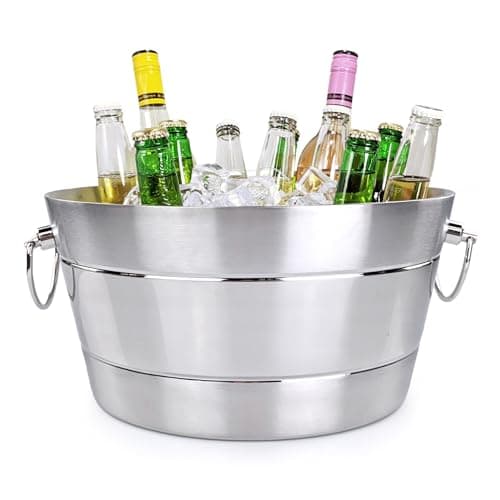
OGGI acrylic oval party tub: for cooling several bottles
The other half of the category. This is a big clear oval tub, roughly eighteen inches long, and what it does that no sleeve can is take warm bottles and actually make them cold - because it holds ice and water, which is a cold source. It swallows several bottles and a pile of cans at once, the clear sides let people see what is left without digging, and the side handles mean it can be carried out to a patio loaded.
What it costs you: a lot of ice, and meltwater that has to go somewhere at the end of the night. Acrylic sweats, so indoors it wants a tray or a folded towel underneath. And it is emphatically not a dining table object - this lives on a sideboard, a counter or outside. Our ice quantities guide covers how much you will actually need.
Potchen six-pack: a chiller per table
Six double-walled buckets in one box, which is the answer to a different question: not how do I keep one bottle cold, but how do I keep six bottles cold in six places. For a long table, a buffet, a wedding or any party laid out across more than one room, six serving points means nobody walks to the kitchen for a refill - which is the actual point of chilling wine properly at a party.
Against them: the walls are thin, so these hold cold adequately rather than impressively. The finish is plain and commercial, closer to catering kit than to tableware. And six of anything is a storage problem in a normal kitchen, although these at least stack inside each other, which acrylic tubs do not.
Winco stainless: the budget pick
The restaurant-supply version - double walled, foodservice construction, and about as cheap as a real steel chiller gets. That price is the whole argument: it makes it reasonable to own three, which is the actual requirement at a dinner for eight and the thing most households get wrong by owning one nice chiller instead. It is built to be washed constantly and knocked about, because that is the job it was designed for.
The honest limits: it looks like what it is, which is restaurant kit, and will not flatter a carefully laid table. Thin walls hold cold for noticeably less time than the heavier options here. And there is no lid and no handles - it is a plain sleeve and nothing more.
The technique that beats any of them
Ice and water, not ice. A bucket of cubes only touches a bottle in a few places; a bucket of half ice and half water contacts the entire surface, and cools a bottle several times faster as a result. Add a handful of salt and it is faster still. A room-temperature white reaches serving temperature in roughly twenty to thirty minutes this way, against well over an hour in a refrigerator - which is the single most useful thing to know when somebody arrives with a warm bottle.
The second technique: chill the glasses, not just the wine. A cold wine poured into a room-temperature glass loses several degrees immediately, and on a warm evening that undoes most of what the chiller was doing. Ten minutes of glasses in a refrigerator costs nothing and makes a bigger difference than most people expect.
Which one to buy
- Best overall: OGGI double-wall stainless. Iceless, dry on the outside, cheap enough to own two.
- Best for long holds and outdoors: Vinglace, because the lid is what buys the hours.
- Best for magnums and sparkling: Vacu Vin HIVE, which takes the widest range of bottles.
- Best for a bar cart: Viski double-walled, bought for the finish as much as the hold.
- Best for cooling warm bottles: OGGI acrylic oval party tub, with ice and water, not ice.
- Best for a party spread across rooms: Potchen six pack.
- Best budget: Winco stainless, and the sane way to own three.
Chilling is one piece of a larger drinks problem at a party, and the other pieces are quantity and ice. How many bottles to buy is worked through in how much wine for a party, how much ice in how much ice for a party, and if the evening is built around the wine itself, hosting a wine tasting at home covers pouring order and temperature together.
The picks in full
We have not lab-tested these products. Picks are chosen from live listings, sustained customer feedback at scale, material quality and fit for hosting — our full methodology.
Product image from Amazon, refreshed daily.
1. OGGI Stainless Steel Double Wall Wine Cooler
A double-walled steel sleeve that holds an already-cold bottle at temperature with no ice at all, which is the version of this product that belongs on a laid table.
Key specs
- Stainless steel
- Double wall, iceless
- Fits standard 750ml bottles
- No condensation
What works
- No ice means no meltwater, no drips and no ring on the tablecloth
- Double-walled steel does not sweat, so it can sit on wood or linen
- Costs about what a decent bottle of wine costs
What does not
- It holds cold, it does not create it - a room-temperature bottle stays room temperature
- Iceless sleeves lose the fight after a couple of hours on a warm evening
- One bottle at a time, so a dinner for eight needs two or three
#ad We may earn a commission · Price as of November 16, 2026
Product image from Amazon, refreshed daily.
2. Vinglacé Wine Bottle Chiller
A vacuum-insulated sleeve with a screw-on top, built for a patio or a boat where a bottle has to survive hours in the sun rather than one course at a table.
Key specs
- Vacuum insulated stainless steel
- Screw-on lid
- Fits standard wine and champagne bottles
- Powder-coated finish
What works
- Vacuum insulation plus a lid holds far longer than any open bucket here
- The lid means the bottle travels upright in a car or a cooler bag without spilling
- Powder coat does not show fingerprints the way polished steel does
What does not
- By a wide margin the most expensive single-bottle option on this page
- The lid has to come off and go somewhere every time you pour
- Bottle fit is tight - unusually wide sparkling bottles can be a struggle
#ad We may earn a commission · Price as of November 16, 2026
Product image from Amazon, refreshed daily.
3. Vacu Vin HIVE Wine Chiller
An insulated steel bucket from the brand best known for wine preservation, and the one here rated for the widest range of bottle sizes.
Key specs
- Stainless steel
- Insulated, no ice needed
- Fits roughly 0.7 to 1.5 liter bottles
- Open bucket form
What works
- Takes magnums and wide-shouldered bottles that a narrow sleeve will not
- Open bucket shape makes the bottle easy to lift out one-handed mid-pour
- No ice, so it is dry on the table and dry when it goes back in a cupboard
What does not
- Wider than a sleeve, so it takes real space on a crowded table
- Same limit as every iceless chiller - it preserves cold rather than making it
- Priced above the plain double-wall sleeves for a similar job
#ad We may earn a commission · Price as of November 16, 2026
Product image from Amazon, refreshed daily.
4. Viski Double Walled Insulated Wine Chiller
The barware-brand version: a heavier double-walled holder finished to sit on a bar cart rather than to be stashed in a cupboard between parties.
Key specs
- Stainless steel
- Double walled
- Single bottle
- Polished finish
What works
- Finished properly - this is the one that looks right left out on a cart
- Heavier walls than the budget sleeves, which shows in how long it holds
- Steady enough that a bottle will not tip it when it is half empty
What does not
- Costs roughly double the plain OGGI sleeve for a modest gain in hold time
- Polished steel shows every fingerprint and water mark
- Single bottle, and the fit is snug on wide champagne bottles
#ad We may earn a commission · Price as of November 16, 2026
Product image from Amazon, refreshed daily.
5. OGGI Acrylic Oval Party Tub
The big clear tub for when the job is not holding one bottle at temperature but getting six bottles and a pile of cans genuinely cold and keeping them there.
Key specs
- Clear acrylic
- Oval, roughly 18.5 by 11 inches
- Side handles
- Indoor or outdoor
What works
- Big enough to chill several bottles at once, which no sleeve can do
- Ice and water actually cool a warm bottle down, where an iceless chiller cannot
- Clear sides let guests see what is left without digging through the ice
What does not
- Needs a lot of ice, and the meltwater has to go somewhere at the end of the night
- Acrylic sweats, so it wants a tray or a towel under it indoors
- Too big for a dining table - this is a sideboard or a patio object
#ad We may earn a commission · Price as of November 16, 2026
Product image from Amazon, refreshed daily.
6. Potchen Wine Chiller Buckets, 6 Pack
Six double-walled buckets in a box, which is the answer when the problem is not one bottle at one table but six bottles spread across a party.
Key specs
- Stainless steel
- Double wall insulated
- 6 per box
- Fits 750ml bottles
What works
- Six serving points means nobody walks to the kitchen for a refill
- Works out cheaper per bucket than any single chiller here
- They stack inside each other for storage, unlike acrylic tubs
What does not
- Thin double walls - these hold cold adequately rather than impressively
- Plain commercial finish, closer to catering kit than to tableware
- Six of anything is a storage problem in a normal kitchen
#ad We may earn a commission · Price as of November 16, 2026
Product image from Amazon, refreshed daily.
7. Winco Stainless Steel Wine Cooler
The restaurant-supply version, double walled and about as cheap as a real steel chiller gets, which makes it the sane way to own three of them.
Key specs
- Stainless steel
- Double wall
- Foodservice grade
- Standard bottle fit
What works
- Cheapest real steel chiller here, so a table of twelve can have three
- Foodservice construction is built to be washed constantly and knocked about
- Plain enough that it does not fight anything else on the table
What does not
- Utilitarian - it looks like what it is, which is restaurant kit
- Thin walls hold cold for noticeably less time than the heavier options
- No lid and no handles, so it is a straightforward sleeve and nothing more
#ad We may earn a commission · Price as of November 16, 2026
Common questions
What is the difference between a wine chiller and an ice bucket?
An ice bucket is a supply of ice for drinks - it sits on a bar, holds loose cubes and a pair of tongs, and is usually lidded so the ice lasts. A wine chiller holds one bottle at serving temperature, has no lid and no tongs, and is shaped so the neck stands clear for pouring. They look similar and do opposite jobs. If you fill a wine chiller with cubes to serve from, you have an inconveniently narrow ice bucket; if you stand a bottle in a lidded ice bucket, you cannot close the lid.
Do iceless wine chillers actually work?
Within the limits of what they claim. A double-walled or vacuum-insulated sleeve slows the warming of a bottle that is already cold - meaningfully, over the length of a dinner, with no meltwater and no ring on the table. What none of them can do is cool a warm bottle down, because there is no cold source in the system. Chill the bottle properly first, then use the sleeve to keep it that way.
How long does it take to chill a bottle of wine in ice?
In a bucket of half ice and half water, roughly 20 to 30 minutes for a room-temperature white to reach serving temperature, and about 15 for a bottle that has been in a cool room. Ice alone is slower than ice and water, because water contacts the whole bottle where cubes only touch it in places - the single most useful thing to know on this page. A handful of salt in the water speeds it up further.
What temperature should white wine be served at?
Most sources put crisp whites and sparkling at roughly 45 to 50 degrees Fahrenheit and fuller whites a little warmer, around 50 to 55. The practical point for a host is that a bottle straight from a refrigerator is usually colder than that, and warms into the right range in the first ten minutes on the table - which is exactly the window an insulated sleeve preserves rather than rushing past.
Can you put red wine in a chiller?
Light reds, yes, and it is more common than people think. A chilled red is a real serving style rather than a mistake, and a brief spell in a chiller suits lighter bodied reds in warm weather. The caution is simply not to overdo it - a heavy red served very cold closes up and tastes thin. Use the chiller as a brake rather than a destination.
How many wine chillers do I need for a dinner party?
One per bottle in service, which usually means two or three rather than one. A table of eight gets through more than one bottle, and the second bottle warming on the sideboard while the first sits in the only chiller is the normal failure. Either buy chillers in multiples or use one big tub for the stock and a single chiller for whatever is open.