How to Host a Wine Tasting at Home
Six wines, two ounces each, one sheet of paper. A tasting is easier to run than a dinner party and it gives people something to do.
Heads up: we earn a commission from qualifying purchases made through the links on this page, at no extra cost to you. It never changes which products we pick or the order we rank them in. Full disclosure.
Quick picks
Tap any row to jump to the full write-up further down the page.
| # | Product | Best for | Score | Price |
|---|---|---|---|---|
| 1 | 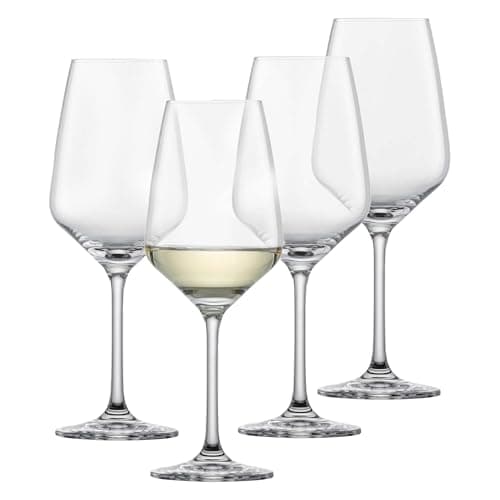 Schott Zwiesel Tritan Crystal Wine GlassesCrystal that survives | Crystal that survives | 8.8 | Check price on Amazon #ad We may earn a commission · Live price on Amazon — it changes often |
| 2 | 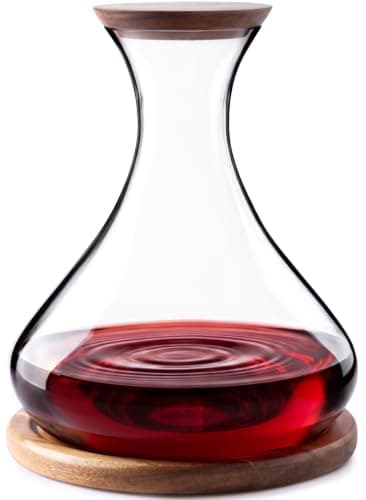 Cork & Mill Wine Decanter SetBest overall decanter | Best overall decanter | 8.2 | $49.99 · View on Amazon #ad We may earn a commission · Price as of November 2, 2026 |
| 3 | 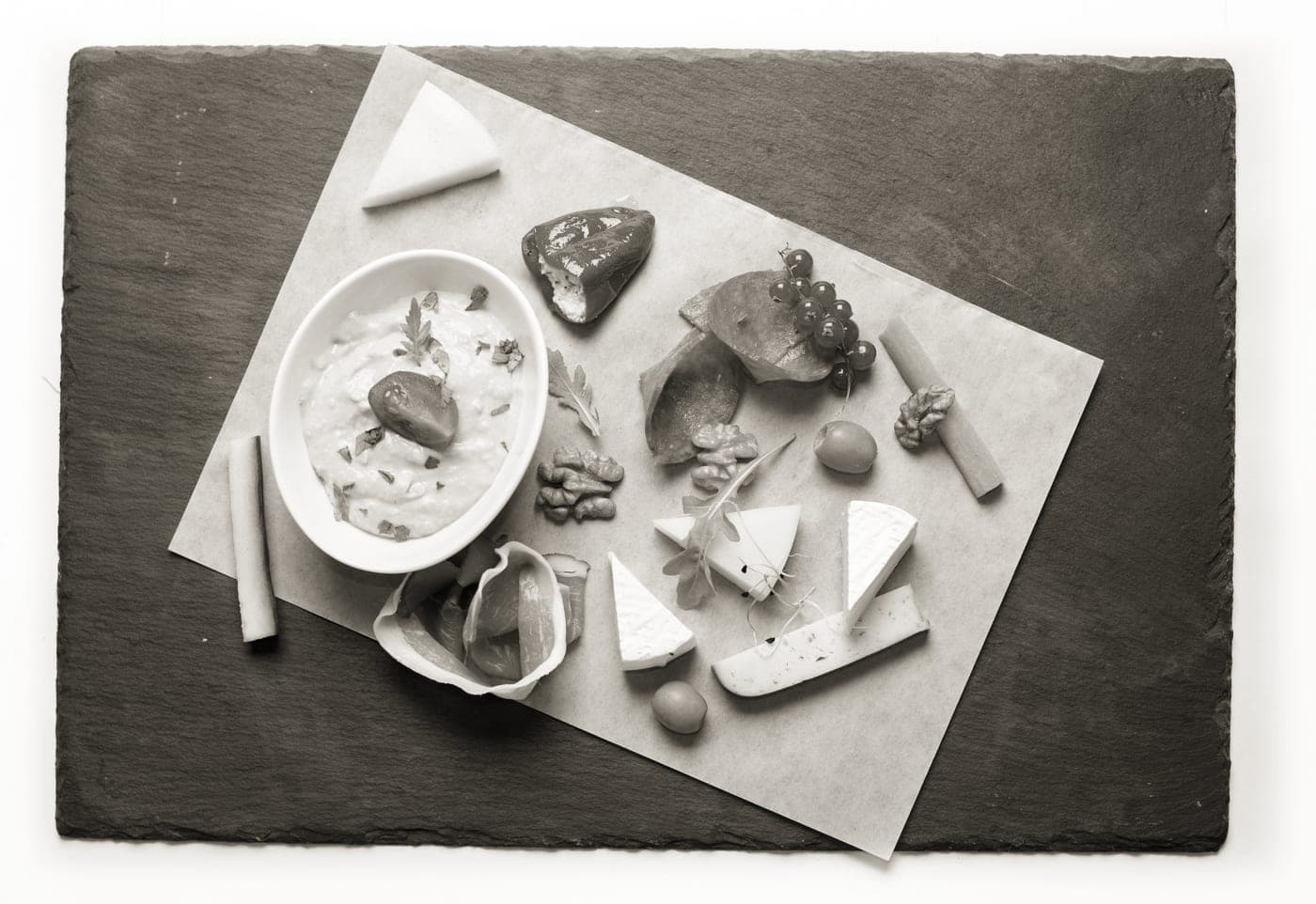 Homeries Marble Cheese and Pastry BoardSoft cheese | Soft cheese | 7.7 | Check price on Amazon #ad We may earn a commission · Live price on Amazon — it changes often |
| 4 | 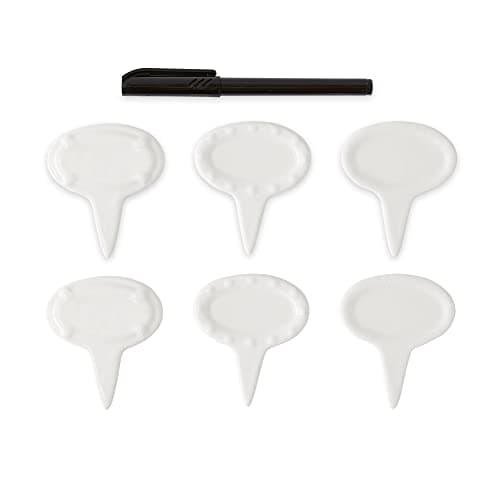 RSVP International Oval Cheese Markers, Set of 6Labeling the cheeses | Labeling the cheeses | 8.2 | $16.51 · View on Amazon #ad We may earn a commission · Price as of November 2, 2026 |
Scores are our editorial rating, not a lab test result — see how we pick.
Pour six wines at 2 oz each, in order from lightest to heaviest, with one glass per guest and bread and water on the table. That is a tasting, and it is less work than a dinner party because the wine is the event. One bottle of each wine covers ten to twelve people, so six bottles runs a tasting for a full room.
The plan
| Decision | The answer | Why |
|---|---|---|
| How many wines | Six | Enough to compare, before palates give up |
| Pour size | 2 oz | About 12 pours per bottle, enough to swirl |
| Glasses per guest | One, plus a dump bucket | Rinse with the next wine, not water |
| Order | Sparkling, white, rose, light red, big red, sweet | Nothing should flatten what follows it |
| Theme | One grape, several places | Gives beginners something concrete to notice |
| Format | Labels covered, wines named as a set | Removes price bias, keeps it fun |
| Food | Bread, mild cheese, water | Anything stronger competes with the wine |
| Run time | About 90 minutes | Then put out a real board |
Pick a theme, because it does the work
A theme is the difference between a tasting and six bottles of wine. The two that never fail are one grape across several regions — six Chardonnays from six places — or one region across several grapes. Either gives people a specific thing to compare instead of asking them to have an opinion from nowhere.
Other themes that work: a price ladder of the same grape, old world against new world, or six wines under one budget. Avoid themes that need knowledge to appreciate, like six vintages of the same wine, unless the room already knows wine.
The order, and why it matters
Serve in order of weight: sparkling, light white, fuller white, rose, light red, heavy red, then anything sweet. A heavy tannic red coats the palate and makes a delicate white poured after it taste like water, and a sweet wine makes the next dry wine taste sour. Both ruin the comparison you set the evening up to make.
Pour all six at once if you have the glasses, or pour in pairs and compare two at a time, which most people find easier. Keep one wine on the table as an anchor so there is always something to compare against.
Covering the labels
- Slide each bottle into a paper bag or wrap it in foil, and number the bags one to six.
- Tell the room what the six wines are as a set — the grapes, the regions, the rough price band — without saying which is which.
- Give everybody a sheet of paper with six rows and three columns: what they smell, what they taste, what they would pay.
- Reveal at the end, in order of the room’s favorites rather than the order they were poured. The cheap bottle beating the expensive one is the moment people remember.
The scoring sheet matters more than it sounds. People taste more carefully when they have to write something down, and it gives the quieter guests a way to take part without talking about wine in front of everybody.
Glasses, temperature and decanting
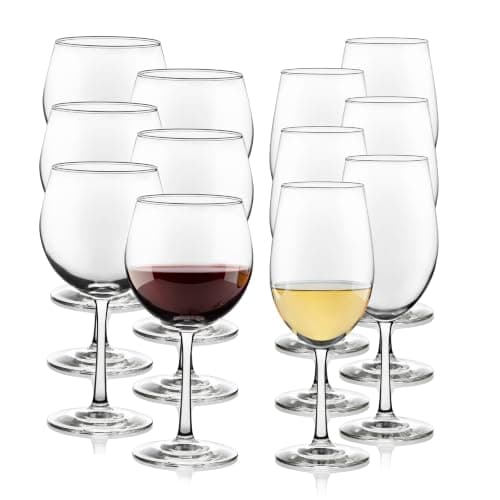
One glass shape for everything is correct at a tasting: comparing wines in different glasses compares the glasses. A universal or white wine shape is the right choice, and the Schott Zwiesel Tritan stems are the ones we would use because they are lead-free crystal with a thin rim that survives a dishwasher.
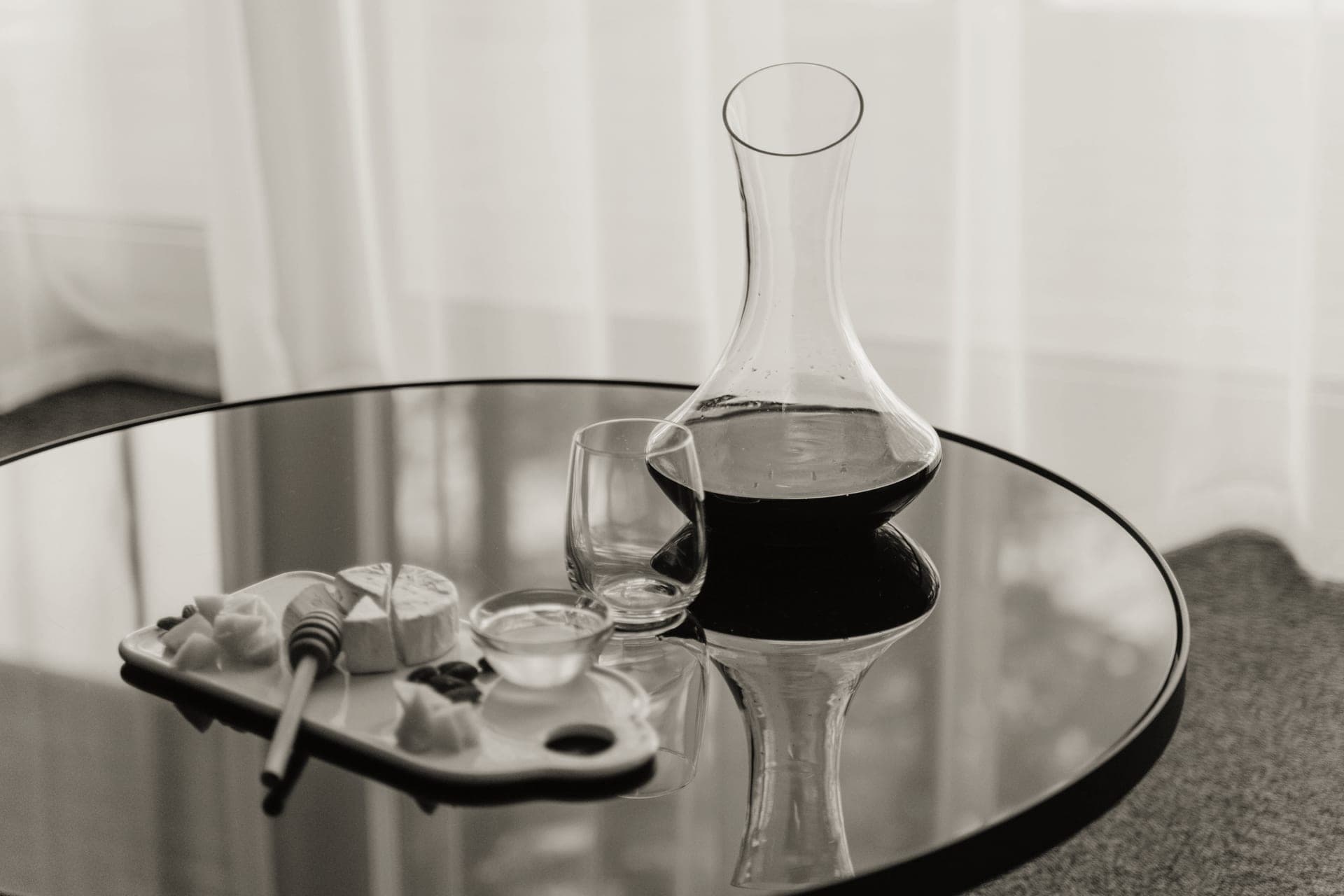
Serve whites around 45 to 50F and reds around 60 to 65F, which means taking reds out of a warm room rather than only chilling the whites. Decant the biggest red an hour ahead — a tasting is one of the few settings where the difference is genuinely visible side by side, as is a wine decanter worth it goes into.
The food
During the tasting: plain bread or water crackers, a mild cheese, and plenty of water. That is all. Strong cheese, charcuterie, olives and anything spicy will dominate the wine, and the people who brought good bottles will notice.
Afterward: put out a real board. People are an hour and a half in and hungry, nothing is being compared any more, and this is the right moment for the cheese you actually wanted to serve. Quantities are in how much cheese and meat per person, and a chilled marble board keeps soft cheese intact while the conversation runs on.
What to put on the table
- Schott Zwiesel Tritan glasses: one shape for all six wines, lead-free Tritan crystal, dishwasher safe.
- Cork & Mill decanter: full-bottle capacity for the big red, on an acacia stand.
- Homeries marble board: chilled, for the cheese that comes out afterward.
- RSVP porcelain markers: six markers and a pen, for labeling the cheeses so the board does not need explaining.
How much wine to buy if the tasting turns into a party is in how much wine for a party.
What it costs, and where to buy
Six bottles and some bread is the whole budget, and it splits easily — a tasting is the one kind of party where asking each guest to bring a bottle to a brief actually improves the evening. Give them the theme and a rough price ceiling and you get six wines nobody has tasted, which is better than six you chose yourself.
If you are buying all six, a wine shop will usually assemble a themed set if you tell them the theme and the budget. That conversation is also where the useful information comes from, and it costs nothing.
The picks in full
We have not lab-tested these products. Picks are chosen from live listings, sustained customer feedback at scale, material quality and fit for hosting — our full methodology.
Product image from Amazon, refreshed daily.
1. Schott Zwiesel Tritan Crystal Wine Glasses
Tritan crystal is the brand that popularized the category: it looks like crystal and goes in the dishwasher, which is the whole point.
Key specs
- Tritan crystal
- Lead-free
- Dishwasher safe
- Stemmed
What works
- Break and chip resistance well beyond ordinary crystal
- Genuinely dishwasher safe, repeatedly
- Clarity holds instead of clouding over years
What does not
- Premium pricing for everyday glassware
- Stems still take cupboard height
#ad We may earn a commission · Live price on Amazon — it changes often
Product image from Amazon, refreshed daily.
2. Cork & Mill Wine Decanter Set
A hand-blown decanter that ships with an acacia stand, so it has somewhere to live instead of taking up a cupboard shelf on its side.
Key specs
- Hand-blown glass
- Acacia wood stand
- Full-bottle capacity
- Gift packaging
What works
- The stand solves storage and drying, which is the real decanter problem
- Full bottle fits, so you are not decanting in two goes
- Presentation is gift-ready without wrapping
What does not
- Hand-blown glass wants hand washing
- The stand takes counter space a bare decanter does not
#ad We may earn a commission · Price as of November 2, 2026
Representative category photo, not the product listing image.
3. Homeries Marble Cheese and Pastry Board
Marble stays cold, which is the entire argument for it. A brie holds its shape on this for an hour longer than it does on wood.
Key specs
- Natural marble
- Stays cold once chilled
- Doubles as a pastry surface
- Heavy
What works
- Genuinely keeps soft cheese servable longer
- Wipes clean with no oiling ritual
- Looks expensive because it is stone
What does not
- Heavy enough that you will not be passing it around
- Marble chips if you drop it and the chip is permanent
- Knives dull faster on stone than on wood
#ad We may earn a commission · Live price on Amazon — it changes often
Product image from Amazon, refreshed daily.
4. RSVP International Oval Cheese Markers, Set of 6
Porcelain labels with an ink pen rather than slate and chalk. Chalk dust lands on the food; ink does not, and it washes off in the dishwasher.
Key specs
- White porcelain
- Set of six, three designs
- Black ink pen included
- 2.5 in wide by 2.75 in tall
- Dishwasher safe
What works
- No chalk dust anywhere near the cheese
- Writing stays legible across a whole evening instead of smudging
- Dishwasher safe, so they get reused rather than put away dirty
What does not
- You are dependent on the included pen; a dried-out pen makes the set useless until you replace it
- White porcelain vanishes against a white platter, which is the one board it does not suit
#ad We may earn a commission · Price as of November 2, 2026
Common questions
How many wines should you serve at a tasting?
Six is the number that works. Four feels thin, eight is where palates stop discriminating and the evening turns into a party. Six wines at a 2 oz pour is about a bottle and a half of total consumption per person, which is a normal evening rather than a heavy one.
How much wine do you pour for a tasting?
Two ounces per wine. That is about a dozen tasting pours from a 750 ml bottle, which means one bottle of each wine covers ten to twelve people with a little spare. A 2 oz pour is also enough to swirl properly, which 1 oz is not.
What order should you serve the wines in?
Sparkling, then white, then rose, then light red, then heavy red, then anything sweet. Within that, dry before sweet and light before heavy. The logic is that a big tannic red flattens everything poured after it, and a sweet wine makes a dry wine taste sour.
How many glasses does each person need?
One, with a water jug and a dump bucket. Rinsing between wines with a splash of the next wine - not water - is what tastings do, and it avoids twenty-four glasses and a sink full of stemware. Two glasses each is a luxury if you have them.
What is a good theme for a home wine tasting?
One grape across several regions, or one region across several grapes. Both give people something to compare. Six random bottles is a nice evening with no structure; six Sauvignon Blancs from six places is a tasting, and the differences are obvious even to beginners.
Should a home tasting be blind?
Half blind works best. Cover the labels so nobody is swayed by a price or a name, but tell people what the six wines are as a set. They get the pleasure of guessing without the frustration of having no information at all.
What food goes with a wine tasting?
Plain bread, mild cheese, plain crackers and water. Strong food competes with the wine, which is the opposite of the point. Serve a proper board afterward rather than during - people are hungry by then and nothing is being compared.