How Many Ounces Is a Wine Glass?
The glass and the pour are two different numbers, and almost every argument about wine glass size comes from mixing them up.
Heads up: we earn a commission from qualifying purchases made through the links on this page, at no extra cost to you. It never changes which products we pick or the order we rank them in. Full disclosure.
Quick picks
Tap any row to jump to the full write-up further down the page.
| # | Product | Best for | Score | Price |
|---|---|---|---|---|
| 1 | 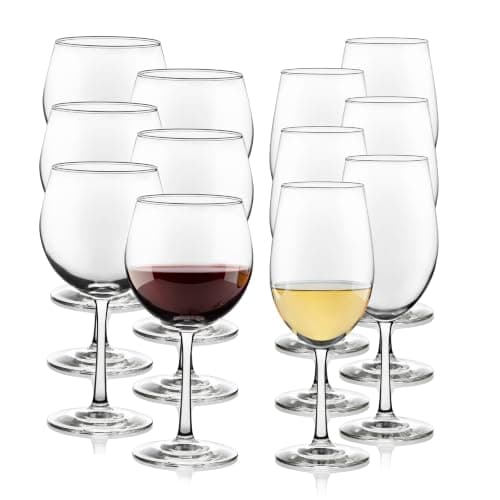 Libbey Wine Glass SetFeeding a crowd | Feeding a crowd | 8.4 | $49.99 · View on Amazon #ad We may earn a commission · Price as of November 2, 2026 |
| 2 | 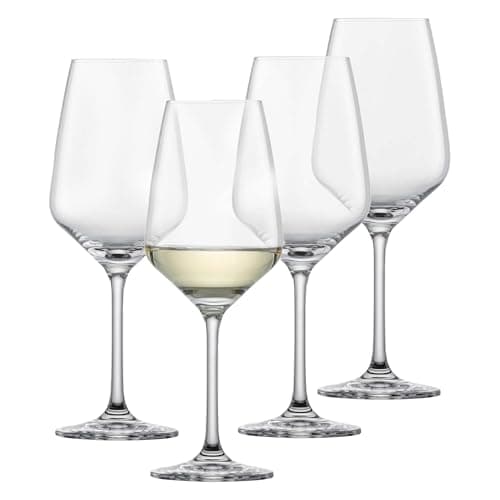 Schott Zwiesel Tritan Crystal Wine GlassesCrystal that survives | Crystal that survives | 8.8 | Check price on Amazon #ad We may earn a commission · Live price on Amazon — it changes often |
| 3 | 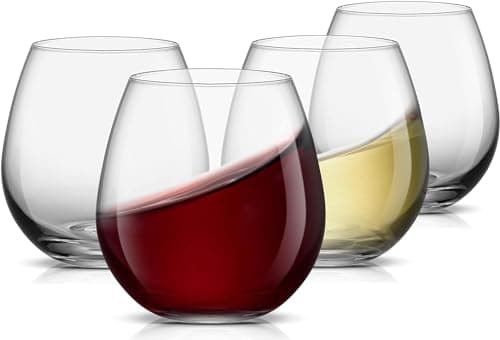 JoyJolt Spirits Stemless Wine GlassesBest overall stemless | Best overall stemless | 8.6 | $15.99 · View on Amazon(27% off) #ad We may earn a commission · Price as of November 2, 2026 |
| 4 | 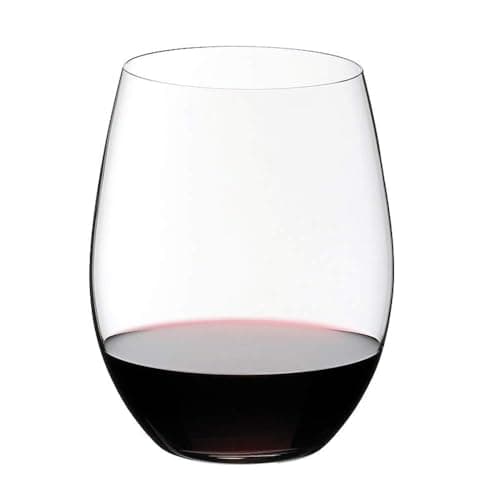 Riedel O Wine TumblerPremium stemless | Premium stemless | 8.2 | $58.51 · View on Amazon #ad We may earn a commission · Price as of November 2, 2026 |
Scores are our editorial rating, not a lab test result — see how we pick.
A standard wine glass holds 12 to 18 oz and a standard pour into it is 5 oz. Those two numbers are the source of nearly every misunderstanding about glass size: capacity is what the bowl could take filled to the rim, and almost nobody fills a wine glass to the rim. At 5 oz a 750 ml bottle gives you five glasses, whatever size the glasses are.
Sizes by glass type
| Glass | Typical capacity | Standard pour | Why that size |
|---|---|---|---|
| White wine | 10 to 14 oz | 5 oz | Narrow bowl keeps it cold and holds aroma |
| Red wine | 14 to 22 oz | 5 oz | Wide bowl gives the wine air |
| Universal / everyday | 12 to 16 oz | 5 oz | A compromise that suits both |
| Stemless | 15 to 17 oz | 5 oz | Tumbler proportions, so wider for the volume |
| Champagne flute | 6 to 10 oz | 4 oz | Narrow to slow the loss of bubbles |
| Oversized red / Bordeaux | 22 to 32 oz | 5 to 6 oz | Maximum air for big tannic reds |
| Restaurant pour glass | 12 to 16 oz | 5 or 6 oz | Sized so a 6 oz pour still looks right |
Why the glass is so much bigger than the pour
The empty space above the wine is doing a job. Aroma collects in it, and the narrowing of the bowl toward the rim funnels that aroma toward you instead of into the room. Fill the glass to the top and you remove the space, which is why a brim-full glass of good wine smells of almost nothing.
It also makes swirling possible. Red wine in particular is improved by contact with air, and you cannot move wine around a glass that is already full. The practical rule is to pour to the widest point of the bowl and stop there.
How to find 5 oz in your own glasses
- Measure 5 oz of water with a kitchen measure and pour it into the glass you normally use.
- Note where it sits. In most glasses it lands at or just below the widest point of the bowl.
- Pour to that landmark from then on. It is faster than measuring and accurate enough that a bottle reliably gives five glasses.
Doing this once is usually a surprise. Most people pour between 7 and 9 oz at home without realizing it, which is why a bottle that should serve five seems to serve three.
Does a bigger glass mean a bigger pour?
It should not, and in practice it does. A 22 oz Bordeaux glass with 5 oz in it looks under-filled, and the instinct is to add more. If you are pouring for guests and want the amounts to stay honest, a 12 to 16 oz universal glass is the easier shape to be disciplined with.
This is also why glass choice affects how much wine you buy for an event. The quantities, with a guest-count table, are in how much wine for a party.
Picks at each size
- Universal, and the one to buy for a crowd: the Libbey set. Soda-lime glass, sets up to twelve, restaurant-grade construction and sized so a standard pour looks right.
- Best glass at any size: the Schott Zwiesel Tritan stems. Lead-free Tritan crystal, thin rim, and formulated to survive a dishwasher.
- Stemless, around 15 to 17 oz: the JoyJolt Spirits glasses, in sets of four and eight.
- Varietal-specific bowls without stems: the Riedel O tumbler, which applies the shape argument to a stemless glass.
Which bowl suits which wine is covered in white wine glass vs red wine glass, and the full ranking is the best wine glasses.
Bottle sizes and what each one pours
| Bottle | Volume | Ounces | Glasses at 5 oz |
|---|---|---|---|
| Split or piccolo | 187 ml | 6.3 oz | 1 |
| Half bottle | 375 ml | 12.7 oz | 2 to 3 |
| Standard | 750 ml | 25.4 oz | 5 |
| Magnum | 1.5 L | 50.7 oz | 10 |
| Double magnum | 3 L | 101.4 oz | 20 |
| Boxed wine | 3 L | 101.4 oz | 20 |
The magnum is the quietly useful one for hosting. One bottle covers a table of ten at a glass each, it needs one opening rather than two, and wine in a magnum ages more slowly because there is proportionally less air in the neck.
Why restaurant pours look different
Restaurants pour to a line, not to a feeling. A house glass is usually marked or measured at 5 or 6 oz, and the glass itself is chosen so that pour sits at the widest part of the bowl and looks generous. That is why a restaurant glass of wine can look larger than the one you pour at home from the same bottle.
The flip side is the oversized glass. A 22 oz Bordeaux bowl with a correct 5 oz pour in it reads as mean, which is why bars rarely use them by the glass. If you want your own pours to stay honest, a 12 to 16 oz universal glass is the easier shape to be disciplined with.
None of this changes the arithmetic. Whatever the glass, five ounces is a serving and a bottle is five of them.
Ounces per person, for planning
Once the glass is settled, the useful unit for hosting is ounces per guest rather than glasses. Budget about 10 oz a head for a two-hour gathering and 25 oz for a long evening, which works out at two glasses then five. Divide by 25.4 oz to get bottles, and a party of twenty over an evening lands at around fifteen.
The reason to think in ounces is that it survives the glassware. A household pouring into 17 oz stemless glasses will get through more wine than one pouring into 12 oz stems, for exactly the reason you would expect, and planning in ounces catches that where planning in glasses does not. The full bottle chart is in how much wine for a party.
The picks in full
We have not lab-tested these products. Picks are chosen from live listings, sustained customer feedback at scale, material quality and fit for hosting — our full methodology.
Product image from Amazon, refreshed daily.
1. Libbey Wine Glass Set
Twelve glasses from an American glassmaker that supplies restaurants, which is exactly the durability profile a party needs.
Key specs
- Soda-lime glass
- Sets up to 12
- Dishwasher safe
- Restaurant-grade construction
What works
- Twelve glasses means nobody is drinking from a tumbler
- Built to restaurant tolerances, so breakage is low
- Replacements are easy to find
What does not
- Thicker rim than crystal, which is noticeable side by side
- Plain styling
#ad We may earn a commission · Price as of November 2, 2026
Product image from Amazon, refreshed daily.
2. Schott Zwiesel Tritan Crystal Wine Glasses
Tritan crystal is the brand that popularized the category: it looks like crystal and goes in the dishwasher, which is the whole point.
Key specs
- Tritan crystal
- Lead-free
- Dishwasher safe
- Stemmed
What works
- Break and chip resistance well beyond ordinary crystal
- Genuinely dishwasher safe, repeatedly
- Clarity holds instead of clouding over years
What does not
- Premium pricing for everyday glassware
- Stems still take cupboard height
#ad We may earn a commission · Live price on Amazon — it changes often
Product image from Amazon, refreshed daily.
3. JoyJolt Spirits Stemless Wine Glasses
The best quality-to-price ratio in stemless glass, with a review base big enough that its consistency is not a guess.
Key specs
- Stemless
- Sold in sets of 4 and 8
- Dishwasher safe
- Clear glass
What works
- Wall thickness is even, which cheap stemless glass often is not
- No stem to snap in a crowded dishwasher
- Stacks into a normal cupboard
What does not
- Your hand warms the wine, a real trade-off for white
- Stemless is informal, which is wrong for a formal table
#ad We may earn a commission · Price as of November 2, 2026
Product image from Amazon, refreshed daily.
4. Riedel O Wine Tumbler
Varietal-specific bowl shapes in lead-free crystal, which is the only stemless glass here engineered around what is actually in it.
Key specs
- Lead-free crystal
- Varietal-specific bowls
- Stemless
- Dishwasher safe
What works
- Bowl shape genuinely changes how an aromatic wine reads
- Crystal is thinner and clearer than the soda-lime field
- Dishwasher safe despite being crystal
What does not
- Several times the price of the value sets
- Thin crystal is less forgiving of a knock
#ad We may earn a commission · Price as of November 2, 2026
Common questions
How many ounces is a standard wine glass?
The glass usually holds 12 to 18 oz, and the standard pour into it is 5 oz. Those are different measurements: capacity is how much the bowl could take if filled to the rim, and the pour is what actually goes in, which is roughly a third of the glass.
How many ounces is a standard pour of wine?
Five ounces, which is also the US dietary-guidelines serving for wine. That makes a standard 750 ml bottle five glasses. Restaurants pour 5 or 6 oz depending on the house; a 6 oz pour gets four glasses from a bottle.
How many ounces is a red wine glass?
Red wine glasses run larger, commonly 14 to 22 oz, because the wide bowl is there to give the wine air. The pour does not change - still 5 oz - so a red glass looks emptier at the same serving, which is deliberate rather than mean.
How many ounces is a white wine glass?
Usually 10 to 14 oz. White wine glasses are narrower because the aim is keeping the wine cold and concentrating aroma rather than aerating it, and a smaller bowl warms more slowly.
How many ounces is a stemless wine glass?
Most stemless glasses are 15 to 17 oz, so they are on the larger side of the range. Their shape is closer to a tumbler, which means the wine sits shallower and presents more surface to the air than the same volume in a tall stemmed bowl.
How full should you fill a wine glass?
To the widest point of the bowl, which is about a third of the glass for red and closer to half for white. That leaves room above the wine for aroma to collect, which is the entire reason the bowl is bigger than the pour.
How many glasses are in a bottle of wine?
Five at a 5 oz pour, from a standard 750 ml bottle. At a generous 6 oz pour it is four. A magnum at 1.5 L is ten standard glasses, which is the easiest way to buy for a table of ten.