How to Make a Grazing Table
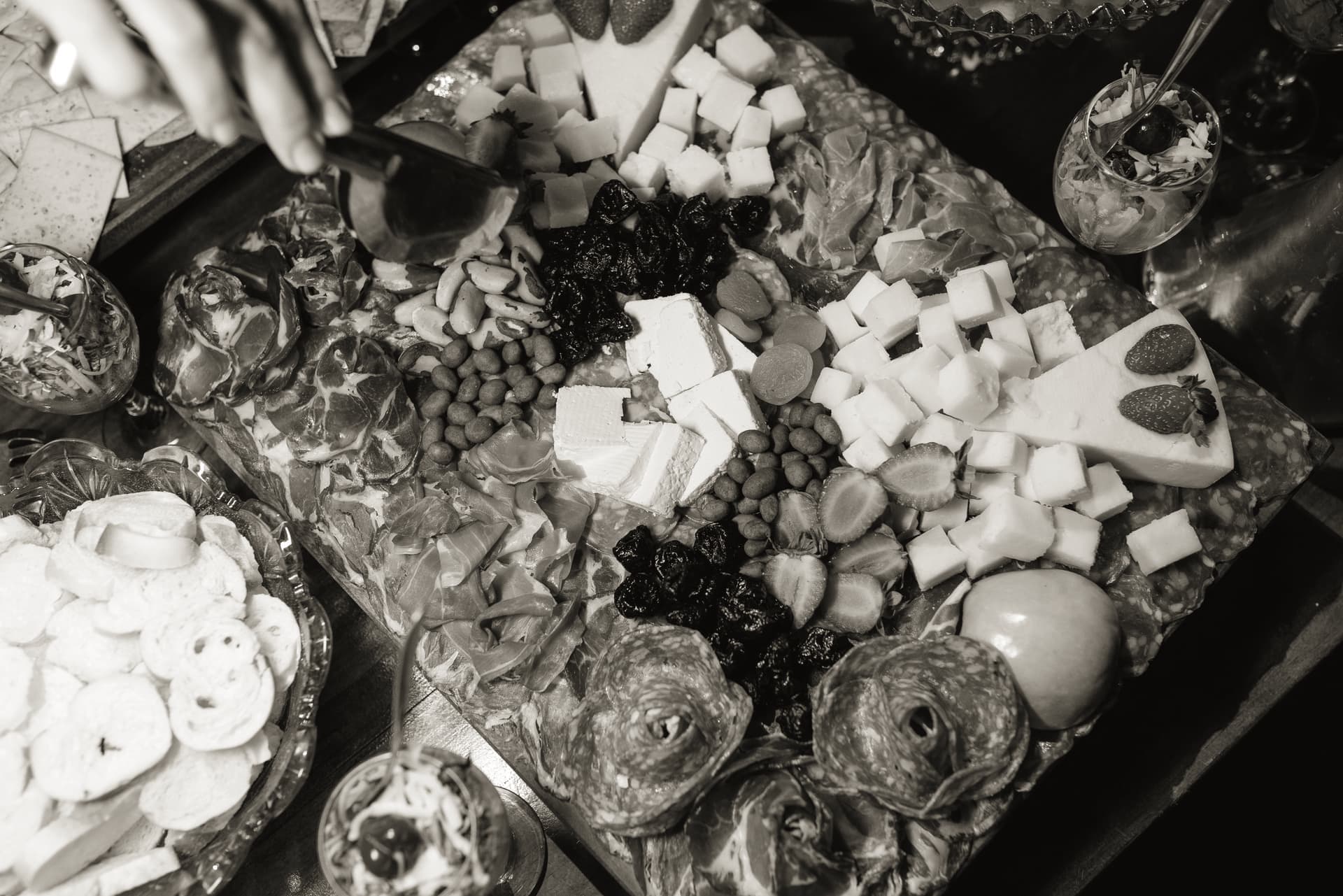
A grazing table is not a bigger charcuterie board. It is a different layout problem, and height is what solves it.
Heads up: we earn a commission from qualifying purchases made through the links on this page, at no extra cost to you. It never changes which products we pick or the order we rank them in. Full disclosure.
Quick picks
Tap any row to jump to the full write-up further down the page.
| # | Product | Best for | Score | Price |
|---|---|---|---|---|
| 1 | 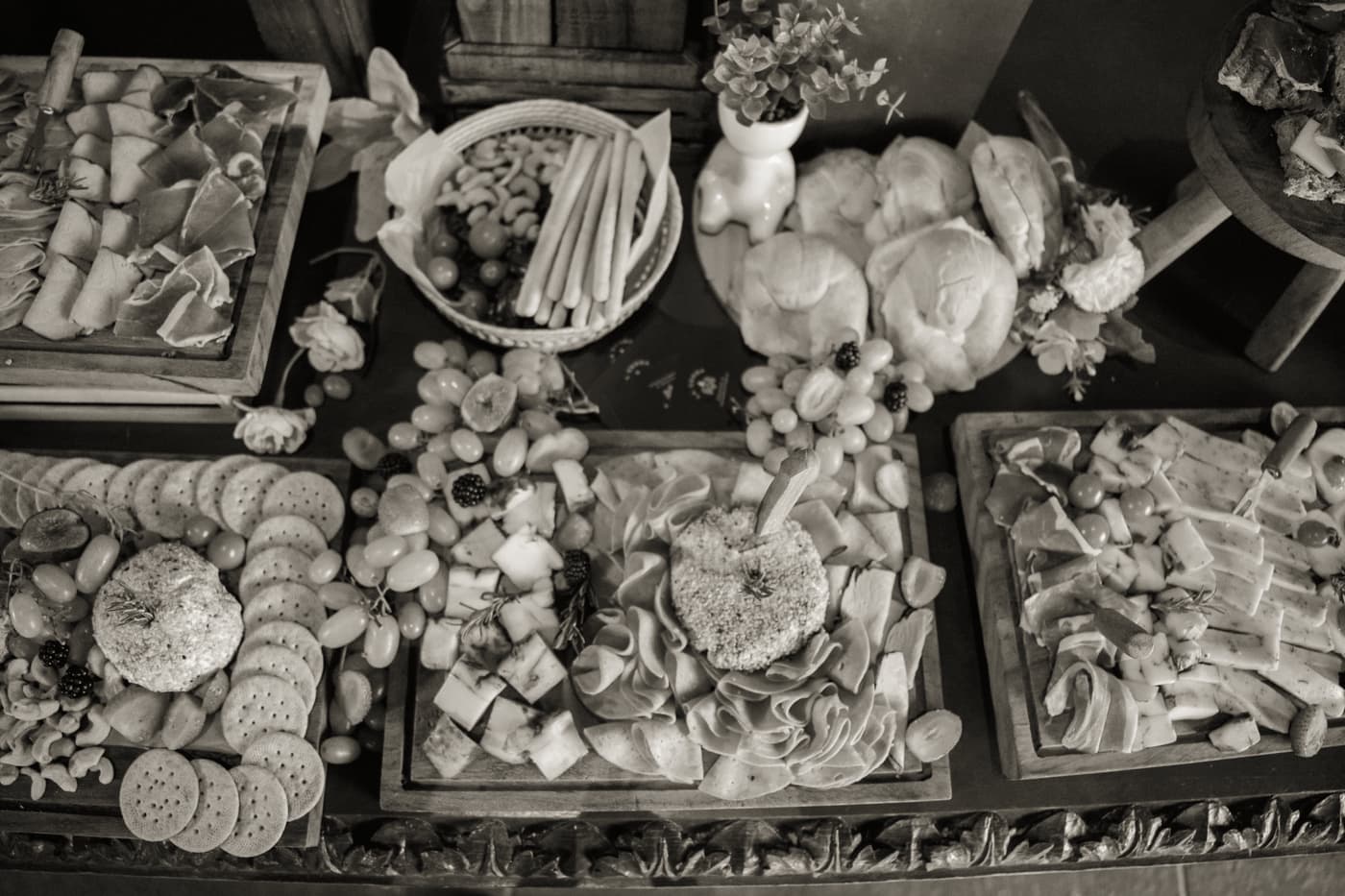 Fresh Nest Co. Extra Large Bamboo BoardBudget crowd board | Budget crowd board | 8.2 | Check price on Amazon #ad We may earn a commission · Live price on Amazon — it changes often |
| 2 | 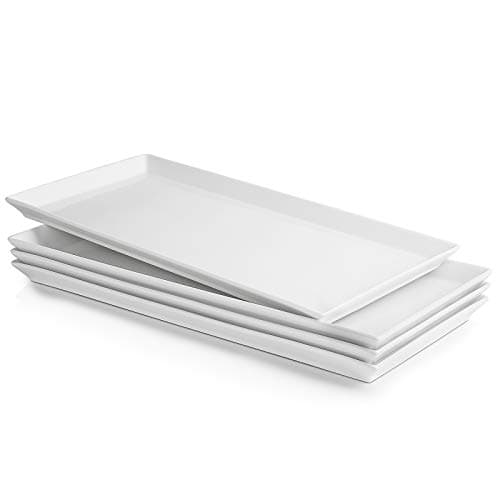 Sweese Porcelain Serving Platter SetPlatters | Platters | 8.4 | $53.99 · View on Amazon #ad We may earn a commission · Price as of November 2, 2026 |
| 3 | 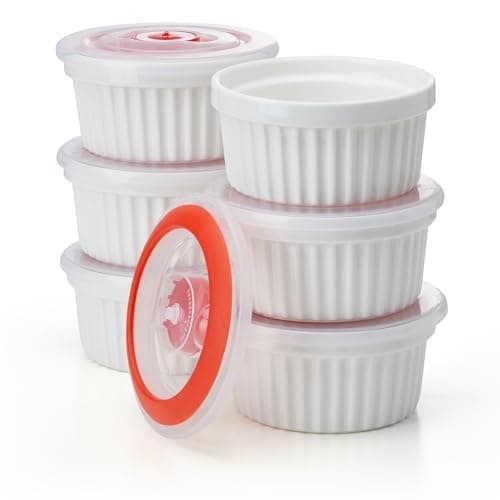 Sweese Pristine White Ramekins with LidOlives, dips and jam | Olives, dips and jam | 8.8 | $28.99 · View on Amazon #ad We may earn a commission · Price as of November 2, 2026 |
| 4 | 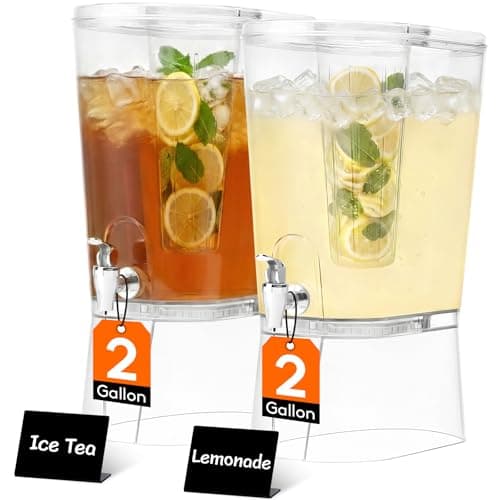 Lifewit 2-Gallon Drink Dispenser with Fruit Infuser, 2-PackA real crowd | A real crowd | 8.4 | $54.99 · View on Amazon(15% off) #ad We may earn a commission · Price as of November 2, 2026 |
Scores are our editorial rating, not a lab test result — see how we pick.
Cover the table, build height first, then fill outward from the tallest point. That is the whole method. A grazing table fails when it is laid out flat, because a flat table of food reads as a buffet with the lids off. Boards, risers and bowls at three different heights are what make it look like the thing people have in mind when they search for this.
The method, in order
- 1. Cover the table. Butcher paper, a runner or linen. Bare table between items is what makes a spread look sparse.
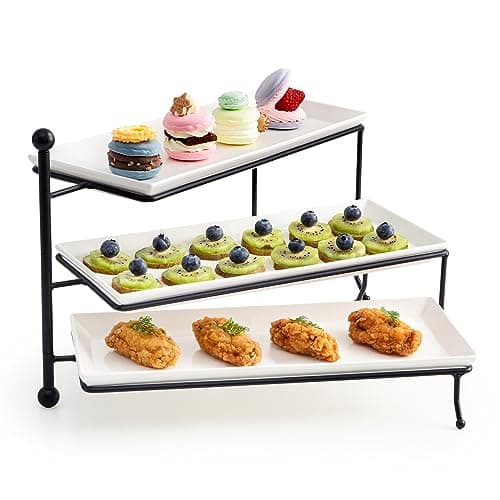
- 2. Place the height. Risers, cake stands, upturned bowls under the paper, a tiered stand. Three or four high points along the table, not in a line.
- 3. Lay the boards and platters. Large surfaces next, angled rather than squared to the table edge. Angles read as abundance; grids read as a canteen.
- 4. Anchor with the cheese. Whole wedges and blocks go down before anything else, spaced along the length so nobody has to walk the table to find cheese.
- 5. Ruffle the meat. Folded and ruffled, never laid flat. Thin slices fill twice the space of thick ones.
- 6. Bowls for anything wet. Olives, cornichons, jam, honey, dips. These stain paper and soften crackers if they touch them.
- 7. Fill every gap. Grapes, crackers, nuts, dried fruit. This is the step that separates a full table from a thin one, and it is also the cheapest step.
- 8. Garnish last. Rosemary sprigs, figs, whatever is in season. Five minutes, large visual payoff.
Quantities by guest count
Same per-person math as a board, with one adjustment: above about twenty guests not everyone grazes, so the per-head figure comes down.
| Guests | Cheese | Cured meat | Serving points |
|---|---|---|---|
| 20 | 5 lb | 4 lb | 1 table, both sides accessible |
| 30 | 7 lb | 5.5 lb | 1 long table, 2 entry points |
| 50 | 10 lb | 8 lb | 2 tables or 1 table with a center break |
| 100 | 18 lb | 14 lb | 2 to 3 separate stations |
Those figures assume the table is the food. If dinner follows, halve the cheese and meat. The full per-person breakdown, including the starter numbers, is in how much cheese and meat per person.
The budget version
The honest answer to doing this cheaply is that surface coverage, not ingredient quality, is what people read as generous. Three genuinely good cheeses and a mountain of grapes, bread and nuts looks better than seven mediocre cheeses spread thin.
- Spend on: three cheeses of different types, one good cured meat, decent bread.
- Fill with: grapes, crackers, nuts, dried apricots, olives, carrot and celery, a jar of jam.
- Skip: four kinds of cured meat. Nobody counts the varieties; they notice the gaps.
Timing and food safety
A grazing table sits under the same clock as a board: about two hours at normal room temperature, about one in real heat. Build the dry structure early, hold the perishable items back, and plan a refill rather than a longer sitting.
If the table is outdoors or the room is warm, how to keep a charcuterie board cold has the chilled-surface and ice arrangements that work at this scale too.
What to build it with
- An oversized board: the Fresh Nest Co. extra large bamboo. Maximum surface per dollar and light enough to move loaded.
- Platters for the wet and the warm: Sweese porcelain, sold in sets, in rectangular and oval shapes.
- Small bowls, six of them: Sweese ramekins in 4 oz and 8 oz with lids, so you can prep them the day before.
- Drinks off the food table: the Lifewit 2-gallon dispensers, two to a pack, which is a second station on its own.
The picks in full
We have not lab-tested these products. Picks are chosen from live listings, sustained customer feedback at scale, material quality and fit for hosting — our full methodology.
Representative category photo, not the product listing image.
1. Fresh Nest Co. Extra Large Bamboo Board
Extra-large surface area at a bamboo price, which is the cheapest honest way to feed twenty people from one board.
Key specs
- Bamboo
- Oversized footprint
- Reversible
- Light for its size
What works
- Surface area per dollar is the best here
- Light enough to carry loaded, unlike a hardwood board this size
- Reversible so one side stays presentable
What does not
- Wide enough that it will not fit every dishwasher or cupboard
- Bamboo looks plain next to acacia at this size
#ad We may earn a commission · Live price on Amazon — it changes often
Product image from Amazon, refreshed daily.
2. Sweese Porcelain Serving Platter Set
Plain white porcelain platters that make the food the thing on the table. The most useful serveware you can own, and the least interesting to shop for.
Key specs
- White porcelain
- Rectangular and oval shapes
- Oven, microwave and dishwasher safe
- Sold in sets
What works
- White makes every food look better than a patterned plate does
- Oven-safe means you can cook and serve in one dish
- Stacks flat, which matters when you own several
What does not
- Heavier than melamine for outdoor use
- Porcelain chips if you stack it carelessly
#ad We may earn a commission · Price as of November 2, 2026
Product image from Amazon, refreshed daily.
3. Sweese Pristine White Ramekins with Lid
The accessory most people turn out to be missing. Six small bowls keep the wet things off the wood, and the lids mean you can fill them the night before and carry them from the fridge to the board.
Key specs
- Glazed ceramic
- 4 oz and 8 oz, sets of six
- Lids included
- Microwave, dishwasher and oven safe
- Fluted shape, stacks with the lids on
What works
- Lids turn them into prep containers, so the board gets assembled in minutes
- Six is the right number for one large board, not a number that forces a second purchase
- Plain white disappears behind the food instead of competing with it
What does not
- Ceramic is heavier than glass, and a full board of them adds real weight
- The brand's own store stocks them in small quantities, so the size you want is not always there
#ad We may earn a commission · Price as of November 2, 2026
Product image from Amazon, refreshed daily.
4. Lifewit 2-Gallon Drink Dispenser with Fruit Infuser, 2-Pack
The same dispenser scaled to two gallons with a fruit infuser column, sold in pairs. Four gallons of drink on one table is party-for-thirty capacity, and the infuser is what makes plain water worth putting out.
Key specs
- 2 gallons each, 2 included
- Removable fruit infuser
- Leak-proof spigot
- Lidded
What works
- Four gallons across two vessels covers a large party without refills
- The infuser column is the reason guests drink the water
- Still a per-gallon bargain next to single glass dispensers
What does not
- Two gallons of liquid is about seventeen pounds, so fill it in place
- Needs a sturdy table and a stand to clear a glass under the spigot
- The infuser is another part to dismantle and wash
#ad We may earn a commission · Price as of November 2, 2026
Common questions
What is the difference between a grazing table and a charcuterie board?
Scale and structure. A board is one surface that people stand around; a grazing table is a whole table surface built from several boards, platters and bowls at different heights, designed so people move along it rather than crowding one point.
How much food do you need for a grazing table?
If the table is the meal, plan about 4 oz of cheese and 3 oz of cured meat per person, plus bread, fruit and something pickled. If it is a starter before dinner, halve the cheese and meat. Above about 20 guests the per-head figure drops by roughly a quarter, because not everyone eats from it.
How do you make a grazing table on a budget?
Spend on three good cheeses and fill the surface with cheap volume: grapes, bread, crackers, nuts, dried fruit and something pickled. Surface coverage is what reads as generous, and the cheapest items cover the most surface per dollar.
What do you build a grazing table on?
A long table covered with butcher paper or a runner, with food sitting on boards, platters and small bowls rather than directly on the covering. The covering stops the table looking bare between items; the boards stop oil and brine reaching it.
How far in advance can you build a grazing table?
Build the dry parts up to two hours ahead and cover them. Cheese, cured meat and anything cut should go out at the last minute, and the whole table works to the same two-hour food-safety window as a board - one hour if it is hot.
How long should a grazing table be for 50 guests?
Think in serving points rather than length. Fifty guests want at least two access sides and ideally a break in the middle so two queues can form, which in practice means a table people can walk both sides of, or two shorter tables.