The Best Cheese Slicers
A slicer is not a smaller knife. It makes thin, even slices of block cheese in a way no knife does - and the type you buy decides which cheeses it can handle.
Heads up: we earn a commission from qualifying purchases made through the links on this page, at no extra cost to you. It never changes which products we pick or the order we rank them in. Full disclosure.
Quick picks
Tap any row to jump to the full write-up further down the page.
| # | Product | Best for | Score | Price |
|---|---|---|---|---|
| 1 | 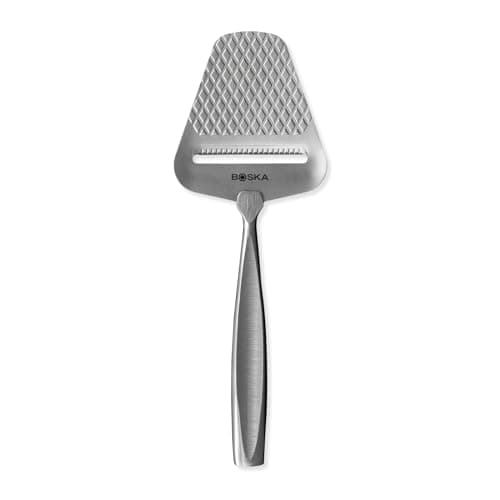 BOSKA Cheese Slicer Monaco+Even slices of hard cheese | Even slices of hard cheese | 8.1 | $19.99 · View on Amazon #ad We may earn a commission · Price as of November 2, 2026 |
| 2 | 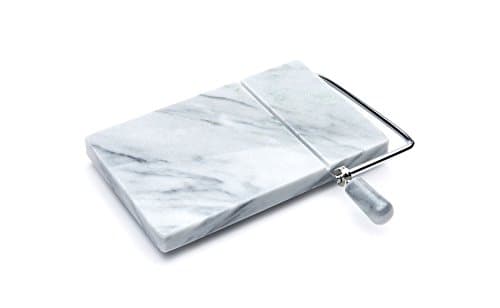 Fox Run Marble Cheese Slicer, WhiteSlicing at the table | Slicing at the table | 8.4 | $22.91 · View on Amazon #ad We may earn a commission · Price as of November 2, 2026 |
| 3 | 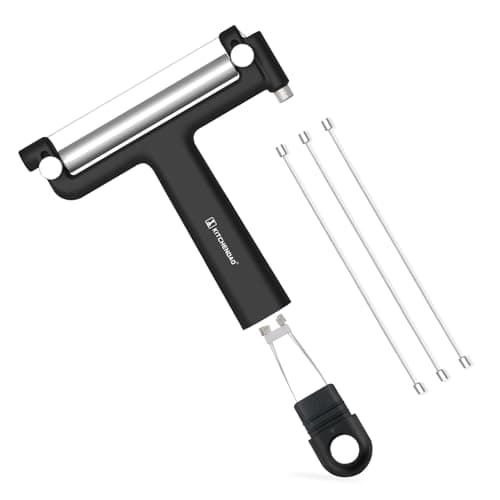 KITCHENDAO Adjustable Wire Cheese SlicerChoosing the thickness | Choosing the thickness | 8.3 | $19.99 · View on Amazon #ad We may earn a commission · Price as of November 2, 2026 |
| 4 | 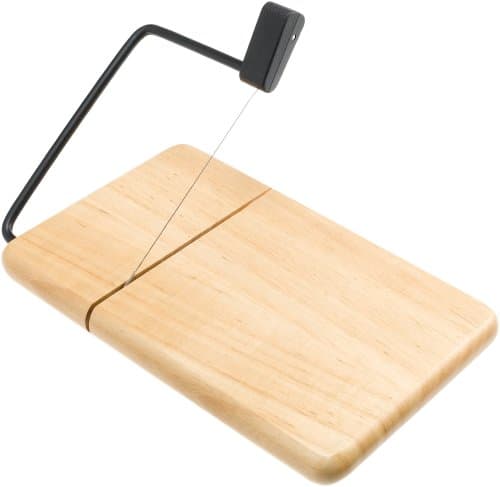 Prodyne Thick Beechwood Cheese SlicerA board slicer for daily use | A board slicer for daily use | 8.2 | $19.95 · View on Amazon #ad We may earn a commission · Price as of November 2, 2026 |
| 5 | 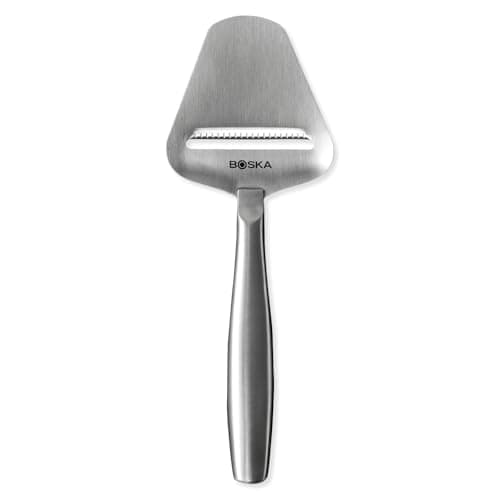 BOSKA Copenhagen Cheese SlicerA drawer slicer under budget | A drawer slicer under budget | 8.0 | $11.99 · View on Amazon #ad We may earn a commission · Price as of November 2, 2026 |
Scores are our editorial rating, not a lab test result — see how we pick.
Almost everybody owns a cheese slicer that does not work on the cheese they actually buy. It came in a drawer set or as a gift, it is a wire on a plastic frame, and the first time it met a two-year-old cheddar the wire bowed, stopped, and left a curved gouge in the block. That is not a bad slicer. It is the wrong type of slicer.
This category has three genuinely different designs and they succeed on different cheeses. Knowing which you need takes one minute and saves the whole purchase. Below is how we weighted that, then five slicers - two planes, one handheld wire, two board slicers - that between them cover everything a host is likely to put on a board.
The three types, and what each one cuts
| Type | Best on | Struggles with | Thickness |
|---|---|---|---|
| Plane (rigid blade) | Firm and hard cheese, cheddar to pecorino | Soft cheese, which smears on the blade | Fixed by the blade gap |
| Handheld wire | Semi-soft to semi-hard: gouda, havarti, mozzarella | Hard aged cheese, where the wire binds | Usually adjustable |
| Board slicer (wire on a slab) | Blocks, at the table, with one hand | Anything not block-shaped | Set by where the block sits |
| Rotary curler | Whole wheels of Tete de Moine | Everything else | Fixed by the blade |
The practical reading: if your cheese drawer is mostly cheddar, manchego and parmesan, buy a plane. If it is mostly gouda, havarti and mozzarella, buy a wire. If cheese goes out on a board in front of people and you want them to serve themselves, buy a board slicer. Which cheeses sit well together on that board is in how to build a charcuterie board.
How we judged these slicers
We have not lab-tested these slicers. The picks come from live listing data and the manufacturers' stated specifications, judged against five criteria that decide whether a slicer earns a drawer.
1. What it does on genuinely hard cheese
This is where cheap slicers fail and it is the honest dividing line in the category. A rigid blade keeps cutting under load. A wire bows, then binds, then stretches, then snaps. Nothing here will slice a three-year parmesan - that cheese wants breaking into shards with a short stiff blade, which is a job for the cheese knives rather than a slicer.
2. What it does on semi-soft cheese
The opposite problem. Soft and semi-soft cheese sticks to a flat blade face, so a plane drags and tears rather than releasing a clean slice. A wire has almost no surface area, which is exactly why it glides through a young gouda or a havarti that a plane would mangle. This is the single best reason to own both types rather than argue about which is better.
3. Whether the slices come out even
Even slices are most of the point. A tool that sets the thickness - the blade gap on a plane, the arm height on a board slicer, the adjuster on a good wire slicer - produces slices that look deliberate on a board and stack properly in a sandwich. A tool where thickness depends on hand pressure produces a wedge, which is just a knife cut with extra steps.
4. What breaks, and whether it can be replaced
On a wire slicer, the wire. That is not a defect, it is a consumable, and the question is only whether spares come in the box and how fiddly the replacement is. On a plane, essentially nothing breaks, which is the strongest practical argument for buying one. On a board slicer the wire again, plus the base - marble chips and wood stains.
5. Whether it can go on the table
A handheld slicer is a kitchen tool: you slice in the kitchen and carry a plate out. A board slicer is a serving object, so guests cut their own at the pace they want and the cheese stays in one piece instead of drying out on a platter for two hours. That difference matters more at a party than any blade spec on this page.
The picks
BOSKA Monaco+: the one for firm cheese
BOSKA makes cheese tools and nothing else, and it shows in the blade geometry. The listing rates this one from block cheddar up to parmesan, which is the widest firm-cheese range here, and the quilted pattern across the blade face exists for a specific reason: less metal touching cheese means less sticking, and sticking is what ruins a slice halfway through. There is no wire, so there is nothing to retighten and nothing to snap.
The honest cons. A fixed blade means one slice thickness, with no way to go thinner for a cracker or thicker for a sandwich. Soft cheese smears on a plane rather than releasing, so this is not the tool for a young brie or a fresh mozzarella. And it sits at the top of the handheld price range here, so it is not the obvious buy for a slicer that will come out twice a year.
Fox Run marble slicer: the one that goes on the table
A slab of white marble with a hinged wire arm, which makes it a cheese board and a slicer at once. That dual role is the reason to buy it: put the block on the marble, set it on the table, and people slice their own instead of hacking at a wedge with whatever knife is nearest. Marble also stays cold, which keeps semi-soft cheese firm enough to slice cleanly for longer than wood does.
Three real drawbacks. Marble is heavy and porous, so red wine, oil and berries will mark it if a spill is left to sit - the same care rules as the stone boards in our marble vs slate comparison. The wire is the failure point and it ships with only one spare. And the slab is compact — smaller than the beechwood slicer below — so this is a cheese station rather than a full board, and it sits alongside a real board rather than replacing one.
KITCHENDAO adjustable wire: the one for thickness control
The handheld wire slicer that addresses the two things handheld wire slicers usually get wrong. The thickness adjusts, which no plane here does, so the same tool makes a thin slice for a cracker and a thick one for a sandwich. And the wire is designed to be replaced quickly, with three spares in the box - which turns the first snapped wire from the end of the tool into a thirty-second job. The listing states the slicer is dishwasher safe.
Against it: a wire will still bind and stop in genuinely hard aged cheese, and no amount of strengthening changes the physics. Even strong wires stretch with use and need retensioning. And a slicer with an adjuster and a replaceable wire simply has more parts than a one-piece plane, which is more to go wrong over years.
Prodyne beechwood board slicer: the bigger board slicer
The board-and-wire design in wood rather than stone. At nine and a half by six inches it is the larger of the two board slicers here, so a full block sits on it with room to work rather than overhanging. It is lighter than marble to lift onto a table and put away, and wood survives being dropped on a tile floor, which a marble slab emphatically does not.
The limits are the material's. Wood should not be soaked, so this is a hand-wash item and wants wiping promptly rather than leaving. Unsealed beechwood stains from oily and strongly colored cheese. And wood does not stay cold, so a soft cheese softens faster on it than on marble - the same trade-off covered in acacia vs bamboo vs marble.
BOSKA Copenhagen: the drawer slicer
The cheapest thing here that is still a real cheese tool rather than a giveaway. One piece of stainless steel, dishwasher safe, with nothing on it that can break or need replacing. Buy it as the second slicer that lives in the drawer and gets used on a Tuesday, or as the one you are happy to lend out and not get back.
What you give up against the Monaco+: no thickness adjustment at all, and a lighter, thinner plane that skates rather than cuts on very hard cheese. It also looks like kitchen equipment rather than something you would put out in front of people, which is fine for a drawer tool and not fine for a board.
Technique, which matters more than the tool
Three habits get more out of any slicer on this page. Slice cold: cheese straight from the refrigerator releases from a blade and holds its shape, where room-temperature cheese smears and tears. Let the slices warm on the board instead, which is where the flavor comes back anyway. Second, wipe the blade or wire between slices - the build-up is what makes the fourth slice ragged. Third, take the slice off the face of the block in a single continuous movement rather than sawing; a slicer is a shaving tool, not a cutting one.
One more thing worth knowing: the first slice off a block is almost always the worst, because the face is uneven from however it was last cut. Take a thin pass to true the face up, eat it, and the slices after it come off cleanly. Keeping the block in good condition between sessions is covered in how to store cheese, and it has a direct effect on how well a slicer works - a dried-out face crumbles under any blade.
Which slicer belongs with which cheese
If the plan is one slicer, buy for the cheese you buy most. A household whose cheese drawer is cheddar, manchego, gruyere and pecorino should buy the plane and accept that soft cheese needs a knife. A household whose drawer is gouda, havarti, muenster and mozzarella should buy the adjustable wire and accept that the hardest cheeses need a knife. Both of those are a complete answer; trying to buy one tool that does both is how people end up with the drawer slicer that works on nothing.
If cheese is a regular part of how you entertain, the board slicer is the one that changes the evening rather than the kitchen. A block on a marble or wooden slicer in the middle of a table keeps giving fresh cut surfaces for hours, where a pre-sliced platter curls and dries within the first forty minutes. Pair it with the flat work from our cheese board picks and the small extras in charcuterie board accessories.
Which one to buy
- Best overall: BOSKA Monaco+. The widest firm-cheese range here and nothing on it that can break.
- Best for the table: Fox Run marble slicer. A cold serving slab that guests can cut their own cheese on.
- Best for thickness control: KITCHENDAO adjustable wire. Thin for crackers, thick for sandwiches, three spare wires.
- Best board slicer for daily use: Prodyne beechwood. A bigger cutting surface, and it survives being dropped.
- Best budget: BOSKA Copenhagen. A real cheese tool for drawer money, and it goes in the dishwasher.
If what you actually need is knives rather than a slicer - and for a mixed board, you probably need both - the best cheese knives roundup covers the three blade shapes that matter, and gifts for cheese lovers is the page to use if any of this is being bought for somebody else.
The picks in full
We have not lab-tested these products. Picks are chosen from live listings, sustained customer feedback at scale, material quality and fit for hosting — our full methodology.
Product image from Amazon, refreshed daily.
1. BOSKA Cheese Slicer Monaco+
A slicer rather than a knife, which is the right tool for a firm aged cheese people want in even pieces. The non-stick treatment is the difference between slices and crumbs.
Key specs
- Stainless steel
- BSF non-stick treatment
- 210 x 74 x 9 mm
- Dishwasher safe
- Lifetime guarantee
What works
- Gives consistent slices that a knife cannot match on a firm cheese
- Lifetime guarantee from a company that only makes cheese tools
- Works on cucumber and hard vegetables, so it is not single-purpose
What does not
- Useless on anything soft, so it never replaces a knife set
- The wire-free design means a dull blade cannot be swapped, only replaced under warranty
#ad We may earn a commission · Price as of November 2, 2026
Product image from Amazon, refreshed daily.
2. Fox Run Marble Cheese Slicer, White
A slab of white marble with a hinged wire arm, so it is a cheese board and a slicer at the same time. Marble stays cold, which is the reason to put this on a table rather than keep it in a drawer.
Key specs
- Marble board base
- Hinged wire cutting arm
- One replacement wire included
- Sold as a charcuterie board
What works
- Doubles as a cold serving slab, so it earns its space on the table
- The arm sets slice thickness by where the cheese sits, not by hand pressure
- Marble is naturally nonstick with semi-soft cheese
What does not
- Marble is heavy and porous - red wine and oil will mark it if left
- The wire is the failure point, and it comes with only one spare
- A compact slab, so it is a cheese station rather than a full board
#ad We may earn a commission · Price as of November 2, 2026
Product image from Amazon, refreshed daily.
3. KITCHENDAO Adjustable Wire Cheese Slicer
The handheld wire slicer that fixes the two things handheld wire slicers get wrong: the wire goes slack, and replacing it is fiddly. This one adjusts for thickness, ships with three spares, and the listing says the wires are dishwasher safe.
Key specs
- Adjustable slice thickness
- Three extra wires included
- Quick wire replacement
- Dishwasher safe
What works
- Thickness is adjustable, which no plane-type slicer offers
- Three spare wires means the first snap is not the end of the tool
- A wire cuts semi-soft cheese cleanly where a blade drags
What does not
- A wire will bind and stop in genuinely hard aged cheese
- Even strong wires stretch with use and need retightening
- More moving parts than a one-piece plane, so more to go wrong
#ad We may earn a commission · Price as of November 2, 2026
Product image from Amazon, refreshed daily.
4. Prodyne Thick Beechwood Cheese Slicer
The board-and-wire slicer in wood rather than stone: lighter than marble, kinder to a tile floor, and at nine and a half inches the largest cutting surface of the two board slicers here.
Key specs
- Beechwood base
- 9.5 x 6 x 0.875 in
- Hinged wire cutting arm
- Thick board stock
What works
- A larger board than the marble slicer, so a full block fits with room to work
- Wood survives being dropped, which a marble slab does not
- Lighter to lift onto a table and to put away
What does not
- Wood should not be soaked, so it is a hand-wash item
- Unsealed beechwood stains from oily and strongly colored cheese
- Wood does not stay cold, so soft cheese softens faster than on marble
#ad We may earn a commission · Price as of November 2, 2026
Product image from Amazon, refreshed daily.
5. BOSKA Copenhagen Cheese Slicer
The cheapest thing here that is still a real cheese tool: one piece of stainless steel, dishwasher safe, with nothing on it that can break. Buy it as the second slicer that lives in the drawer.
Key specs
- Stainless steel
- Plane-type slicer
- Non-stick treatment
- Dishwasher safe
What works
- Lowest price here and there is nothing on it to fail
- Goes in the dishwasher, which is what makes a tool get used
- Light enough to pass around a board without comment
What does not
- No thickness adjustment at all
- A lighter, thinner plane than the Monaco+ and it skates on very hard cheese
- Plain steel looks like kitchen equipment, not like something for a table
#ad We may earn a commission · Price as of November 2, 2026
Common questions
What is the difference between a cheese slicer and a cheese knife?
A knife cuts through cheese; a slicer takes a thin, even sheet off the face of a block. The slicer wins whenever you want uniform slices for a sandwich, a cracker or a neat fan on a board, because thickness is set by the tool rather than by your hand. A knife wins on anything that is not a flat block - a wedge, a wheel, a soft round - and on very hard aged cheese where a slicer binds.
What kind of cheese slicer works on hard cheese?
A rigid blade, not a wire. Hard aged cheese resists, and a wire under load either binds, stretches or snaps; a stiff plane-type blade keeps cutting. Even then there is a limit - a properly aged parmesan is not slicing cheese at all, it is cheese to break into shards with a short stiff knife, which is a different tool entirely.
Wire or blade cheese slicer, which is better?
They are better at different things. A wire glides through semi-soft and semi-hard cheese - gouda, havarti, young cheddar, mozzarella - without dragging, and most wire slicers let you adjust the thickness. A blade plane handles firmer cheese and has nothing on it that can snap, but the slice thickness is fixed. If you only buy one, the question is simply what is in your refrigerator most often.
How do you stop cheese sticking to a slicer?
Three things help. Cold cheese releases better than room-temperature cheese, so slice straight from the refrigerator and let the slices warm up on the board instead. A non-stick or textured blade face - the quilted pattern on some planes exists exactly for this - reduces the contact area. And wiping the blade between slices takes two seconds and stops the build-up that makes the fourth slice tear.
Are marble cheese slicers worth it?
They are if the slicer is going to live on the table rather than in a drawer. Marble stays cold, which keeps semi-soft cheese firm enough to slice cleanly for longer, and the slab doubles as a serving board. The costs are weight, price and porosity - marble marks from oil, red wine and berries if a spill is left sitting on it.
Can you put a cheese slicer in the dishwasher?
Plain stainless steel ones, yes, and the listings for several here state it explicitly. Anything with a wooden handle or a wooden base should be hand washed, because wood warps and splits with repeated dishwasher cycles. Wire slicers vary - some wires and mechanisms are rated for a dishwasher and some are not, so this is worth checking on the listing before the first wash.