Why Are Charcuterie Boards So Expensive?
Four things drive the price, and only two of them change how the board performs. Here is where the money goes and where to stop spending.
Heads up: we earn a commission from qualifying purchases made through the links on this page, at no extra cost to you. It never changes which products we pick or the order we rank them in. Full disclosure.
Quick picks
Tap any row to jump to the full write-up further down the page.
| # | Product | Best for | Score | Price |
|---|---|---|---|---|
| 1 |  Home Beets Acacia Charcuterie BoardAcacia on a budget | Acacia on a budget | 8.1 | Check price on Amazon #ad We may earn a commission · Live price on Amazon — it changes often |
| 2 |  Fresh Nest Co. Extra Large Bamboo BoardBudget crowd board | Budget crowd board | 8.2 | Check price on Amazon #ad We may earn a commission · Live price on Amazon — it changes often |
| 3 | 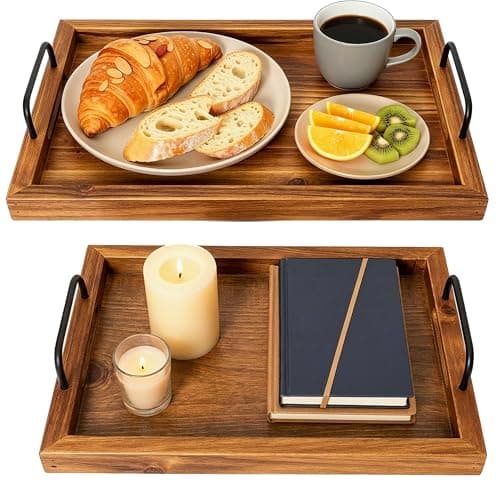 Besti Rustic Vintage Charcuterie BoardsFarmhouse look | Farmhouse look | 7.8 | $29.95 · View on Amazon #ad We may earn a commission · Price as of November 2, 2026 |
| 4 | 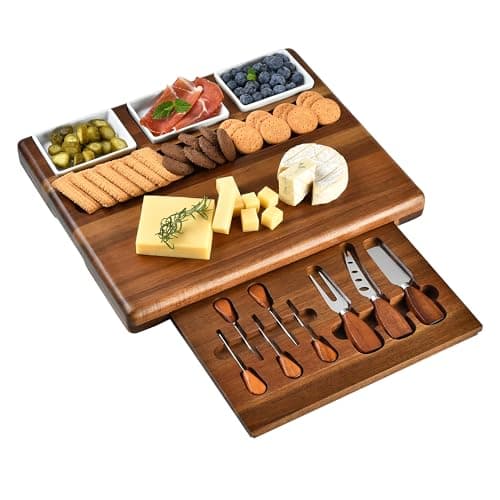 Shanik Acacia Wood Charcuterie BoardA board you keep | A board you keep | 8.6 | $65.99 · View on Amazon(6% off) #ad We may earn a commission · Price as of November 2, 2026 |
Scores are our editorial rating, not a lab test result — see how we pick.
Four things drive what a board costs: the wood, the thickness, whether it is solid or laminated, and the finishing work. Only the first three change how the board behaves over years. The fourth changes how it looks on day one. That distinction is the whole answer to whether a particular board is worth its price.
Where the money goes
| Cost driver | Why it costs | Does it change performance? |
|---|---|---|
| The wood | Hardwood is slow-grown; bamboo is a fast grass | Yes — density, knife friendliness, looks |
| Thickness | Several times the raw material of a thin board | Yes — the best predictor of not warping |
| Solid vs laminated | Fewer, larger pieces means more waste in milling | Yes — glue lines are where cheap boards split |
| Finishing | Flattening, sanding and edge work are hand steps | Mostly cosmetic, except at the handle cut-outs |
| Bundled extras | Knives, bowls, markers, gift packaging | No — and the knives are usually the weak part |
| Brand and store | Gift-shop margin, boutique positioning | No |
The one price step that is real
There is exactly one point on the price curve where something material changes, and it is the jump from the thinnest bargain boards up to a solid, properly thick acacia or bamboo board.
Below that step, boards cup and warp, and eventually split along a glue line. It usually takes a year or two and a few washes that were a little too enthusiastic. Above it, boards mostly stop failing. Above that in turn — the furniture-grade end — you are buying grain, edge work and a maker’s name. All real, none of it making the cheese taste different.
Why bamboo is the honest shortcut
Bamboo is a grass. It reaches harvest size in a few years rather than decades, it machines predictably, and it is light for its size. That is why almost every oversized board on the market is bamboo: a 24-inch hardwood board is a genuinely expensive slab of timber, and the same footprint in bamboo is not.
What you give up is grain character and a little knife friendliness — bamboo is harder on an edge than acacia. What you keep is the whole function. A bamboo board holds exactly the same cheese. The material trade-offs are laid out properly in acacia vs bamboo vs marble.
What you are paying for in a gift set
A boxed board with knives, bowls, markers and coasters costs more than a bare board of the same size, and most of the difference is not the board. That is fine when it is a gift — one box that lets someone host that night is a genuinely good present — and poor value when you are buying for yourself and already own knives.
The practical rule: buy a set if this is a first board or a gift, and a bare board plus a separate set of real cheese knives otherwise. The knives bundled into kits are reliably the weakest item in the box.
Buying at each tier
- Budget, and genuinely fine: Home Beets acacia, with a moisture-resistant finish and sizes from mid to large. Acacia at the bottom of the acacia price range.
- Maximum surface per dollar: the Fresh Nest Co. extra-large bamboo. Reversible, light for its size, and the cheapest way to feed twenty off one board.
- Looks over spec: Besti rustic, with live-edge styling and varied grain, sold singly and in pairs.
- Where we would stop spending: the Shanik acacia. Solid, noticeably thicker than bamboo boards, reversible, with a juice groove on most sizes. This is the top of the step, and going further up buys looks rather than life.
Making a cheap board last
Most of the gap between a cheap board and an expensive one closes with care, because the failure modes of a budget board are all moisture-driven.
- Never submerge it, and never put it in a dishwasher. This is what splits glue lines.
- Oil it, with food-safe mineral oil, every month or two in heavy use. Full routine in how to clean and care for a board.
- Dry it standing on edge, not flat on a counter, so both faces lose moisture at the same rate. Uneven drying is what cups a board.
Do those three things and a mid-range board will outlast a neglected expensive one, which is the most useful thing on this page.
The picks in full
We have not lab-tested these products. Picks are chosen from live listings, sustained customer feedback at scale, material quality and fit for hosting — our full methodology.
Representative category photo, not the product listing image.
1. Home Beets Acacia Charcuterie Board
Acacia's look and moisture resistance without the premium-brand markup. The value pick if you want wood with character rather than bamboo's flat grain.
Key specs
- Acacia
- Moisture-resistant finish
- Mid to large sizes
What works
- Real acacia grain at close to bamboo money
- Handles moisture better than untreated hardwood
- Sizes usable for a real party
What does not
- Finish is not as refined as the premium acacia boards
- Grain variation means the one you get may not match the photo
#ad We may earn a commission · Live price on Amazon — it changes often
Representative category photo, not the product listing image.
2. Fresh Nest Co. Extra Large Bamboo Board
Extra-large surface area at a bamboo price, which is the cheapest honest way to feed twenty people from one board.
Key specs
- Bamboo
- Oversized footprint
- Reversible
- Light for its size
What works
- Surface area per dollar is the best here
- Light enough to carry loaded, unlike a hardwood board this size
- Reversible so one side stays presentable
What does not
- Wide enough that it will not fit every dishwasher or cupboard
- Bamboo looks plain next to acacia at this size
#ad We may earn a commission · Live price on Amazon — it changes often
Product image from Amazon, refreshed daily.
3. Besti Rustic Vintage Charcuterie Boards
Deliberately rough-edged and rustic, which either suits your table or it does not. For a farmhouse or holiday spread it beats a clean-lined board outright.
Key specs
- Wood, rustic live-edge styling
- Sold singly and in pairs
- Varied grain and color
What works
- The rustic finish hides scratches instead of collecting them
- Pairs well with linen and earthenware
- Two smaller boards beat one big one when you need two serving points
What does not
- Rustic edges are harder to wipe clean than a sanded edge
- Style is specific and looks out of place on a modern table
#ad We may earn a commission · Price as of November 2, 2026
Product image from Amazon, refreshed daily.
4. Shanik Acacia Wood Charcuterie Board
Heavier and more figured than any bamboo board, with grain variation that means no two look alike. This is the one that stays out on the counter rather than going back in the cupboard.
Key specs
- Solid acacia
- Noticeably thicker than bamboo boards
- Juice groove on most sizes
- Reversible
What works
- Acacia's color variation reads as furniture, not kitchenware
- Thick enough that it does not flex when you carry it loaded
- Doubles honestly as a cutting board
What does not
- Heavy once it is full, which matters if you are carrying it outside
- Needs oiling a few times a year or it goes dull and gray
#ad We may earn a commission · Price as of November 2, 2026
Common questions
Why are charcuterie boards so expensive?
Four reasons, in order of how much they move the price: the wood itself, the thickness, whether it is solid or laminated, and the finishing work. Hardwood thick enough not to warp is genuinely expensive raw material, and the rest is labor that cannot be automated cheaply.
Is an expensive charcuterie board worth it?
Up to a point. There is a real quality step from the thinnest bargain boards to a solid, properly thick acacia or bamboo board, and it shows up as not warping, not splitting along a glue line and not feeling cheap. Above that step you are paying for grain, brand and furniture-grade finishing, which are real but optional.
What makes one wooden board cost more than another?
Thickness and construction more than anything else. A thick board made from solid pieces uses several times the raw material of a thin laminated one, takes longer to flatten and sand, and resists the warping that eventually kills a cheap board.
Are cheap charcuterie boards any good?
Bamboo ones often are, and that is the honest shortcut. Bamboo grows fast, machines easily and is light, so a large bamboo board costs a fraction of the same size in hardwood while serving exactly the same food. What you give up is grain character and a little knife friendliness.
Why are charcuterie boards from gift shops more expensive?
Usually because of what is bundled with them rather than the board. Knives, slate coasters, chalk markers, ceramic bowls and gift packaging add cost and piece count, and the knives in particular are usually the weakest part of the box.
How much should I spend on a charcuterie board?
Spend to the top of the mid tier on the size you actually need, and nothing on extras you have not already decided you want. A well-made mid-range board outlasts two cheap ones, and a furniture-grade board does not serve cheese any better.
Sources
Read next
Charcuterie & Cheese BoardsHow to Choose a Charcuterie BoardCharcuterie & Cheese BoardsAcacia vs Bamboo vs Marble: Which Board Material to BuyCharcuterie & Cheese BoardsThe Best Charcuterie Boards, Chosen by How Many People You Are Feeding Charcuterie & Cheese BoardsThe Best Small Charcuterie Boards for 2 to 4 People