The Best Acacia Charcuterie Boards
Dense, figured, moisture-resistant and kind to a knife edge. Acacia became the default charcuterie wood because it does four things bamboo cannot.
Heads up: we earn a commission from qualifying purchases made through the links on this page, at no extra cost to you. It never changes which products we pick or the order we rank them in. Full disclosure.
Quick picks
Tap any row to jump to the full write-up further down the page.
| # | Product | Best for | Score | Price |
|---|---|---|---|---|
| 1 | 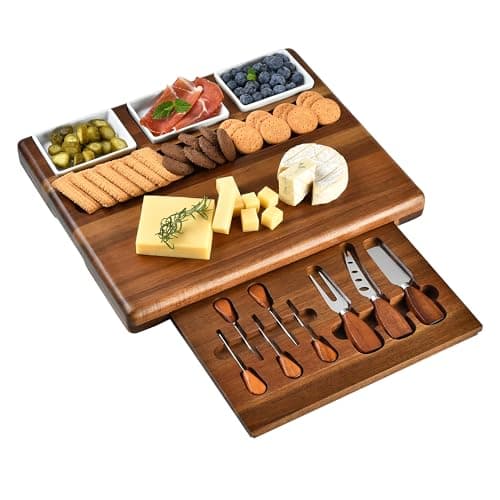 Shanik Acacia Wood Charcuterie BoardA board you keep | A board you keep | 8.6 | $52.79 · View on Amazon(20% off) #ad We may earn a commission · Price as of November 24, 2026 |
| 2 | 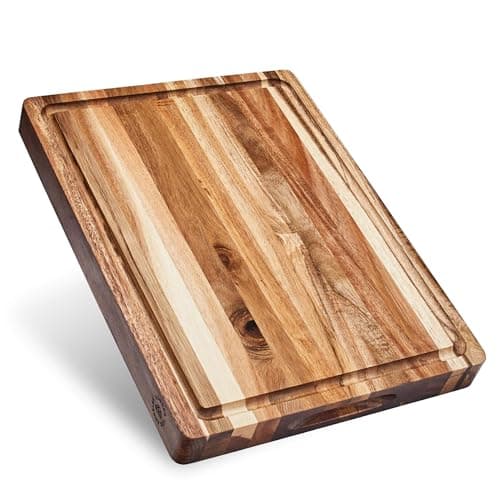 Sonder Los Angeles Acacia Serving BoardLooks on the table | Looks on the table | 8.5 | $47.99 · View on Amazon(20% off) #ad We may earn a commission · Price as of November 24, 2026 |
| 3 | 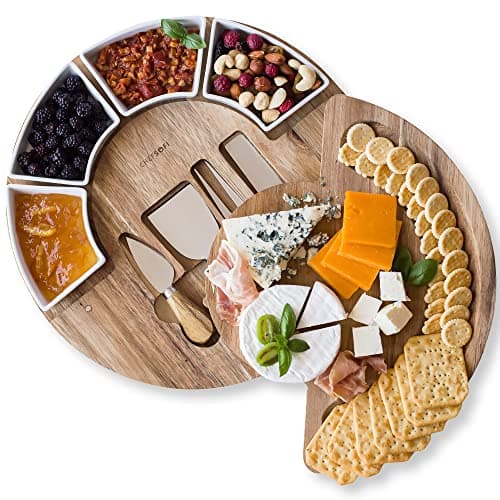 ChefSofi Acacia Charcuterie Board SetDips and spreads | Dips and spreads | 8.3 | $46.44 · View on Amazon #ad We may earn a commission · Price as of November 24, 2026 |
| 4 |  Home Beets Acacia Charcuterie BoardAcacia on a budget | Acacia on a budget | 8.1 | Check price on Amazon #ad We may earn a commission · Live price on Amazon — it changes often |
Scores are our editorial rating, not a lab test result — see how we pick.
The pick is the Shanik Acacia Wood Charcuterie Board - heavier and more figured than any bamboo board, with a juice groove on most sizes and a reversible face, and the right board for anyone who wants one that lives on the counter rather than in a cupboard. The budget pick is the ChefSofi Acacia Charcuterie Board Set, which is the cheapest acacia here with a live price and arrives with four knives and four ceramic bowls in the box. Every price is read from the live listing with the date it was checked beside the button.
If you have shopped charcuterie boards at all you have mostly been shopping acacia without being told why. It is dense enough to resist moisture and shrug off knife marks, it is naturally figured so no two boards look alike, it takes a food-safe finish well, and it grows fast enough to stay affordable at that quality. Those four things together are why it displaced bamboo everywhere above the entry level.
What separates one acacia board from another
The wood is the same. What varies is thickness, whether it has a groove, whether it is reversible, and what comes with it.
| Board | Build | Groove | In the box | Best for |
|---|---|---|---|---|
| Shanik acacia | Solid, noticeably thick | On most sizes | Board only | A board you keep |
| Sonder Los Angeles | Hand-finished edges | Varies by size | Board only | Looks on the table |
| ChefSofi set | 13 in acacia | No | 4 knives, 4 bowls, storage | Dips and spreads |
| Home Beets acacia | Mid to large | Varies by size | Board only | Acacia without the markup |
Thickness is the specification most people never check and the one that decides how a board feels. A thick acacia board sits flat, does not flex when it is carried loaded, and is heavy enough that it does not slide when somebody cuts on it. Thin boards do all three badly and photograph identically.
How we judged these
None of these boards has been tested here. The picks come from live listings and the makers' stated specifications, against four criteria.
1. Thickness and weight
Covered above. A substantial board is the single biggest difference between something that feels like a serving piece and something that feels like a tray.
2. Whether the finish is stated as food safe
Acacia itself is food safe and used widely in commercial kitchens. The finish is where listings vary, and a board that states a food-safe finish is telling you something a board that stays silent is not.
3. Groove and reversibility
A groove catches liquid from melon, a warm roast or a very ripe cheese, and takes a little surface away from a dry spread. Reversible boards with a groove on one face solve the argument.
4. What else is in the box
Boards that arrive with knives and bowls are a different purchase from a bare board. Bundled knives are usually the weak part - a specialist set is better, as our cheese knives page sets out - but bundled ceramic bowls are genuinely useful.
The picks
Shanik Acacia Wood Board: the best overall
For the host who wants a board that stays out. Solid acacia, noticeably thicker than the bamboo field, with a juice groove on most sizes and a reversible face - so the grooved side takes a roast and the flat side takes a dry spread. The grain variation means no two look alike, which is the whole argument for acacia over bamboo.
Against it: it is heavy enough that passing it around a room is a two-handed job, hand wash only with no dishwasher under any circumstances, and it wants oiling once or twice a year to stay from going grey.
Sonder Los Angeles Acacia Serving Board: for the table
For a board that is part of the table setting rather than a surface under food. The best-looking board here, with hand-finished edges and a finish that makes people ask where you got it - worth it when the board is on show empty as well as full.
The trade: the finish is the thing you are paying for, so it wants protecting from standing water; sizes vary in what they include; and hand-finished boards have more variation piece to piece.
ChefSofi Acacia Board Set: the budget pick
The cheapest acacia on this page with a live price, and the only one that arrives ready to host. A 13-inch acacia board with four knives and four ceramic bowls in slide-out storage - the bowls are the genuinely useful part, because they are the difference between a board that holds cheese and a board that holds a whole spread.
What you give up: bundled knives are rarely as good as a dedicated set, 13 inches is a board for four to six people rather than a crowd, and the storage drawer adds thickness that makes it awkward to stack.
Home Beets Acacia Board: acacia without the markup
For a buyer who wants acacia's look and moisture resistance without a premium brand name attached. A mid-to-large board with a moisture-resistant finish and the grain character that bamboo's flat stripe cannot give you.
Honest limits: this listing did not show a live price at our last check, so its button falls back to a plain link rather than a number - deliberate, because this site will not print a price it cannot confirm. It is also a bare board with nothing in the box.
Which one to buy
- Best overall: Shanik acacia - thick, reversible, grooved on most sizes.
- Best looking: Sonder Los Angeles acacia.
- Best budget and best ready to host: ChefSofi acacia set, with bowls and knives.
- Best plain board: Home Beets acacia.
If you are choosing between materials rather than between boards, acacia vs bamboo vs marble is the comparison, and how to condition a charcuterie board covers the care routine that keeps any of them alive.
The picks in full
We have not lab-tested these products. Picks are chosen from live listings, sustained customer feedback at scale, material quality and fit for hosting — our full methodology.
Product image from Amazon, refreshed daily.
1. Shanik Acacia Wood Charcuterie Board
Heavier and more figured than any bamboo board, with grain variation that means no two look alike. This is the one that stays out on the counter rather than going back in the cupboard.
Key specs
- Solid acacia
- Noticeably thicker than bamboo boards
- Juice groove on most sizes
- Reversible
What works
- Acacia's color variation reads as furniture, not kitchenware
- Thick enough that it does not flex when you carry it loaded
- Doubles honestly as a cutting board
What does not
- Heavy once it is full, which matters if you are carrying it outside
- Needs oiling a few times a year or it goes dull and gray
#ad We may earn a commission · Price as of November 24, 2026
Product image from Amazon, refreshed daily.
2. Sonder Los Angeles Acacia Serving Board
The best-looking board of the group, with the kind of finish that makes people ask where you got it. Worth it if the board is part of the table setting rather than just a surface.
Key specs
- Acacia
- Hand-finished edges
- Several sizes
- Food-safe finish
What works
- Finish quality is a clear step above the mass-market boards
- Edge profile is comfortable to carry loaded
- Sizes go large enough to anchor a spread
What does not
- Priced above the bamboo field
- No included knives, so budget for those separately
#ad We may earn a commission · Price as of November 24, 2026
Product image from Amazon, refreshed daily.
3. ChefSofi Acacia Charcuterie Board Set
A 13-inch acacia board that ships with four knives and four ceramic bowls, which is the difference between a board that holds cheese and a board that holds a whole spread.
Key specs
- 13 in acacia board
- Four knives
- Four ceramic bowls
- Slide-out storage
What works
- The bowls solve olives, nuts and jam, which is where most boards fall apart
- Acacia at a set price that usually buys bamboo
- Bowls lift out so the board cleans properly
What does not
- Four bowls on a 13-inch board leaves less room than you expect
- Ceramic bowls add real weight to carry
#ad We may earn a commission · Price as of November 24, 2026
Representative category photo, not the product listing image.
4. Home Beets Acacia Charcuterie Board
Acacia's look and moisture resistance without the premium-brand markup. The value pick if you want wood with character rather than bamboo's flat grain.
Key specs
- Acacia
- Moisture-resistant finish
- Mid to large sizes
What works
- Real acacia grain at close to bamboo money
- Handles moisture better than untreated hardwood
- Sizes usable for a real party
What does not
- Finish is not as refined as the premium acacia boards
- Grain variation means the one you get may not match the photo
#ad We may earn a commission · Live price on Amazon — it changes often
Common questions
Why is acacia used for charcuterie boards?
It is dense enough to resist moisture and knife marks, it is naturally figured so no two boards look the same, it is relatively fast growing so it is affordable for the quality, and it takes a food-safe finish well. Those four together are the reason it displaced bamboo at the mid and upper end of this category. The one thing bamboo still wins on is weight.
Is acacia better than bamboo for a cheese board?
For a board you keep, yes. Acacia is heavier and more substantial in the hand, the grain has real character rather than bamboo's uniform stripe, and it holds up better to repeated oiling over years. Bamboo is lighter, cheaper and easier to pass around a room. We compare them properly, alongside marble, on our acacia vs bamboo vs marble page.
How do you care for an acacia board?
Hand wash in warm water, dry immediately rather than draining, and oil it with a food-grade mineral oil or board cream once or twice a year - more often if it starts looking dry or grey. Never put it in a dishwasher and never leave it standing in water. Our conditioning guide walks through the whole routine.
Does an acacia board need a juice groove?
Only if meat and fruit go on it. A groove catches the liquid from sliced melon, a warm roast or a very ripe cheese, and it is genuinely useful for those. For a dry spread of hard cheese, crackers and cured meat it does nothing except reduce the usable surface slightly. Reversible boards with a groove on one side are the sensible compromise.
Is acacia food safe?
Yes, and it is used widely in commercial food service for that reason. The thing to check is the finish rather than the wood: a board should state a food-safe finish, and anything with an unspecified lacquer or varnish is worth avoiding. Re-oiling with a food-grade mineral oil keeps the surface sealed between uses.
Sources
Read next
Charcuterie & Cheese BoardsThe Best Charcuterie Boards, Chosen by How Many People You Are FeedingCharcuterie & Cheese BoardsAcacia vs Bamboo vs Marble: Which Board Material to BuyCharcuterie & Cheese BoardsHow to Choose a Charcuterie BoardHosting GuidesHow to Condition a Charcuterie BoardCharcuterie & Cheese BoardsThe Best Charcuterie Boards Under $100Charcuterie & Cheese BoardsThe Best Large Charcuterie Boards for Feeding a Crowd